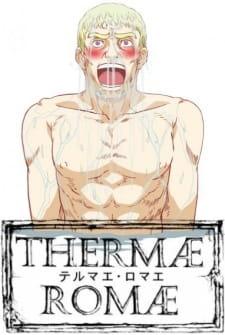
Thermae Romae
テルマエ・ロマエ
- Comedy
- Adult Cast
- Historical
- Time Travel
- Episodes
- 3
- Duration
- 24 min per ep
- Aired
- Jan 13, 2012 to Jan 27, 2012
- Status
- Finished Airing
Synopsis
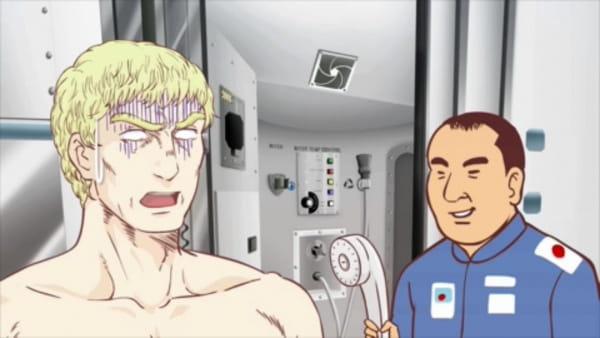
Lucius Modestus, a bathhouse architect in ancient Rome, has hit a creative wall and ends up out of work. Hoping to lift his spirits, friends bring him to a public bath, but the noise and crowding only frustrate him. When he ducks underwater to escape, he discovers a hidden passage that drops him into a modern Japanese bathhouse—an encounter that sparks the inspiration he’s been missing.
Armed with ideas far beyond his era, Lucius returns to Rome determined to adapt what he’s seen. Limited by the tools and materials of his time, his attempts don’t always match the originals, yet the novelty and cleverness of his designs may be enough to impress the public and restore his standing.
Note: MyAnimeList lists the show as three episodes rather than five; see “More Info” for details.
Otaku Consensus
Thermae Romae lands as a clever, compact culture-clash comedy whose best assets are Azuma Tani’s brisk gag direction, DLE’s intentionally economical presentation, and the series’ unusually specific obsession with bathing culture as design history. Its 6.92 MAL score and 66 AniList score reflect a warm-but-not-reverent reception: fans tend to remember the concept and timing more than the visuals. The recurring criticism is equally consistent: the Flash-style animation is stiff, and the core joke can feel repetitive across the short run.
Why You Should Watch
Watch Thermae Romae if you want a historical comedy for adults that treats architecture, labor, and public bathing as punchlines without turning into a lecture. It scratches a similar itch to Saint Young Men’s anachronistic deadpan and Hetalia’s compressed history jokes, but with a more workplace-minded protagonist and a narrower, weirder specialty. The appeal is not sakuga or emotional escalation; it is the precision of seeing a serious professional mind overreact to mundane conveniences, then translate them through ancient constraints. At only three MAL-listed episodes, it is also ideal if you want a complete oddity in one sitting: strange enough to feel like a cult recommendation, short enough that its single-minded gag engine does not overstay its welcome.
Key Characters
- LLucius Modestus
Lucius is memorable because he plays every absurd discovery with the wounded dignity of a craftsman, turning professional insecurity into the show’s main comic instrument.
What Makes It Stand Out
- 1
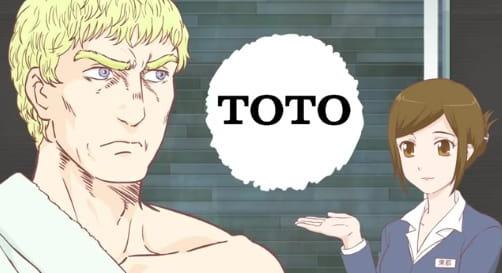
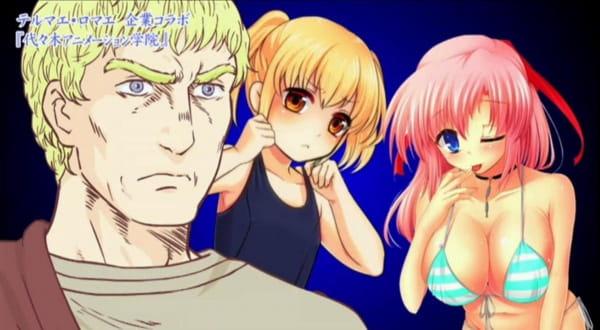
DLE’s production uses the studio’s low-motion digital comedy style rather than conventional TV-anime fluidity, making the series feel closer to a moving comic strip with deliberately abrupt timing.
- 2
Azuma Tani is credited not only as director but also as scriptwriter, episode director, and storyboard artist for episode 1, which helps explain the show’s tight, sketch-comedy rhythm from the start.
- 3
The soundtrack credits unusually name Ludwig van Beethoven’s Symphony No. 9 and Claude Debussy’s Clair de Lune, giving the comedy a grand classical counterweight to its highly specific bathhouse jokes.
- 4
MyAnimeList lists the anime as three episodes, while the note around the title acknowledges confusion with a five-part/segment perception, making its release format part of its database identity.
- 5
AniList’s high-percentage tags for Time Manipulation, Historical, Language Barrier, and Foreign capture the show’s real engine more accurately than genre labels alone: the comedy depends on cultural misreading as much as time travel.
Fun Facts & Trivia
- Fun fact 1
- Thermae Romae is based on the work of original creator Mari Yamazaki, and the anime keeps the source’s unusual focus on bathing culture rather than broad sword-and-sandal adventure.
- Fun fact 2
- The theme song is performed by Chatmonchy, a notable all-female Japanese rock band whose credit gives the short production a stronger musical identity than its episode count might suggest.
- Fun fact 3
- Classical composers are directly credited in the staff data: Beethoven for Symphony No. 9 and Debussy for Clair de Lune, an uncommon pairing for a three-episode comedy about public baths.
- Fun fact 4
- Azuma Tani’s name appears repeatedly across the key staff list, including director, script, episode direction, and storyboard for episode 1, indicating a highly centralized creative hand.
- Fun fact 5
- Despite its niche status, the title has enough database footprint to hold 13,329 MAL votes, a 6.92 score, and 37 AniList favourites, placing it in the realm of remembered curiosities rather than forgotten shorts.
Studios
- DLE