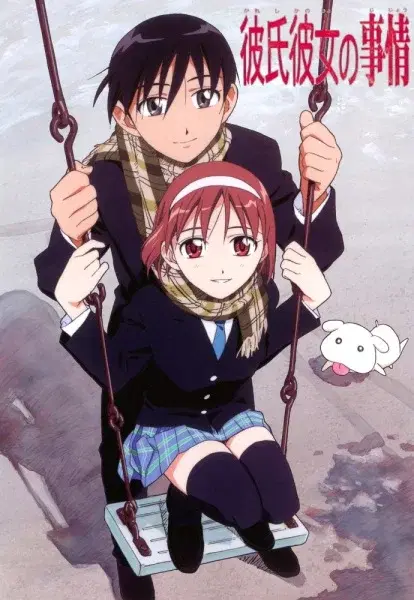
My Little Monster
となりの怪物くん (Tonari no Kaibutsu-kun)
- Comedy
- Romance
- School
- Episodes
- 13
- Duration
- 24 min per ep
- Aired
- Oct 2, 2012 to Dec 25, 2012
- Status
- Finished Airing
Synopsis
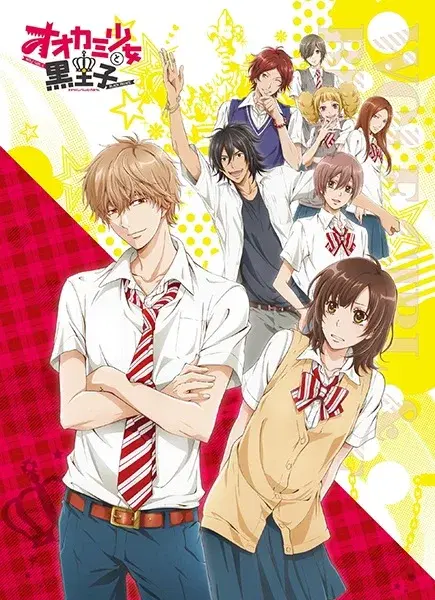
Shizuku Mizutani keeps her world small and orderly, focusing almost entirely on grades and showing little interest in classmates. That routine shifts when she crosses paths with Haru Yoshida, a feared troublemaker who stopped coming to school after a fight early in the year. Despite his reputation, Haru is as out of step with other people as Shizuku is—he doesn’t understand social norms and has no friends. Their first real meeting catches Shizuku off guard when Haru abruptly declares her his friend and even confesses his feelings on the spot.
With little experience navigating friendships, Shizuku struggles to make sense of what Haru wants and what she’s supposed to feel in return. As they spend more time together, their connection gradually deepens, and Shizuku starts to see sides of Haru beyond his violence. Caught between uncertainty and growing affection, the two learn—awkwardly, honestly, and at their own pace—what their bond means and how to understand their emotions.
Otaku Consensus
My Little Monster earns its staying power less through clean romantic closure than through Brain's Base's lively visual timing, Hiro Kaburagi's sharp comic direction, and a 13-episode pace that lets awkward teen chemistry stay prickly instead of polished. Its popularity remains striking for a mid-scoring shoujo romance: MAL lists it at 7.45 with over 654,000 votes and a popularity rank of #144, while AniList sits at 72/100 with 4,847 favourites. The recurring complaint is legitimate and consistent: the anime stops short of a satisfying resolution, with the final episode often reading more like an extra chapter than a finale.
Why You Should Watch
Watch My Little Monster if you want a school romance that treats emotional inexperience as messy, funny behavior rather than soft-focus yearning. It scratches a similar itch to Toradora! in its combative romantic rhythm, but it is shorter, stranger, and more openly blunt about how badly teenagers can misread each other. Viewers who like shoujo structure without endless will-they-won't-they stalling will appreciate how quickly the show throws its leads into uncomfortable conversations and lets the comedy come from poor social calibration. Brain's Base gives the adaptation enough visual snap to keep classroom scenes from feeling static, and the supporting production choices lean into expressions, pauses, and sudden tonal pivots. Do not choose it for closure; choose it for the jagged first half of a romance that feels more volatile than decorative.
Key Characters
- SShizuku Mizutani
Shizuku stands out among shoujo leads because her emotional restraint is not treated as coyness; the series frames her kuudere bluntness as a genuine obstacle to connection.
- HHaru Yoshida
Haru is the show's most polarizing element, a character fans remember for swinging between disarming sincerity and alarming social misjudgment in the same scene.
What Makes It Stand Out
- 1
Brain's Base produced the anime, and contemporary reviews singled out its animation and overall design as a major strength, especially compared with flatter-looking school comedies of the period.
- 2
The adaptation runs only 13 episodes, airing from October 2 to December 25, 2012, which gives it a brisk seasonal shape but also feeds the common criticism that it ends before the romance reaches a proper endpoint.
- 3
Hiro Kaburagi directed the series, with Norihiro Naganuma as assistant director and Noboru Takagi handling series composition, a staff configuration that helps explain the show's tight comic timing and fast emotional turns.
- 4
AniList's tag profile is unusually specific for a school romance: School at 92%, Shoujo at 90%, Female Protagonist at 87%, Kuudere at 81%, and Tsundere at 73%, reflecting how strongly the show is identified through temperament rather than setting alone.
- 5
The final episode has a notable reputation among viewers for feeling detached from the main romantic progression, frequently described more like a bonus episode than a conclusive ending.
Fun Facts & Trivia
- Fun fact 1
- My Little Monster is based on Robico's original work, with the anime credited to Brain's Base rather than one of the studios more commonly associated with long-running shoujo adaptations.
- Fun fact 2
- The production credits separate character design and prop design: Tomohiro Kishi handled character design, while Naoko Kouda was credited for prop design, an uncommon detail casual database listings often bury.
- Fun fact 3
- The show's visual pipeline included Chikako Shibata as art director, Yukie Inose on art design, Hiromi Miyawaki on color design, and Hitoshi Tamura as director of photography.
- Fun fact 4
- Its database profile shows a gap between reach and rating: on MAL it ranks only #2407 by score but sits at #144 in popularity, making it one of the more widely sampled 2010s school romances despite divided reactions.
- Fun fact 5
- Weekend Otaku's review famously framed the appeal as an unlikely romance involving a bookworm, a socially dangerous boy, and a chicken, which captures how much of the show's identity comes from its offbeat comic texture.
Studios
- Brain's Base