Black Blood Brothers
ブラック・ブラッド・ブラザーズ
- Action
- Comedy
- Fantasy
- Urban Fantasy
- Vampire
- Episodes
- 12
- Duration
- 24 min per ep
- Aired
- Sep 8, 2006 to Nov 24, 2006
- Status
- Finished Airing
Synopsis
Vampires known as Black Bloods and humans—Red Bloods—once stood side by side in a hard-won crusade against a powerful enemy. Ten years later, vampire veteran Jirou Mochizuki, the “Silver Blade,” sets out with his younger brother Kotarou for the Special Zone, a protected city where the two races are meant to coexist peacefully.
Their arrival coincides with mounting unrest as vampire migrants clash with the Special Zone’s human authorities, threatening the fragile balance. As signs of a deeper plot tied to a past foe begin to surface, Jirou joins forces with Mimiko “Compromiser” Katsuragi and draws on the strength of his old bloodline to defend the life—and the people—he refuses to lose.
Otaku Consensus
Black Blood Brothers earns its cult affection through brisk 12-episode pacing, cleanly readable action, and a vampire power system that reviewers consistently singled out as cooler than the show’s modest reputation suggests. Its character setup, especially Jirou’s veteran presence and Mimiko’s mediator role, is stronger than its compressed story, with the most common criticism being that it “almost works” rather than becoming a genre-defining vampire anime.
Why You Should Watch
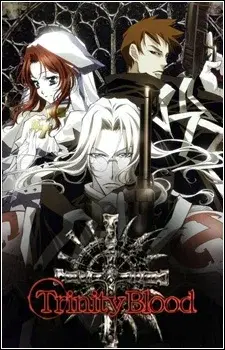
Watch Black Blood Brothers if you want urban vampire action with treaty-room tension, swordplay, and occasional comedy without the operatic weight of Hellsing or the sprawling commitment of Trinity Blood. Its appeal is in the compactness: 12 episodes, a clearly defined Special Zone setting, and a lead whose reputation as the “Silver Blade” gives every fight a mythic charge before the blade even moves. The series is especially good for viewers who like supernatural politics but do not want a lore encyclopedia; the rules, factions, and grudges are sketched with enough confidence to make the world feel lived-in. Fans also remember it as an underrated gateway vampire anime: accessible, stylish, and more character-driven than its MAL popularity rank suggests.
Key Characters
- JJirou Mochizuki
Jirou stands out as the kind of vampire lead fans latch onto: elegant in combat, burdened by history, and defined more by restraint than by bloodlust.
- KKotarou Mochizuki
Kotarou gives the series its warmer sibling energy, softening the harsher vampire politics without turning the show into pure comic relief.
- MMimiko Katsuragi
Mimiko’s “Compromiser” role makes her more than a civilian tagalong, positioning her as the human professional who has to translate ideals of coexistence into daily crisis management.
What Makes It Stand Out
- 1
The production pairs Group TAC with Studio Live, giving the series a mid-2000s TV-anime look that favors clear character acting and legible action over visual excess.
- 2
The show compresses its vampire migration, factional unrest, and sword-combat identity into 12 episodes aired from September to November 2006, which is a major reason reviewers describe it as engaging but also underdeveloped.
- 3
AniList’s high-confidence tags emphasize Vampire at 96%, Swordplay at 79%, Travel at 79%, and War at 79%, reflecting a blend closer to supernatural road-conflict fiction than a single-location gothic horror setup.
- 4
Reviewers repeatedly cite the powers and combat presentation as a selling point, with praise aimed less at brutality and more at the variety of abilities and the clean momentum of the fights.
- 5
The series’ reception profile is unusually split between respectable approval and low visibility: a 7.09 MAL score from 56,987 votes, but only #2284 in MAL popularity and 98 AniList favourites.
Fun Facts & Trivia
- Fun fact 1
- Kouhei Azano is credited as the original creator, while Yuuya Kusaka handled the original character designs, marking a clear separation between concept authorship and visual identity.
- Fun fact 2
- Nishiki Itaoka is credited for both mechanical design and accessory design, an unusual pairing of roles that points to attention being paid not only to weapons or equipment but also to smaller world-detail objects.
- Fun fact 3
- The visual pipeline lists Hiroshi Yoshikawa as art director, Aki Watanabe as color designer, Jirou Tazawa as director of photography, and Masashi Furukawa as editor, giving the series a fully documented core craft staff despite its short run.
- Fun fact 4
- The web review consensus around the series is notably consistent: praise for entertaining characters, solid animation, cool powers, and strong opening and ending songs, paired with the recurring caveat that the story is merely “alright.”
- Fun fact 5
- Among fan comments, Black Blood Brothers often appears as an “underrated first anime” or hidden vampire pick, which helps explain why its affection exceeds its mainstream database visibility.
Studios
- Group TAC
- Studio Live