Vampire Hunter D: Bloodlust
バンパイアハンターD (Vampire Hunter D (2000))
- Action
- Drama
- Fantasy
- Horror
- Romance
- Sci-Fi
- Vampire
- Episodes
- 1
- Duration
- 1 hr 42 min
- Aired
- Aug 25, 2000
- Status
- Finished Airing
Synopsis
As daylight weakens, elegant yet terrifying vampires tighten their grip on the night, casting a deathly chill over anyone unlucky enough to cross their path. Their kind may be fading, but relentless bounty hunters continue to hunt down these near-immortal predators and keep what remains of humanity’s world from slipping further into darkness.
That fragile balance shatters for the Elbourne family when their daughter, Charlotte, is taken by Meier Link, a powerful vampire noble guarded by a host of monstrous allies. Desperate to bring her home, the family hires two very different forces: the ruthless Marcus Brothers and D, a stoic dhampir swordsman whose half-human, half-vampire nature grants him exceptional power without the usual frailties.
The pursuit becomes a race against time and a grim promise—if Meier chooses to turn Charlotte, the hunters must end her life themselves. With Carmilla’s formidable vampire stronghold looming ahead, D and his rivals press on, knowing that if Meier reaches its walls, Charlotte may be lost to humanity forever.
Otaku Consensus
Vampire Hunter D: Bloodlust remains the premium animated expression of Hideyuki Kikuchi and Yoshitaka Amano’s vampire mythos: Yoshiaki Kawajiri’s direction gives the film chase-movie momentum, while Madhouse turns gothic horror, swordplay, guns, and post-apocalyptic science fiction into one coherent visual language. Its strong MAL and AniList reception reflects what endures most: feature-film polish, adult genre storytelling, and a tragic-romantic vampire tone; the main recurring weakness is that the compact runtime leaves several supporting hunters and corners of the world more suggestive than fully explored.
Why You Should Watch
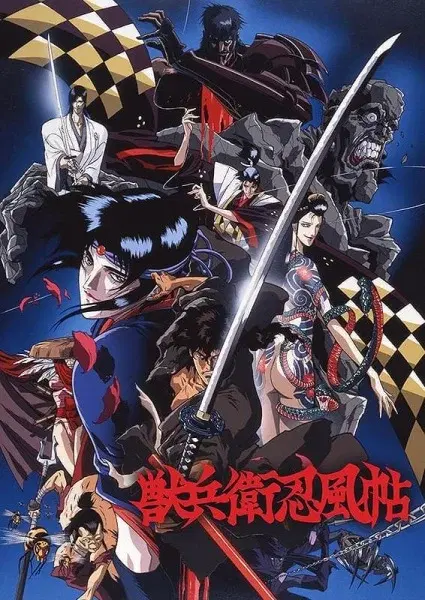
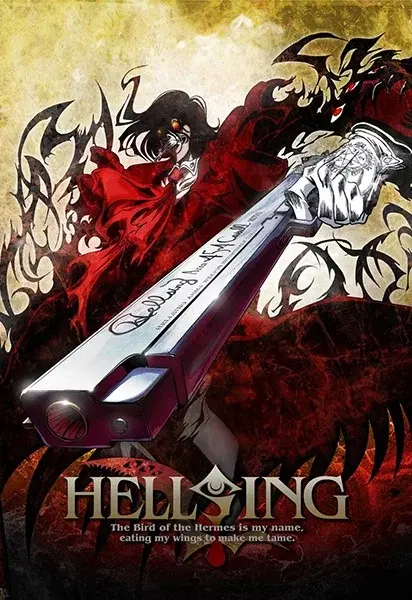
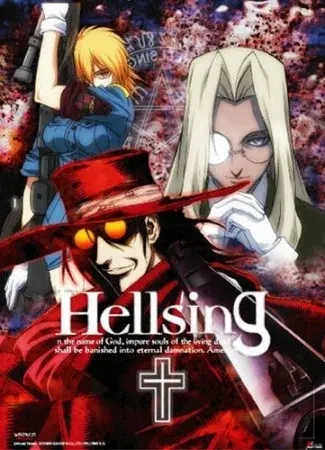
Watch Bloodlust if you want vampire anime with aristocratic dread, adult stakes, and theatrical craft without the episodic sprawl of a long TV series. It scratches the same itch as Hellsing for ornate vampire menace, and the same itch as Ninja Scroll for deadly road encounters, but replaces swagger with mournful gothic romance. The appeal is in the collision of textures: swords beside firearms, ruined future landscapes beside old-world castles, bounty-hunter pragmatism beside vampire nobility. Madhouse’s 2000 feature production gives the film a density of shadow, architecture, monster design, and character posing that feels closer to illustrated dark fantasy than routine action animation. If you like horror-fantasy that treats beauty and decay as the same substance, this is essential viewing.
Key Characters
- DD
A dhampir hunter whose appeal comes from contradiction: he carries the elegance and isolation of the vampire world while standing as one of its most dangerous executioners.
- CCharlotte Elbourne
The emotional center of the film’s adult romance, she complicates the usual rescue-story framework by making the chase feel less like a simple retrieval and more like a crisis of choice.
- MMeier Link
A vampire noble presented with tragic refinement rather than monster-of-the-week cruelty, giving the film its most memorable gothic-romantic tension.
- CCarmilla
A legendary vampire presence tied to the film’s fortress imagery, linking Bloodlust to older European vampire fiction as much as to anime action-horror.
What Makes It Stand Out
- 1
Yoshiaki Kawajiri structures the film as a pursuit narrative rather than a standard monster hunt, using travel, rival hunters, and escalating encounters to keep the pacing taut across a single feature-length entry.
- 2
Madhouse’s production emphasizes hand-drawn gothic spectacle: elongated silhouettes, ornate costumes, heavy shadow, and grotesque monster designs make the world feel designed from the frame outward, not merely decorated.
- 3
The visual lineage is unusually strong: Yoshitaka Amano is credited for original character design, while Yutaka Minowa handles the film’s character design, translating Amano’s baroque fantasy sensibility into animation-ready forms.
- 4
Bloodlust stands apart from pure gothic vampire stories by fusing old-world vampire mythology with dystopian and post-apocalyptic science fiction; AniList’s tags for Dystopian, Travel, Post-Apocalyptic, Swordplay, and Guns accurately capture that hybrid identity.
- 5
Its one-episode format makes it unusually accessible for a cult dark-fantasy property: viewers get a complete cinematic arc without needing to commit to a TV continuity or a long franchise watch order.
Fun Facts & Trivia
- Fun fact 1
- The film comes from Hideyuki Kikuchi’s Vampire Hunter D universe, with Yoshitaka Amano credited for original character design; that pairing is a major reason the franchise feels closer to illustrated dark fantasy literature than conventional anime horror.
- Fun fact 2
- The credited production staff reflects feature-film compartmentalization: Yoshiaki Kawajiri directed, with Toru Matsunawa, Katsuyuki Kodera, and Kenichi Kawamura listed as assistant directors, alongside dedicated art direction, color design, and photography roles.
- Fun fact 3
- Carmilla’s name carries literary weight outside anime: Sheridan Le Fanu’s vampire novella Carmilla predates Bram Stoker’s Dracula, making Bloodlust’s use of the name a deliberate-feeling bridge to older vampire fiction.
- Fun fact 4
- The film’s vampire imagery draws on a myth with deep European roots; the modern word vampire was popularized in Western Europe after 18th-century hysteria linked to Balkan and Eastern European folklore.
- Fun fact 5
- Its reception has remained durable across databases: the film holds a 7.99 MAL score from 117,720 votes and a 78/100 AniList score with 2,491 favorites, unusually strong visibility for a single standalone anime film from 2000.
Studios
- Madhouse