The Wind Rises
風立ちぬ (Kaze Tachinu)
- Award Winning
- Drama
- Romance
- Historical
- Episodes
- 1
- Duration
- 2 hr 6 min
- Aired
- Jul 20, 2013
- Status
- Finished Airing
Synopsis
Jirou Horikoshi dreams of the sky, but poor eyesight keeps him grounded. Leaving his hometown behind, he heads to Tokyo Imperial University to study aeronautical engineering, determined to build aircraft like his idol, Italian designer Giovanni Battista Caproni. When he arrives in Tokyo, the Great Kanto Earthquake of 1923 strikes, and in the chaos he helps a maid working for the family of a young girl, Naoko Satomi—an encounter that lingers as Japan enters decades of unease on the road to World War II.
As Jirou’s career advances toward the creation of the Mitsubishi A6M Zero fighter, his dedication is tempered by what he learns along the way: the weight of how his designs will be used and the difficult turns in his own life. With each step forward, he’s forced to consider how much he’s willing to sacrifice in pursuit of a dream he refuses to abandon.
Otaku Consensus
Critics and anime audiences have largely treated The Wind Rises as one of Miyazaki’s major late-career works, backed by an 8.14 MAL average from 222,543 votes and an AniList 80/100, with praise centering on the director’s unusually grounded historical mode, Studio Ghibli’s tactile aviation imagery, and Joe Hisaishi’s elegiac restraint. Its adaptation blend, with Tatsuo Hori’s literary melancholy filtered through Miyazaki’s lifelong aircraft fascination, gives the romance and workplace material a density absent from a standard biopic. The most common criticism is also what makes it singular: viewers expecting the propulsive fantasy architecture of Spirited Away or Laputa may find its adult pacing, moral distance, and engineering focus unusually reserved.
Why You Should Watch
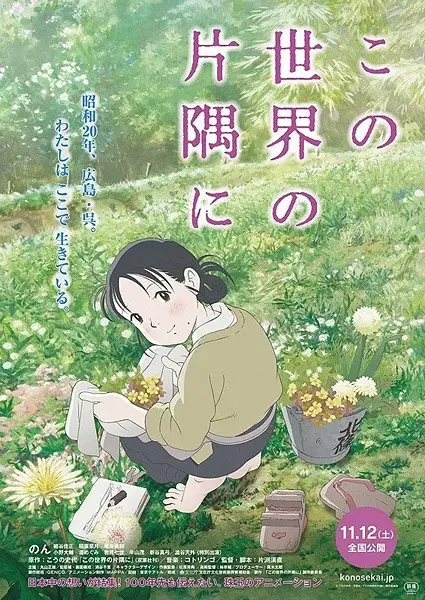
Watch The Wind Rises if you want Studio Ghibli’s craftsmanship applied to adult historical drama without mascots, magic kingdoms, or a child-adventure structure. It scratches a similar itch to In This Corner of the World in the way private lives are framed against national catastrophe, while its fascination with work, tools, and compromise makes it feel closer to a creative-process film than a conventional wartime melodrama. Miyazaki turns drafting, trains, wind, paper, and mechanical vibration into expressive animation, so the pleasure is in watching a mind and an era take shape through motion. It is especially rewarding for viewers interested in aviation history, biographical anime, mature romance, and the uncomfortable gap between artistic aspiration and political consequence.
Key Characters
- JJirou Horikoshi(VA: Hideaki Anno)
Jirou is compelling because he is written less as an inspirational genius than as a disciplined craftsman whose calm concentration makes the film’s ethical tension feel sharper.
- NNaoko Satomi(VA: Mayu Iino)
Naoko gives the film its emotional counterweight, with fans often reading her scenes as Miyazaki’s most restrained use of romance rather than a separate sentimental subplot.
What Makes It Stand Out
- 1
Studio Ghibli applies its hand-drawn sensibility to aviation design and workplace routine rather than fantasy spectacle, making engines, drafting rooms, trains, and weather systems part of the film’s emotional language.
- 2
The film is built around an adult cast and long time skips, a structural choice reflected in AniList’s tags for Work, Biographical, Time Skip, War, and Primarily Adult Cast.
- 3
Joe Hisaishi’s score supports the film with a more elegiac register than many of his Ghibli adventure scores, while Yumi Matsutouya’s theme song performance gives the ending a distinctly retrospective tone.
- 4
Hideaki Anno voices Jirou, a notable casting choice because he is best known to anime fans as the creator and director associated with Neon Genesis Evangelion rather than as a conventional lead voice actor.
- 5
The film stands apart in Miyazaki’s catalogue because multiple reviews singled it out as a move away from his fantasy roots and toward a grounded portrait of a historical figure who fascinated him.
Fun Facts & Trivia
- Fun fact 1
- The Wind Rises was widely discussed at release as Hayao Miyazaki’s final feature, a context complicated by his long history of retirement announcements noted in contemporary reviews.
- Fun fact 2
- The credits list both Tatsuo Hori and Hayao Miyazaki as original creators, which helps explain why the film feels like a fusion of literary period melodrama and Miyazaki’s personal aviation interests.
- Fun fact 3
- Common Sense Media identifies the film as Oscar-nominated, placing it among the Ghibli works that crossed from anime fandom into mainstream awards conversation.
- Fun fact 4
- The core production team includes major Ghibli veterans: Katsuya Kondou on character design, Youji Takeshige as art director, Michiyo Yasuda on color design, Takeshi Seyama editing, and Kouji Kasamatsu as sound director.
- Fun fact 5
- Released in Japan on July 20, 2013, the film remains heavily watched by database standards, with MAL listing more than 222,000 votes and AniList recording over 4,000 favourites.
Studios
- Studio Ghibli
No community data yet. Be the first to add The Wind Rises to your list!