Grave of the Fireflies
火垂るの墓 (Hotaru no Haka)
- Drama
- Historical
- Episodes
- 1
- Duration
- 1 hr 28 min
- Aired
- Apr 16, 1988
- Status
- Finished Airing
Synopsis
In the final months of World War II, 1945 Japan is engulfed by destruction as American air raids leave cities in ruins. *Grave of the Fireflies* follows Seita and his younger sister Setsuko, whose lives are shattered by the conflict—stripped of their mother, separated from their father, and left without a home or any clear path forward.
With nowhere to turn, the siblings drift through the countryside trying to survive amid hunger and illness. As they encounter adult indifference and the harsh choices brought on by scarcity, their bond and small moments of childhood resilience stand in stark contrast to the relentless realities closing in around them.
Otaku Consensus
Grave of the Fireflies endures as Studio Ghibli’s most severe anti-war statement, with Isao Takahata’s restrained direction and exacting pacing turning Akiyuki Nosaka’s autobiographical material into historical drama rather than animated melodrama. Critics consistently single out its observational detail, the cave-bound survival stretch, and its refusal of battlefield spectacle as the reasons it hits harder than most live-action war films. The common criticism is also its defining feature: the film is emotionally punishing, offering so little catharsis that many viewers admire it more than they can bear to revisit it.
Why You Should Watch
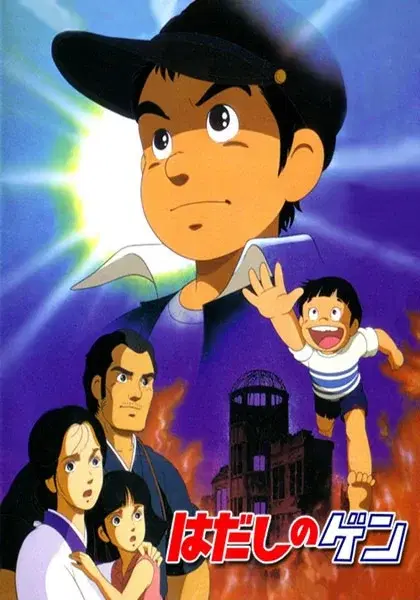
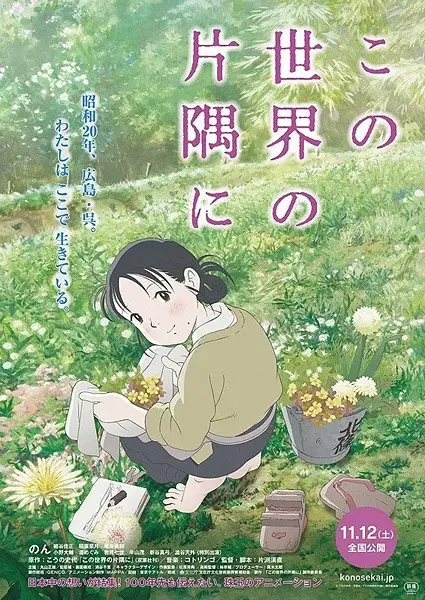
Watch it if you want anti-war anime with no battlefield glamour: the horror is rationing etiquette, social shame, and the adult habit of treating children as an inconvenience. It scratches the historical-memory itch of Barefoot Gen and In This Corner of the World, but with Studio Ghibli’s fantasy instincts stripped away and Isao Takahata’s observational realism pushed to the front. The film is especially rewarding for viewers interested in how animation can weaponize small gestures: a candy tin, firefly light, a child's game, the silence after an air raid. At 88 minutes, its pacing is surgical rather than epic, and the opening's fatalistic structure makes every ordinary choice feel morally charged. If you want catharsis or escapist war heroism, look elsewhere; if you want animation treated as serious historical cinema, this is foundational.
Key Characters
- SSeita
Seita is compelling because his protectiveness, pride, and adolescent judgment are allowed to coexist without the film flattening him into either a hero or a cautionary example.
- SSetsuko
Setsuko is remembered by fans less as a symbol than as a vividly observed child, with games, complaints, appetite, and trust giving the film its most devastating texture.
What Makes It Stand Out
- 1
The film is a rare Studio Ghibli work defined by harsh historical realism rather than fantasy adventure, with Isao Takahata’s direction foregrounding social behavior, hunger, and civilian bureaucracy over combat spectacle.
- 2
Its structure reveals Seita’s death in the opening and then proceeds through memory, shifting the suspense away from survival mechanics and toward moral causality: how small failures accumulate when society is collapsing.
- 3
The production’s visual credibility is tied to named craft roles: Nizou Yamamoto served as art director, Katsu Hisamura as assistant art director, Michiyo Yasuda handled color design, and Nobuo Koyama was director of photography.
- 4
Yoshifumi Kondou’s character designs avoid caricatured wartime suffering; the children remain soft, ordinary, and readable, which makes the surrounding historical detail feel more abrasive by contrast.
- 5
Its long-tail reputation is measurable across anime databases: MAL lists it at 8.54 from over 463,000 votes, while AniList records an 83/100 score and more than 7,000 favourites.
Fun Facts & Trivia
- Fun fact 1
- Grave of the Fireflies aired on April 16, 1988 as a single completed film, not a television series, and its one-episode database format reflects its theatrical identity.
- Fun fact 2
- Akiyuki Nosaka is credited as the original creator, and the work’s autobiographical context is echoed in AniList’s Autobiographical tag, which appears at 51%.
- Fun fact 3
- The title logo has two credited designers, Hideo Takagu and Yoshiko Tagami, an unusually specific production credit for a film often discussed mainly through its director and studio.
- Fun fact 4
- Takeshi Seyama edited the film; his contribution matters because the movie’s impact depends on the controlled movement between aftermath, memory, domestic routine, and sudden devastation.
- Fun fact 5
- Critical responses frequently position it outside normal anime comparison: The Cinephile Fix calls it the greatest animated film ever made, while The Independent Critic emphasizes that even a battered VHS copy could not blunt its visual and emotional force.
Studios
- Studio Ghibli