Freedom
FREEDOM
- Action
- Adventure
- Sci-Fi
- Racing
- Space
- Episodes
- 7
- Duration
- 28 min per ep
- Aired
- Nov 24, 2006 to May 23, 2008
- Status
- Finished Airing
Synopsis
In 2041, the Freeport Space Station is dragged into Earth’s atmosphere, and its collapse triggers the “Great Cataclysm,” leaving the planet’s environment in ruins. As the world becomes a polluted wasteland, survivors turn on one another for dwindling resources, and the resulting conflicts ultimately wipe out humanity. Far from Earth, life continues on a lunar base originally intended as an immigration stop for a Mars exploration mission—only to evolve into a functioning city where society is both controlled and able to prosper. Officially known as the City of Eden, it represents the hope of fully colonizing the Moon.
By 2267, Eden citizen Takeru spends his days competing in gang-run “Tube Races,” piloting hovercraft-like machines through high-speed battles. After causing a serious accident, he’s sentenced to volunteer labor outside the city limits—work that leads him to a discovery among the remnants beyond Eden, hinting at hidden truths about Earth’s fate and the origins of the lunar city.
Otaku Consensus
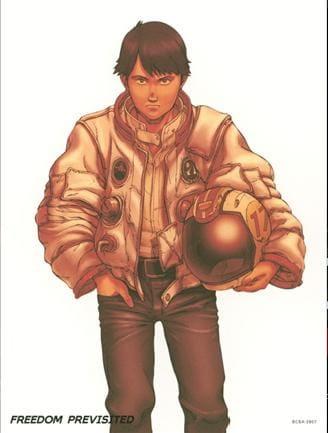
Freedom earns its cult-grade reputation less through narrative complexity than through a distinctive production identity: Sunrise’s full-CGI OVA pipeline, Shuuhei Morita’s clean momentum, and Katsuhiro Ootomo’s character and mechanical design give its racing-and-space adventure a recognizable silhouette. Its 7.35 MAL score and 69 AniList score reflect a solid but not universal reception, with the most persistent complaint being that the seven-episode format compresses character development while the mid-2000s CG can look stiff beside its strongest design work.
Why You Should Watch
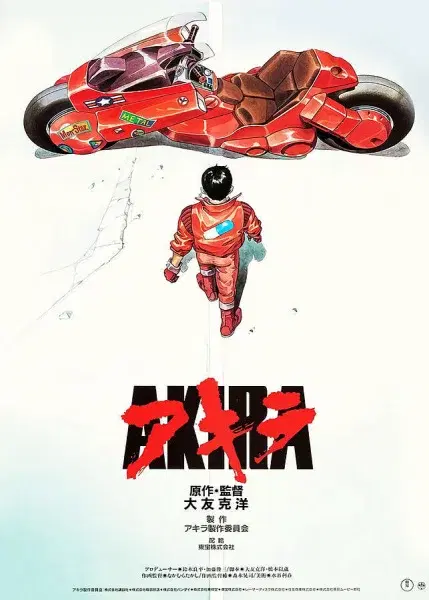
Watch Freedom if you want a compact sci-fi OVA that treats machinery, speed, and built environments as part of the storytelling rather than background decoration. It scratches a different itch than Redline: less psychedelic excess, more industrial lunar-city texture and hovercraft street-racing attitude. The Katsuhiro Ootomo connection also makes it worth seeking out for viewers who admire Akira’s obsession with vehicles, youth rebellion, and dense mechanical surfaces, even though Freedom uses a very different digital production style. At only seven episodes, it is ideal for fans who want a self-contained 2000s Sunrise experiment without committing to a long franchise, especially if the combination of space-colony paranoia, teen racers, Yoshihiro Ike’s score, and Hikaru Utada’s theme-song presence sounds like a time capsule worth opening.
Key Characters
- TTakeru(VA: Daisuke Namikawa)
Takeru stands out as the kind of restless racer-protagonist whose impulsiveness makes the OVA’s shift from speed culture to larger sci-fi inquiry feel emotionally continuous.
- KKazuma(VA: Shoutarou Morikubo)
Kazuma functions as Takeru’s more grounded companion, giving the teen cast a practical counterweight amid the series’ machinery-heavy momentum.
- BBismarck(VA: Kappei Yamaguchi)
Bismarck is remembered as the trio’s livelier presence, using comic timing and group chemistry to soften the hard-edged CG aesthetic.
- AAo(VA: Sanae Kobayashi)
Ao gives Freedom its quieter emotional pull, contrasting the boys’ racing energy with a more reflective sense of distance and longing.
What Makes It Stand Out
- 1
Freedom is a Sunrise-produced seven-episode OVA released across an unusually long window, from November 2006 to May 2008, which gives it the feel of a prestige-format digital experiment rather than a conventional TV series.
- 2
Katsuhiro Ootomo is credited on both character design and mechanical design, making the OVA especially notable for viewers interested in how the creator of Akira’s visual language translates into a full-CGI mid-2000s production.
- 3
The series is heavily associated with full CGI, a major point of distinction in AniList tagging, and its most memorable action identity comes from high-speed Tube Race staging rather than traditional hand-drawn sakuga spectacle.
- 4
The script credits pair Dai Satou with Yuuichi Nomura, placing Freedom in the orbit of writers comfortable with speculative societies, youth subcultures, and future-world systems rather than simple adventure plotting.
- 5
Yoshihiro Ike’s music and Hikaru Utada’s theme-song performance give the project a more premium audiovisual profile than many short OVAs of its era.
Fun Facts & Trivia
- Fun fact 1
- Freedom was part of the broader Freedom Project, a multimedia collaboration tied to Nissin Cup Noodles’ 35th anniversary, which helps explain its unusually polished promotional footprint for a seven-episode OVA.
- Fun fact 2
- Despite having only seven episodes, the release stretched over roughly eighteen months, from November 24, 2006 to May 23, 2008.
- Fun fact 3
- Katsuhiro Ootomo’s dual credit on character and mechanical design is one of the project’s biggest pedigree markers, especially because Freedom is not simply an Akira-like production but a separate 2000s CG showcase.
- Fun fact 4
- Shuuhei Morita directed the OVA before gaining wider international recognition for the Oscar-nominated animated short Possessions.
- Fun fact 5
- The show’s audience profile remains niche: it sits at a 7.35 MAL score from 8,279 votes, with MAL popularity around #4863 and only 39 AniList favourites.
Studios
- Sunrise
No community data yet. Be the first to add Freedom to your list!