Ergo Proxy
エルゴプラクシー
- Mystery
- Sci-Fi
- Suspense
- Adult Cast
- Psychological
- Episodes
- 23
- Duration
- 25 min per ep
- Aired
- Feb 25, 2006 to Aug 12, 2006
- Status
- Finished Airing
Synopsis
Romdo is a sealed, domed metropolis sheltering one of humanity’s last enclaves after an ancient ecological disaster left the outside world nearly unlivable. Daily life depends on AutoReivs—humanoid robots built to support and serve—but a strange affliction known as the Cogito Virus has begun spreading among them, awakening something like self-awareness and unsettling the city’s carefully maintained order. Re-l Mayer, granddaughter of Romdo’s ruler, is tasked with investigating the phenomenon alongside her AutoReiv companion, Iggy, only to find the case pulling her toward a far-reaching conspiracy and the darker truths beneath Romdo’s stability.
At the same time, Vincent Law, an AutoReIv specialist, is caught in a chain of surreal incidents that forces him to confront his own past. As their paths intersect with the child AutoReiv Pino, the group is drawn into Romdo’s deepest mysteries and the question of what the elusive “Proxies” truly are.
Otaku Consensus
Ergo Proxy remains one of mid-2000s cyberpunk anime’s most distinctive originals: Manglobe’s production leans on Shuukou Murase’s cold noir direction, Naoyuki Onda’s severe character art, and Dai Satou’s puzzle-box series composition rather than easy exposition. Its strongest stretch is the surreal, travel-driven middle section, where the show becomes less procedural and more philosophical science fiction; the common criticism is equally consistent, with viewers finding the opacity and uneven pacing exhilarating or alienating depending on their tolerance for confusion.
Why You Should Watch
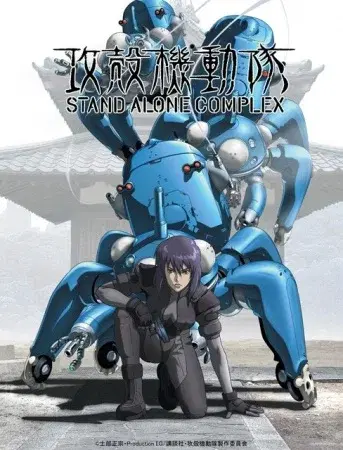
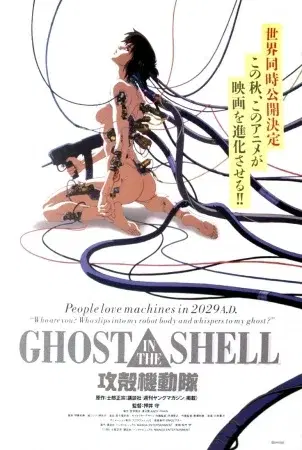
Watch Ergo Proxy if you want philosophical cyberpunk that refuses to sand down its edges: adult characters, institutional paranoia, artificial intelligence, amnesia, and post-apocalyptic worldbuilding presented as a mystery to be decoded rather than explained. It scratches the same itch as Ghost in the Shell for viewers who like identity and consciousness debates, but it trades police-procedural clarity for dream logic, gothic noir imagery, and a denser fugitive-road structure. If your ideal sci-fi anime asks questions before it offers answers, and if you would rather sit with ambiguity than be guided by constant exposition, this is one of the key 2000s titles to seek out. If you need clean answers every episode, its 23-episode slow burn will test you.
Key Characters
- RRe-l Mayer(VA: Rie Saitou)
Re-l stands out as a hard-edged female lead whose appeal comes from skepticism, class privilege, and investigative tunnel vision rather than conventional warmth.
- VVincent Law(VA: Kouji Yusa)
Vincent is the show’s most destabilizing presence, with fans often drawn to how his uncertainty turns the series’ identity questions into something personal rather than purely theoretical.
- PPino(VA: Akiko Yajima)
Pino became a fan-favorite counterweight to the bleak atmosphere, bringing childlike curiosity to a story otherwise dominated by repression, guilt, and control.
- IIggy(VA: Kiyomitsu Mizuuchi)
Iggy is memorable because his role as Re-l’s AutoReiv companion lets the series examine loyalty, dependence, and artificial personhood without turning him into a simple mascot.
What Makes It Stand Out
- 1
Ergo Proxy is an original 23-episode Manglobe anime, not a manga or light novel adaptation, which lets its mysteries and tonal pivots be built specifically for television pacing.
- 2
Dai Satou’s series composition favors delayed context and fragmented reveals, a choice that explains both the anime’s cult reputation and the frequent complaint that it can feel deliberately disorienting.
- 3
The show’s visual identity is unusually unified: Naoyuki Onda handled character design, Takashi Aoi served as art director, and Kiyomi Yamazaki’s color design reinforces the cold, desaturated noir atmosphere associated with Romdo and the wider wasteland.
- 4
Its soundtrack identity is unusually recognizable for a TV anime of the era, with MONORAL’s “Kiri” as the opening and Radiohead’s “Paranoid Android” as the ending theme, a licensing choice that directly echoes the series’ anxiety over artificial minds.
- 5
AniList’s high-percentage tags capture its hybrid appeal with unusual precision: Post-Apocalyptic at 95%, Philosophy at 93%, Dystopian at 90%, Cyberpunk at 87%, and Robots at 86%.
Fun Facts & Trivia
- Fun fact 1
- The title logo was credited separately to Noriyuki Jinguuji, a small production detail that reflects how carefully the anime packaged its identity as a sleek, industrial cyberpunk work.
- Fun fact 2
- Mechanical and world-design duties were spread across Kimitoshi Yamane, Takayuki Yanase, and Yoshinori Sayama, with Yutaka Izubuchi credited for design assistance, giving the series a heavier design bench than many TV originals.
- Fun fact 3
- The series aired from February 25 to August 12, 2006, placing it in the same era of TV anime experimentation that produced several darker, adult-oriented science-fiction titles.
- Fun fact 4
- Its reception profile is unusually stable for a divisive work: MyAnimeList lists it at 7.9 from 259,749 votes, while AniList records a 76/100 score and 4,998 favourites, showing that its cult audience extends beyond a small niche.
- Fun fact 5
- Contemporary and later critics consistently frame it as a recommendation for viewers who like hard cyberpunk philosophy, especially those interested in works adjacent to Ghost in the Shell and Do Androids Dream of Electric Sheep?
Studios
- Manglobe