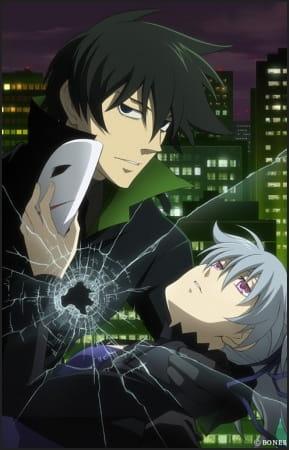
Darker than Black
Darker than BLACK -黒の契約者- (Darker than Black: Kuro no Keiyakusha)
- Action
- Mystery
- Super Power
- Episodes
- 25
- Duration
- 24 min per ep
- Aired
- Apr 6, 2007 to Sep 28, 2007
- Status
- Finished Airing
Synopsis
A decade after Heaven’s Gate surfaced in South America and Hell’s Gate appeared in Japan, the night sky has been replaced by an oppressive, unfamiliar canopy. Within these Gates, the rules of physics no longer apply—and their arrival brought forth Contractors: individuals who gain supernatural powers at the cost of their humanity.
In the Japanese city that has grown around Hell’s Gate, Section 4 Chief Misaki Kirihara pursues the elusive Contractor known as Hei. Feared in the underworld as the “Black Reaper,” Hei carries out covert assignments for a ruthless Syndicate, all while uncovering the hidden forces behind a conspiracy that could determine the fate of Contractors themselves. Conceived by Tensai Okamura, *Darker than Black* blends action and mystery into a shadow war where politics and justice mean little, and everything is decided in secrecy.
Otaku Consensus
Darker than Black endures because Tensai Okamura and Bones treat superpowers as the machinery of espionage: clipped missions, underworld politics, fluid close-quarters combat, and a noir mood reinforced by a fitting soundtrack. Critics and fans consistently praise its atmosphere and memorable cast, while the main complaint is that the final stretch feels constrained by the 25-episode TV format, leaving parts of the mystery denser and less cleanly resolved than its best case-file arcs.
Why You Should Watch
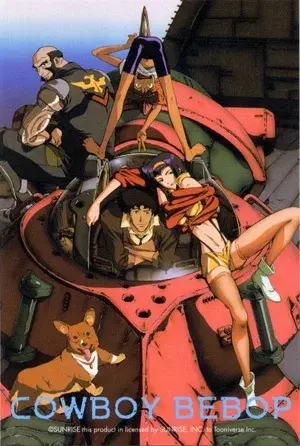
Watch Darker than Black if you want urban-fantasy espionage without tournament logic, exposition dumps, or heroic speeches. Its appeal is procedural: coded meetings, assassinations, police pressure, triad activity, and powers treated like dangerous tradecraft rather than spectacle. The series scratches a similar itch to Ghost in the Shell: Stand Alone Complex in its conspiracy structure, while its nocturnal cool and episodic melancholy sit near the darker corners of Cowboy Bebop. Bones gives the fights a sharp physical rhythm, but the show’s real hook is how every ability feels tied to a transaction, a habit, or a psychological wound. If you like anti-heroes, noir police pursuit, and mysteries that ask you to assemble the board piece by piece, this is one of the 2000s’ defining originals.
Key Characters
- HHei
Hei became a fan-favorite anti-hero because his reputation as the Black Reaper clashes with a carefully compartmentalized everyday persona, making him feel less like a power fantasy and more like a professional operative under constant self-erasure.
- MMisaki Kirihara
Misaki Kirihara stands out as the grounded police counterweight to the underworld cast, giving the series a procedural spine and a human standard of justice inside a setting built on secrecy.
What Makes It Stand Out
- 1
This is an original Bones production, not an adaptation, with Tensai Okamura credited as both original creator and director; that gives the first season a self-contained TV-anime identity rather than the pacing compromises of a manga catch-up project.
- 2
The show is structured heavily around episodic crime and espionage cases, a choice reflected in its AniList tags for Episodic, Crime, Police, Assassins, Espionage, Triads, Terrorism, and Conspiracy rather than a single linear battle-anime campaign.
- 3
Yuuji Iwahara provided the original character designs, while Takahiro Komori handled the animation character designs, creating a cast whose silhouettes and understated fashion fit the series’ noir-city aesthetic instead of flashy superhero iconography.
- 4
Bones’ action direction emphasizes short, efficient bursts of movement; contemporary reviews singled out the combat as fluid, which matches the show’s preference for sudden takedowns and mission pressure over extended power demonstrations.
- 5
The soundtrack is repeatedly cited in reviews as part of the package that makes the series work, supporting the show’s nighttime atmosphere and spy-thriller pacing rather than simply underlining action scenes.
Fun Facts & Trivia
- Fun fact 1
- Darker than Black aired for 25 episodes from April 6 to September 28, 2007, placing it in the mid-2000s wave of original late-night anime where studios could build genre identity around atmosphere as much as source recognition.
- Fun fact 2
- Its MAL profile shows a strong long-tail reputation: a score of 8.04 from 455,393 votes, a popularity rank of #189, and an overall rank of #680, indicating a show that remains widely sampled years after broadcast even if critical scoring is not at the absolute top tier.
- Fun fact 3
- AniList users tag it most strongly as Super Power at 96%, but the next cluster is Anti-Hero, Noir, Crime, Urban, Assassins, Conspiracy, and Terrorism, which explains why the series is often discussed more as a shadow-war thriller than a conventional powers anime.
- Fun fact 4
- The production’s background identity was built by a large visual-design team: Takashi Aoi served as art director, with Eiji Taguchi, Tomoaki Okada, and Masahiro Satou credited for art design, plus Nobuko Mizuta on color design.
- Fun fact 5
- Later discussion of the franchise often centers on the second season, Gemini of the Meteor, and the OVAs; the web commentary supplied here notes that the sequel adds depth and has even inspired unconventional fan watch-order debates.
Studios
- Bones