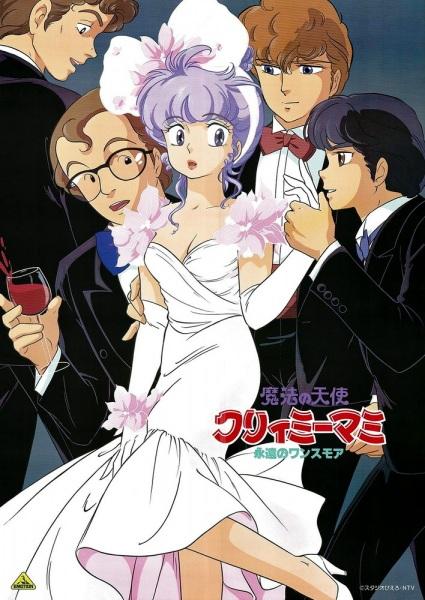
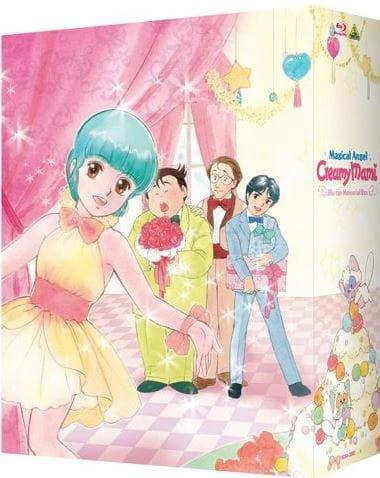
Magical Angel Creamy Mami
魔法の天使 クリィミーマミ (Mahou no Tenshi Creamy Mami)
- Comedy
- Romance
- Sci-Fi
- Idols (Female)
- Mahou Shoujo
- School
- Episodes
- 52
- Duration
- 24 min per ep
- Aired
- Jul 1, 1983 to Jun 29, 1984
- Status
- Finished Airing
Synopsis
In a charming blend of magic and everyday life, a young girl named Yuu finds herself transformed when she encounters a mysterious spaceship. Granted the extraordinary ability to wield magic for a year, she is accompanied by two feline companions, Poji and Nega, who serve as her guides. Embracing her newfound powers, Yuu becomes the enchanting idol, Creamy Mami, navigating the challenges of a dual life filled with performances, school responsibilities, and family commitments at her parents' crepe shop.
As she juggles her ambitions, Yuu also faces the trials of friendship and young love, particularly in her efforts to capture the heart of her childhood friend, Toshio. Along the way, she must confront various adversaries, including aliens and other threats, all while maintaining her balance between the magical and the mundane. With a delightful mix of comedy, romance, and the allure of idol culture, her journey is a captivating exploration of youth and self-discovery.
Otaku Consensus
Magical Angel Creamy Mami holds its reputation because Studio Pierrot’s first magical-girl production treats idol fantasy as everyday routine rather than battle spectacle, with Osamu Kobayashi’s chief direction and Kazunori Itou’s series composition giving the 52-episode run a breezy, character-first rhythm. Fans and critics consistently single out Akemi Takada’s 1980s character appeal, Kouji Makaino’s sticky idol-pop music, and the show’s unusually comfortable blend of comedy, romance, work life, school life, aliens, and stage performance. The recurring criticism is real: viewers looking for escalating stakes or tightly serialized conflict may find its episodic, low-pressure pacing too gentle.
Why You Should Watch
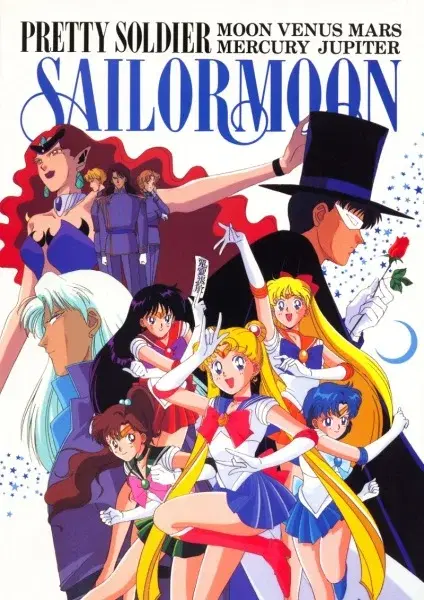
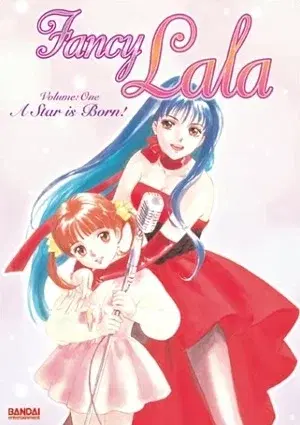
Watch Magical Angel Creamy Mami if you want the roots of idol magical-girl anime without the combat-team formula that later defined Sailor Moon. It scratches the same transformation-fantasy itch as Fancy Lala, but with a stronger 1980s showbiz texture: stage numbers, dancing, agency pressure, school comedy, crepe-shop domesticity, and romantic awkwardness all sharing space with oddball sci-fi intrusions. The appeal is not in a villain ladder or lore dump; it is in watching a full-year TV series use magic as a lens for performance, self-image, and the uncomfortable gap between being a kid and being treated like a celebrity. If you like early mahou shoujo, idol history, catchy insert songs, and soft episodic storytelling, this is foundational viewing.
Key Characters
- YYuu Morisawa(VA: Takako Oota)
Yuu stands out among early magical-girl leads because her tomboyish normal self and polished idol persona create a built-in performance of identity rather than a simple power upgrade.
- TToshio Ootomo(VA: Yuu Mizushima)
Toshio gives the romance its sharper irony, functioning as both childhood-friend anchor and the audience’s window into the series’ love-triangle tension.
- NNega(VA: Kaneta Kimotsuki)
Nega is one half of the feline guide duo, adding a dry counterweight to the show’s sparkle and keeping the magical rules from feeling purely decorative.
- PPosi(VA: Yuuko Mita)
Posi balances Nega with a warmer guide presence, helping make the series’ alien-magic setup feel more like domestic companionship than distant mythology.
What Makes It Stand Out
- 1
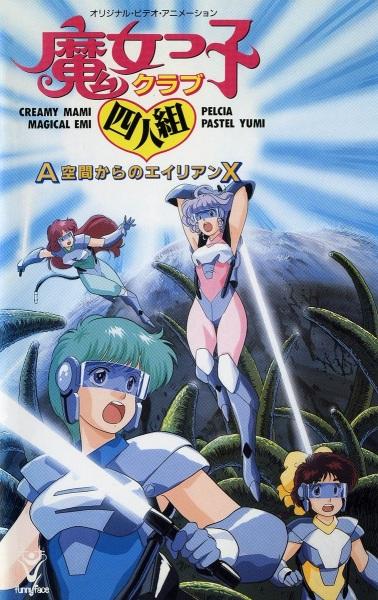
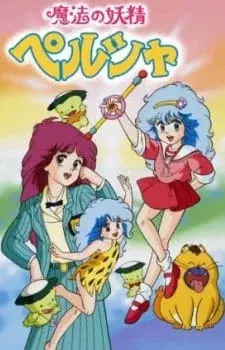
This was Studio Pierrot’s first magical-girl anime, preceding the studio’s later line of genre entries such as Magical Fairy Persia, Magical Star Magical Emi, Magical Idol Pastel Yumi, and Magical Stage Fancy Lala.
- 2
The series is an original TV project shaped by Kazunori Itou as both original planner and series composer, while a three-volume manga by Itou and artist Yuuko Kitagawa was released during the anime’s original run.
- 3
Kouji Makaino’s music is central to the viewing experience; fan commentary repeatedly points to the songs as unusually catchy, which matters because the idol material is not incidental decoration but one of the show’s main engines.
- 4
Akemi Takada’s character designs give the show much of its enduring collector and fan-art appeal, preserving a soft, fashion-conscious 1980s look distinct from later action-oriented magical-girl aesthetics.
- 5
Its structure leans heavily episodic across 52 episodes, and the AniList tag spread reflects that breadth: Idol at 100%, Magic at 95%, Henshin at 90%, Dancing at 79%, Aliens at 70%, Love Triangle at 70%, and Work at 68%.
Fun Facts & Trivia
- Fun fact 1
- Magical Angel Creamy Mami aired for almost exactly one year, from July 1, 1983 to June 29, 1984, totaling 52 TV episodes.
- Fun fact 2
- The production’s key visual identity involved multiple specialist roles: Akemi Takada handled character design, Hideki Sugisawa designed the title logo, and Shichirou Kobayashi served as art director.
- Fun fact 3
- The anime later received four OVA adaptations and also appeared in other Studio Pierrot special presentations, extending its presence beyond the original TV broadcast.
- Fun fact 4
- Its current database footprint shows cult rather than mainstream status: MAL lists a 7.21 score from 4,911 votes, while AniList records a 69/100 score and 159 favourites.
- Fun fact 5
- A contemporary fan review described the premise as resembling a Hannah Montana-style musical alter ego filtered through alien-granted magic, which captures how unusual its idol, sci-fi, and mahou shoujo combination still feels.
Studios
- Studio Pierrot