Looking for the Full Moon
満月をさがして (Full Moon wo Sagashite)
- Comedy
- Drama
- Romance
- Supernatural
- Music
- Showbiz
- Episodes
- 52
- Duration
- 24 min per ep
- Aired
- Apr 6, 2002 to Mar 29, 2003
- Status
- Finished Airing
Synopsis
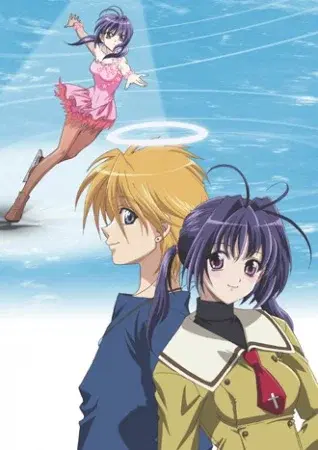
Two years after her closest friend Eichi Sakurai left for America, Mitsuki Kouyama still clings to the promise they made: he would chase his dream of becoming an astronomer, and she would become a professional singer. Unable to reach him directly, she pours her feelings into music, hoping her voice can travel across the distance and find him like the glow of a full moon.
That dream comes with painful obstacles. Mitsuki is living with throat cancer, leaving her voice faint and singing difficult. Her grandmother—who despises music—pushes her toward surgery, but Mitsuki refuses, fearing it could take away her ability to sing. When two shinigami, Meroko Yui and Takuto Kira, appear and tell her she has only a year left to live, Mitsuki throws herself into the world of show business, determined to debut as a singer with their help before time runs out.
Otaku Consensus
Toshiyuki Katou’s direction turns a seemingly juvenile magical-idol setup into disciplined shoujo melodrama, with the late-series emotional payoff, musical identity, and evolving central relationships earning especially strong praise. Studio Deen’s adaptation makes substantial changes to Arina Tanemura’s manga yet often succeeds on its own terms; its chief liability is a padded, slow-starting middle stretch, compounded for some viewers by the contrivance of Mitsuki’s age-changing transformation.
Why You Should Watch
If you want an idol anime driven by emotional consequence rather than competition rankings, Full Moon wo Sagashite is an unusually sincere choice. Its 52-episode runway lets professional setbacks, rehearsals, friendships, and grief accumulate instead of resolving within a single cour, while recurring songs gain new meaning as Mitsuki changes. It scratches the earnest shoujo itch of the 2001 Fruits Basket and anticipates Oshi no Ko’s interest in entertainment-industry pressure, but without the latter’s cynicism or thriller mechanics. The bright Studio Deen presentation also makes the darker material approachable without trivializing it. Come prepared for early episodic padding and broad comedy; stay for the increasingly connected character histories, sharp tonal pivots, and a final stretch whose impact depends on the time already spent with the cast.
Key Characters
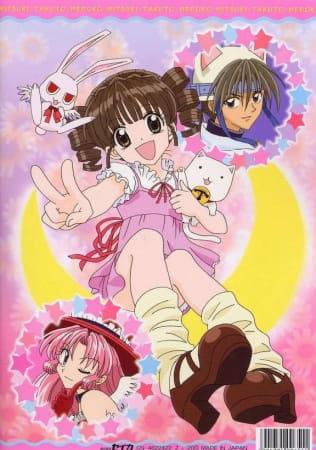
- MMitsuki Kouyama(VA: Myco)
Mitsuki’s appeal lies in the tension between her polished stage identity and the stubborn, emotionally transparent child underneath it, a contrast Myco carries through both dialogue and song.
- TTakuto Kira(VA: Yakkun Sakurazuka)
Takuto is the prickly counterweight to Mitsuki’s optimism, with his guarded behavior and gradually deepening investment making him central to the series’ strongest relationship writing.
- MMeroko Yui(VA: Chieko Honda)
Meroko’s rabbit-eared theatricality supplies much of the early comedy, but her volatility and need for connection keep her from becoming a disposable mascot character.
What Makes It Stand Out
- 1
The series commits 52 episodes to a hybrid structure: episodic show-business hurdles gradually feed into a serialized supernatural drama, allowing early details and relationships to acquire greater weight in the final stretch.
- 2
Mitsuki’s transformation into an older performer adapts magical-girl henshin conventions to the workplace of the idol industry rather than using them primarily for combat.
- 3
Myco serves as both Mitsuki’s Japanese voice actor and her singing voice, giving the character’s spoken vulnerability and stage performances an unusual degree of continuity.
- 4
Studio Deen pairs Yuka Kudou’s rounded shoujo character designs with Shinji Matsumoto’s bright color design, creating the deliberately cheerful surface that makes the story’s darker tonal turns more abrupt.
- 5
The anime is not a panel-for-panel rendering of Arina Tanemura’s manga; its substantial adaptation changes have divided source readers, while several reviewers consider the television version equally strong or stronger.
Fun Facts & Trivia
- Fun fact 1
- Full Moon wo Sagashite aired from April 6, 2002, to March 29, 2003, sustaining a nearly year-long television run rather than the one- or two-cour format common to later idol anime.
- Fun fact 2
- Arina Tanemura created the original manga, while the television narrative was organized by series composer Hiro Masaki under director Toshiyuki Katou.
- Fun fact 3
- The production’s audiovisual leads included art director Nobuto Sakamoto, photography director Kouji Aoki, editor Seiji Morita, and sound director Takuya Hiramitsu.
- Fun fact 4
- Its reception remains stronger among committed viewers than its modest visibility suggests: it holds a 7.94 MyAnimeList score from 50,183 votes despite a popularity rank of only #2170, alongside 683 AniList favourites.
Studios
- Studio Deen