K-ON!
けいおん! (K-On!)
- Comedy
- CGDCT
- Music
- School
- Episodes
- 13
- Duration
- 24 min per ep
- Aired
- Apr 3, 2009 to Jun 26, 2009
- Status
- Finished Airing
Synopsis
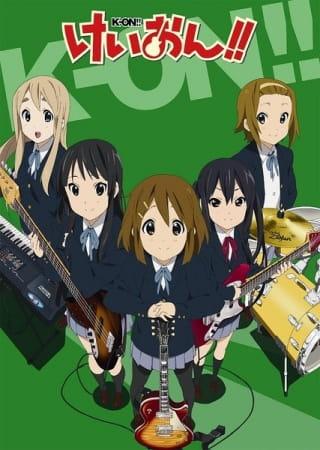
Starting her first year of high school, Yui Hirasawa sets out to join a club but can’t decide where she belongs. When she wanders into the Light Music Club, she mistakes it for something far simpler and signs up on a whim—only to panic when she realizes it involves real instruments, and she doesn’t know how to play.
The club is also on the verge of being shut down for lack of members, so the remaining girls do everything they can to keep Yui from leaving, offering snacks and an easygoing atmosphere to win her over. Even with her doubts, a performance from the group ignites Yui’s interest, drawing her into their circle and turning after-school hours into a mix of casual practice, friendship, and shared time in the clubroom.
Otaku Consensus
K-ON! earns its reputation less through band-drama machinery than through Naoko Yamada’s patient direction, Kyoto Animation’s lively character acting, and Reiko Yoshida’s relaxed episodic pacing, which turn tiny clubroom behaviors into the main event. Its adaptation became a defining late-2000s CGDCT and moe touchstone, but the most persistent criticism is genuine: viewers looking for plot pressure, technical music focus, or surprise may find its tea-and-sweets rhythm fluffy, predictable, or boring.
Why You Should Watch
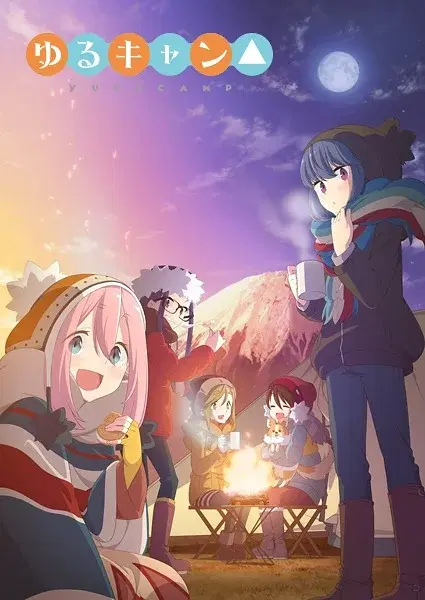
Watch K-ON! if you want a school comedy where the emotional payoff comes from timing, habits, and group chemistry rather than tournaments, romance triangles, or heavy melodrama. It scratches a similar itch to Lucky Star’s hangout humor and Yuru Camp’s low-stress iyashikei comfort, but with a pop-rock club identity and Kyoto Animation’s unusually attentive body language. The appeal is in how the show makes practice avoidance, snack rituals, and minor personality clashes feel like character writing instead of filler. If you enjoy anime that lets its cast become familiar through repetition, recurring jokes, and small shifts in confidence, this is one of the genre’s key reference points. If you need constant narrative escalation, it will test your patience.
Key Characters
- YYui Hirasawa
Yui is the show’s comic spark, remembered for turning inexperience and absent-minded enthusiasm into a form of social glue rather than a simple ditz routine.
- MMio Akiyama
Mio functions as the anxious, disciplined counterweight whose reactions helped make her one of the series’ most visible fan favorites.
- RRitsu Tainaka
Ritsu brings the club’s restless troublemaker energy, giving the comedy its push-and-pull whenever the group drifts too far into comfort.
- TTsumugi Kotobuki
Tsumugi’s keyboardist role is inseparable from the tea-and-sweets ritual that became one of K-ON!’s defining images in anime fandom.
What Makes It Stand Out
- 1
Kyoto Animation’s production favors expressive micro-acting over spectacle: posture shifts, pauses, and reaction cuts carry much of the comedy. That approach is a major reason the series is discussed as more than a simple four-panel gag adaptation.
- 2
Naoko Yamada’s direction makes the clubroom rhythm the dramatic center, not a waiting room between concerts. The result is a music anime where practice, food, and idle conversation are treated as equally important texture.
- 3
Reiko Yoshida’s series composition leans into an episodic school-year structure across 13 episodes. AniList’s high tags for Episodic, Iyashikei, Food, and Rock Music capture the show’s unusual balance of band identity and low-pressure hangout comedy.
- 4
Yukiko Horiguchi’s rounded character designs became strongly associated with late-2000s moe and CGDCT aesthetics. Multiple reviews frame K-ON! as one of the first titles people think of when the genre is mentioned.
- 5
Its reception profile is unusually durable for a low-conflict school comedy: a 7.87 MAL score from over 613,000 votes, MAL popularity rank #158, AniList score 78/100, and 12,835 AniList favourites. The same visibility also made it a target for viewers hostile to the genre’s perceived lack of plot.
Fun Facts & Trivia
- Fun fact 1
- K-ON! adapts Kakifly’s manga, with Kyoto Animation handling the anime production and Naoko Yamada directing. The core staff also includes Reiko Yoshida on series composition and Yukiko Horiguchi on character design.
- Fun fact 2
- The first season aired from April 3, 2009 to June 26, 2009 and ran for 13 episodes. Its short seasonal format helped concentrate the show around repeatable clubroom dynamics rather than a long-form band competition arc.
- Fun fact 3
- AniList’s tag distribution is revealing: Cute Girls Doing Cute Things and School Club both sit at 96%, Band at 93%, Rock Music at 81%, Iyashikei at 82%, and Food at 65%. That mix explains why fans and critics often describe it as both a band show and a tea-and-cake comfort anime.
- Fun fact 4
- The visual side credits Seiki Tamura as art director, Akiyo Takeda as color designer, and Kana Miyata in color design assistance, with Takeshi Shinohara, Yoshimi Nakajima, and Akihiro Sugimura credited in assistance roles. The staff list reflects Kyoto Animation’s emphasis on controlled, polished in-house presentation.
- Fun fact 5
- Review discourse around the series is polarized in a very specific way: positive reactions praise its sweetness, lively animation, and character interaction, while negative reactions often call it boring, predictable, or too light. That divide helped make K-ON! a shorthand title in debates over moe and slice-of-life anime.
Studios
- Kyoto Animation