Sailor Moon
美少女戦士セーラームーン (Bishoujo Senshi Sailor Moon)
- Romance
- Mahou Shoujo
- Episodes
- 46
- Duration
- 24 min per ep
- Aired
- Mar 7, 1992 to Feb 27, 1993
- Status
- Finished Airing
Synopsis
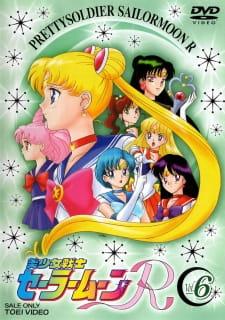
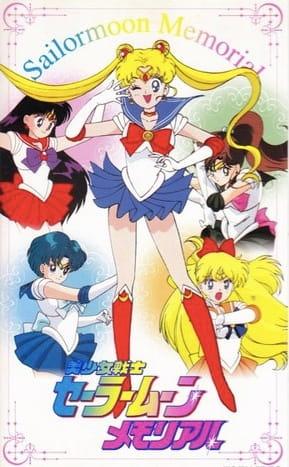
Usagi Tsukino is a clumsy, tearful underachiever whose ordinary schooldays change the moment she rescues a black cat marked with a crescent moon. The cat, Luna, soon reveals that their encounter was meant to be: Usagi is fated to become Sailor Moon, a guardian with the power to protect Earth. With a transformation brooch in hand, she’s drawn into battles against energy-draining monsters unleashed by Queen Beryl and the Dark Kingdom.
As the danger grows, Usagi’s responsibilities extend beyond learning how to fight. She must locate the missing princess of the Moon Kingdom, gather the other Sailor Guardians, and uncover the Legendary Silver Crystal before the planet is pushed toward ruin.
Otaku Consensus
Sailor Moon earns its classic status because Toei Animation’s 1992 television adaptation, guided by Junichi Satou’s comic-romantic direction and Takanori Arisawa’s instantly mood-setting music, turns a weekly henshin formula into a durable engine for slapstick, friendship, and melodrama. Its most praised material is the late-season payoff after the guardian team has fully settled into place; its most common and fair criticism is that the first half can feel slow, repetitive, and “Saturday morning cartoon”-like to viewers coming in without nostalgia.
Why You Should Watch
Watch this first season if you want magical-girl television as a comfort rhythm: school comedy, henshin ritual, theatrical villains, and sincere adolescent feeling, without the self-conscious darkness that later franchise revivals often chase. It scratches the same itch as Cardcaptor Sakura’s everyday magic and the team-color camaraderie that Pretty Cure would later make industrial, but with rougher 1992 TV texture and more sitcom bickering. The pleasure is cumulative: 46 episodes give the guardians room to feel like girls with crushes, tempers, hobbies, and terrible comic timing before they are icons. Viewers who need tight serialization may bounce off the early stretch; viewers who enjoy a monster-of-the-week format with an emotional endgame will understand why this season still has 4,555 AniList favourites.
Key Characters
- MMinako Aino(VA: Rica Fukami)
Minako is remembered for adding showbiz sparkle and a slightly more seasoned magical-girl energy to the team dynamic, giving the ensemble a different flavor from its more impulsive personalities.
- AArtemis(VA: Yasuhiro Takato)
Artemis works as the lighter feline counterweight in the cast, bringing a more playful adviser presence to a show that frequently turns guidance into comedy.
- MMamoru Chiba(VA: Toru Furuya)
Mamoru is pure early-1990s shoujo romantic cool, and Toru Furuya’s performance gives him the polished mystery that fans either swoon over or affectionately tease.
- RRei Hino(VA: Michie Tomizawa)
Rei gives the group its sharpest tongue and most combative rhythm, making her a favorite for viewers who like magical-girl teams with internal friction rather than constant harmony.
What Makes It Stand Out
- 1
Toei Animation structured the season as a 46-episode weekly broadcast from March 1992 to February 1993, which is why it has both the charm and the drag of long-form early-1990s TV anime. The monster-of-the-week rhythm is not incidental; it is the format that lets comedy, romance, and team chemistry accumulate gradually.
- 2
Director Junichi Satou’s handling of tone is central to the show’s durability: slapstick crying fits, ritualized transformations, romantic staging, and sudden emotional sincerity all sit inside the same episode grammar. That tonal elasticity is why reviews often describe the season as both lightweight comfort viewing and surprisingly affecting.
- 3
Kazuko Tadano’s character designs are a major part of the franchise’s visual memory, especially the clean silhouettes and immediately readable magical-girl styling. The designs helped make the cast recognizable far beyond the details of any single episode.
- 4
Takanori Arisawa’s music, with Makiko Kayahara credited for music selection and Apple Pie credited for insert song performance, gives the season a distinct audio identity rather than treating battles, comedy, and romance as interchangeable TV filler.
- 5
Its reception profile is unusually stable for an older, episodic shoujo title: it holds a 7.76 MAL score from more than 203,000 votes and a 76/100 AniList score, while user reviews still split sharply over whether its slow early pacing is cozy or tedious.
Fun Facts & Trivia
- Fun fact 1
- The first season aired for almost a full year, running from March 7, 1992 to February 27, 1993, and finished at 46 episodes.
- Fun fact 2
- The core production pairs original creator Naoko Takeuchi with Toei Animation, director Junichi Satou, and character designer Kazuko Tadano, a staff combination that defined the anime’s identity separately from the manga page.
- Fun fact 3
- The credits list both Yasuhiro Yoshikawa and Youko Tsuru for editing, while Yasuyuki Konno is credited for sound effects, highlighting how much of the show’s rhythm depends on timing, reaction gags, and repeated transformation/action beats.
- Fun fact 4
- The music department is more layered than a single composer credit: Takanori Arisawa composed the score, Makiko Kayahara handled music selection, and Apple Pie is credited for insert song performance.
- Fun fact 5
- Retrospectives on the franchise often separate the original Japanese version from the localized dub experience; one fan-review survey called the original stronger while still defending the dub as a valid entry point, and noted the unusually frustrating history of later home-video availability.
Studios
- Toei Animation