Eureka Seven
交響詩篇エウレカセブン (Koukyoushihen Eureka Seven)
- Adventure
- Drama
- Romance
- Sci-Fi
- Mecha
- Episodes
- 50
- Duration
- 24 min per ep
- Aired
- Apr 17, 2005 to Apr 2, 2006
- Status
- Finished Airing
Synopsis
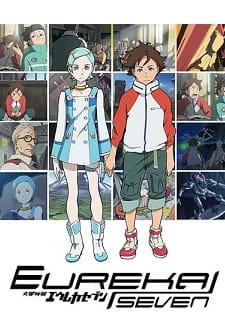
In the quiet, out-of-the-way town of Bellforest, 14-year-old Renton Thurston dreams of escaping his ordinary life to run with the mercenary crew Gekkostate. With his grandfather urging him toward a practical future as a mechanic and the shadow of his late father’s reputation hanging over him, Renton’s main outlet is riding the Trapar wave particles that drift through the sky—an aerial thrill akin to surfing.
That routine is shattered when a mysterious craft crashes into his garage: a Light Finding Operation mecha built to ride the Trapar waves, the Nirvash typeZERO. Its pilot, a girl named Eureka and a member of Gekkostate, asks for repairs—an encounter that pulls Renton into Gekkostate’s orbit and sends him into the air as Eureka’s co-pilot.
Otaku Consensus
Bones’ Eureka Seven remains one of 2000s TV mecha’s stronger original productions, with Tomoki Kyouda’s direction and Dai Satou’s series composition turning a 50-episode run into a blend of aerial action, romance, environmental anxiety, and military politics that still sustains an 8.05 MAL score from over 189,000 votes. Its most reliable strengths are emotional accumulation and visual identity; its real weakness is unevenness, with critics repeatedly pointing to irritating stretches and missed opportunities inside the otherwise ambitious long-form structure.
Why You Should Watch
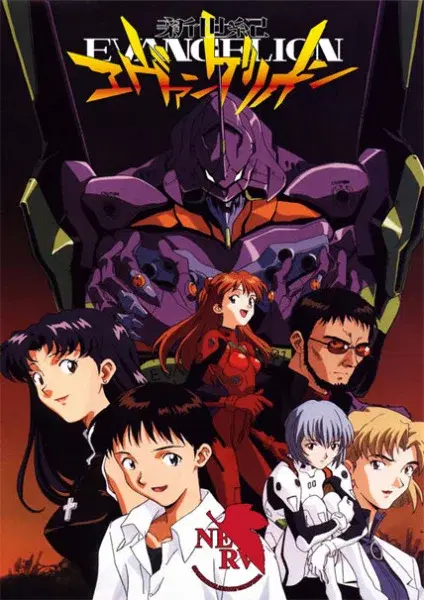
Watch Eureka Seven if you want mecha that treats adolescence, war, romance, ecology, and found family as one tangled system rather than separate genre boxes. It scratches part of the same itch as Evangelion’s emotionally exposed robot drama and Code Geass’s military-politics spectacle, but trades apocalyptic claustrophobia and chessboard plotting for sky-surfing movement, cohabitation dynamics, and a warmer long-haul ensemble rhythm. The appeal is not just the robots; it is the way Bones makes flight feel like culture, sport, rebellion, and combat at once. Viewers who like their science fiction philosophical without becoming abstract, romantic without becoming weightless, and political without losing character intimacy will get the most from it.
Key Characters
- RRenton Thurston
Renton is memorable because the series lets him be a convincingly immature 14-year-old, making his coming-of-age arc feel earned through embarrassment, longing, idealism, and repeated recalibration rather than instant hero competence.
- EEureka
Eureka stands out as a mecha heroine whose presence is defined as much by emotional distance, combat capability, and questions of identity as by the romance and parenthood themes surrounding her.
What Makes It Stand Out
- 1
Eureka Seven is a 50-episode original TV anime from Bones, not a short seasonal adaptation, which gives its romance, crew dynamics, political escalation, and environmental mythology room to develop through accumulation rather than compression.
- 2
The series’ mecha identity is unusually hybrid: AniList tags it as both Super Robot and Real Robot at high confidence, matching a show where iconic, expressive machines still operate inside military systems, maintenance culture, and tactical conflict.
- 3
Its aerial action is built around Trapar wave riding, giving the robot choreography a surf and board-sport grammar instead of standard ground-based duels or space dogfights; that visual hook is central enough that Surfing is one of its highest AniList tags.
- 4
The writing profile is unusually dense for a shounen-positioned mecha adventure: Environmental, Coming of Age, Politics, Found Family, Philosophy, War, Military, and Parenthood all rank as major AniList tags, which reflects how many thematic registers the show keeps active.
- 5
The design bench is unusually stacked: Kenichi Yoshida handled character design, while Shingo Takeba, Takayuki Yanase, Shigeto Koyama, and Yutaka Izubuchi are all credited for design works, with Susumu Imaishi listed under design assistance.
Fun Facts & Trivia
- Fun fact 1
- The show aired almost exactly one year, from April 17, 2005 to April 2, 2006, a broadcast footprint that reflects the older 50-episode TV anime model rather than the modern one-cour or split-cour standard.
- Fun fact 2
- Its reception differs slightly by database: MAL lists it at 8.05/10 with 189,066 votes, rank #668, and popularity #577, while AniList records a 78/100 score and 2,455 favourites.
- Fun fact 3
- Tomoki Kyouda directed the series, Dai Satou handled series composition, and Megumi Shimizu is credited for literary arts, indicating a production structure with dedicated attention to long-form narrative architecture.
- Fun fact 4
- Eiji Nakada is credited as main animator, a notable role on a series whose appeal depends heavily on keeping character acting and mecha motion coherent across a full-year run.
- Fun fact 5
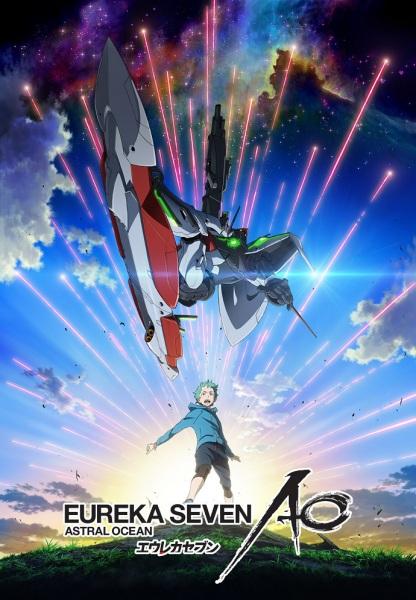
- Later discussion of Eureka Seven AO frequently frames it as something best approached after the original, reinforcing how much the 2005 series functions as the franchise’s essential foundation rather than just its first installment.
Studios
- Bones
No community data yet. Be the first to add Eureka Seven to your list!