Cross Ange: Rondo of Angel and Dragon
クロスアンジュ 天使と竜の輪舞〈ロンド〉 (Cross Ange: Tenshi to Ryuu no Rondo)
- Fantasy
- Sci-Fi
- Gore
- Mecha
- Military
- Episodes
- 25
- Duration
- 23 min per ep
- Aired
- Oct 5, 2014 to Mar 29, 2015
- Status
- Finished Airing
Synopsis
Angelise Ikaruga Misurugi, first princess of the Misurugi Empire, has grown up in a world transformed by “Mana,” a revolutionary power that bends light and has ushered in an era of prosperity where war and pollution are largely things of the past. Yet that peace comes with a cruel divide: people born without Mana are branded “Norma,” treated as dangerous outcasts, and relentlessly persecuted—an order Angelise has long accepted.
On her sixteenth birthday, a stunning discovery reveals Angelise herself is a Norma. Stripped of her status amid public fury, she is sent to Arzenal, an isolated military facility where Normas are conscripted and trained to fight. There, the former princess is forced into a brutal new reality, learning to pilot Paramail mecha against massive, destructive creatures known as DRAGONs—until unsettling truths about these enemies begin to surface.
Otaku Consensus
Cross Ange earns its cult reputation through Sunrise’s aggressive mecha staging, Yoshiharu Ashino’s fast cliffhanger pacing, and a 25-episode original-TV structure that keeps escalating instead of settling into routine monster fights. The verdict remains sharply split: its smooth battle animation and outrageous genre pivots are real strengths, but the most persistent criticism is its exploitation-heavy handling of nudity, gore, cruelty, and intentionally abrasive characters.
Why You Should Watch
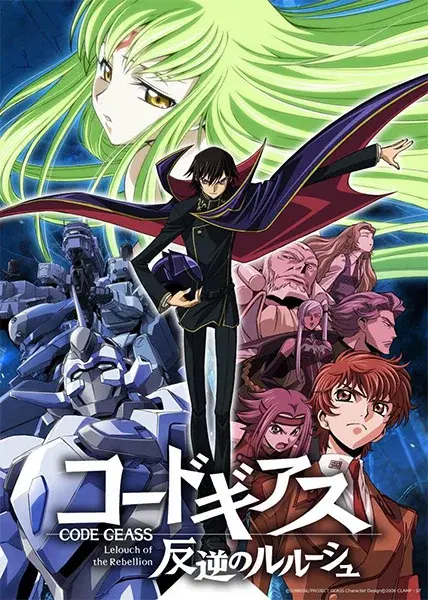
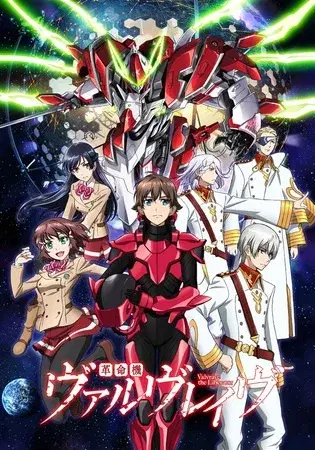
Watch Cross Ange if you want Sunrise mecha melodrama with the restraint removed: military hardware, dragons, gun-heavy aerial combat, royal-class soap opera, and a heroine whose likability is never treated as a requirement. It scratches a neighboring itch to Code Geass and Valvrave the Liberator, but with more grindhouse sexuality, harsher humiliation, and a primarily female combat unit at the center of the chaos. Viewers who enjoy cleanly noble protagonists or tasteful dystopian allegory should steer clear; the appeal here is seeing a polished studio machine embrace trash-opera extremes. Its best audience is the fan who can separate discomfort from dullness and wants a sci-fi/fantasy mecha series that is never content to be merely competent.
Key Characters
- AAngelise Ikaruga Misurugi
Ange is remembered less as a conventionally sympathetic lead than as a deliberately abrasive protagonist whose hard-earned growth became one of the show’s biggest points of debate.
- HHilda
Hilda stands out in fan discussion as one of the series’ sharper examples of how Arzenal’s female cast weaponizes loyalty, resentment, and survival instinct.
- SSalia
Salia gives the ensemble its strict military-counterpart energy, making command, jealousy, and discipline feel personal rather than procedural.
- TTusk
Tusk functions as the show’s unapologetic pulp-romance pressure valve, a character whose presence pushes Cross Ange further into its knowingly excessive register.
What Makes It Stand Out
- 1
Sunrise produced Cross Ange as a 25-episode original TV anime, not as a straightforward manga or light-novel adaptation, which helps explain its willingness to shift tone from military sci-fi to parody-tinged melodrama.
- 2
The action identity is unusually hybrid: AniList tags it as both Super Robot and Real Robot, matching the way the series combines named mechanical hardware, guns, squad tactics, and outsized fantasy threats.
- 3
Its reputation is inseparable from excess: AniList’s high tags for Nudity, Gore, Dystopian, War, Yuri, Bisexual, Parody, and Meta point to a series built around provocation rather than a single clean genre lane.
- 4
Multiple reviews singled out the battle animation as a genuine strength, especially compared with complaints about the harsh character writing and polarizing creature/mecha aesthetics.
- 5
The cast structure is statistically distinctive for mainstream mecha: AniList marks Female Protagonist at 85% and Primarily Female Cast at 83%, putting women at the center of both combat drama and interpersonal conflict.
Fun Facts & Trivia
- Fun fact 1
- Cross Ange aired from October 5, 2014 to March 29, 2015, completing a two-cour run of 25 episodes during a period when original mecha TV anime were increasingly risky commercial bets.
- Fun fact 2
- The production separated design duties across several specialists: Yuusuke Matsuo handled original character design, Sayaka Ono handled character design, Tatsuya Suzuki handled sub-character design, and Fumihilo Katagai, Takashi Miyamoto, and Kenji Teraoka all contributed mechanical design.
- Fun fact 3
- Its reception numbers show the same split reflected in reviews: MyAnimeList lists it at 7.38 from 90,610 votes, while AniList records a lower 69/100 but still over 1,000 favorites.
- Fun fact 4
- The show’s critical footprint is unusually polarized for a mid-7 MAL title, with published reviews calling it both worth watching for its dazzling moments and openly condemning it as exploitation.
- Fun fact 5
- Prop design is credited separately to Juri Toida and Yoshiharu Ishihara, a production detail that fits a series balancing military equipment, mecha interfaces, and fantasy-world visual texture.
Studios
- Sunrise