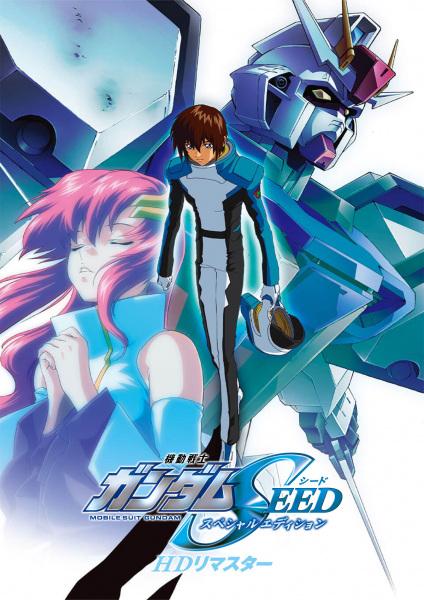
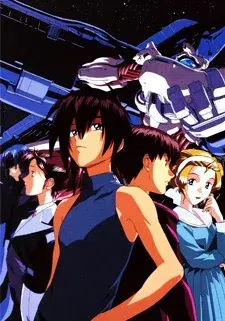
Mobile Suit Gundam SEED
機動戦士ガンダムSEED (Kidou Senshi Gundam SEED)
- Award Winning
- Drama
- Romance
- Sci-Fi
- Mecha
- Military
- Space
- Episodes
- 50
- Duration
- 24 min per ep
- Aired
- Oct 5, 2002 to Sep 27, 2003
- Status
- Finished Airing
Synopsis
In Cosmic Era 0071, the neutral space colony Heliopolis tries to stay out of a widening conflict between Coordinators—humans genetically adjusted before birth—and Naturals, who remain unaltered on Earth. Longstanding resentment has pushed many Coordinators into space, where the war now threatens even those who want no part in it.
Kira Yamato, a Coordinator and university student living on Heliopolis, is caught in the chaos when ZAFT forces strike the colony to seize five cutting-edge mobile suits known as Gundams. Four are taken, but Kira ends up piloting the remaining unit, the Strike, and escapes the attack. Alongside his friends, he is drawn into the Earth Alliance’s battles aboard the warship Archangel, facing the cost of survival as the fighting escalates.
Otaku Consensus
Mitsuo Fukuda’s direction turns familiar Gundam architecture into emotionally forceful weekly drama, with the Kira–Athrun relationship and romance-heavy ensemble making its moral conflicts feel personal rather than theoretical. The 50-episode escalation gives major confrontations weight, but repetitive pacing and Hisashi Hirai’s polarizing, highly uniform character designs remain the most persistent criticisms. Divisive rather than revolutionary, SEED succeeds as accessible space opera driven by wounded relationships and ideological pressure.
Why You Should Watch
Watch SEED if you want Code Geass-style interpersonal pressure and Gundam Wing’s earnest geopolitical melodrama, but with no Universal Century homework. Its standalone Cosmic Era makes factional ideology legible through friendships, rivalries, and romance; combat choices matter because they reorder trust inside the ensemble. Sunrise gives the 50-episode run enough room for military procedure, political argument, and emotionally messy fallout instead of treating the robots as a tournament bracket. The Kira–Athrun axis supplies the central ache, while Lacus and Cagalli prevent the drama from becoming a two-boy feud. It is especially suited to viewers who prefer conflicted teenage pilots, shifting loyalties, visible battlefield casualties, and romance integrated into the war narrative. Go in expecting heightened soap-operatic emotion and a polarizing early-2000s character aesthetic, not austere military realism.
Key Characters
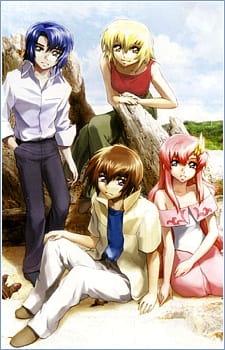
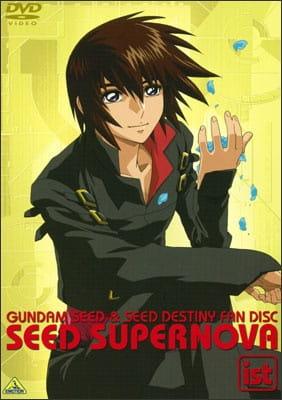
- KKira Yamato(VA: Souichirou Hoshi)
Kira is compelling because his exceptional competence never eliminates his fear, guilt, or discomfort at being valued primarily for what he can do in combat.
- AAthrun Zala(VA: Akira Ishida)
Athrun gives the series its strongest personal contradiction, balancing military duty against relationships that refuse to fit neatly within factional loyalties.
- LLacus Clyne(VA: Rie Tanaka)
Lacus turns a deliberately gentle public image into a source of moral and political authority, making restraint feel more disruptive than aggression.
- CCagalli Yula Athha(VA: Naomi Shindou)
Cagalli’s volatility, blunt convictions, and refusal to remain a passive observer make her an effective counterweight to the cast’s more guarded personalities.
What Makes It Stand Out
- 1
SEED inaugurates the independent Cosmic Era continuity, allowing it to function as a complete Gundam entry point rather than requiring knowledge of the Universal Century timeline.
- 2
Sunrise paired veteran Gundam mechanical designer Kunio Okawara with Kimitoshi Yamane, creating a design lineage that connects the series to the franchise’s history while supporting its own military factions and visual identity.
- 3
The story distributes main-character status across Kira, Athrun, Lacus, and Cagalli rather than leaving every ideological perspective attached to one pilot; romance and politics consequently operate through the same central ensemble.
- 4
AniList’s tag profile captures the show’s unusual balance: Military and War score 97% and 96%, while Love Triangle reaches 80% and Politics 60%. Its romantic melodrama is structural, not decorative.
- 5
Its Real Robot tag sits at 86%, yet the series embraces heightened space-opera emotion across 50 episodes, combining military hardware and battlefield consequences with the cadence of a serialized relationship drama.
Fun Facts & Trivia
- Fun fact 1
- The creator credits unite Yoshiyuki Tomino, Gundam’s original creator, with Hajime Yatate, the collective pen name traditionally used for Sunrise’s in-house creative contributions.
- Fun fact 2
- The design staff extends well beyond the two principal mechanical designers: Shigeru Morita handled special design, while Kazutaka Miyatake, Mutsumi Inomata, and Hiroyuki Taiga provided design assistance.
- Fun fact 3
- The original Japanese run aired from October 5, 2002, through September 27, 2003, sustaining a 50-episode television narrative across almost a full year.
- Fun fact 4
- Its reception remains substantial but divided: MyAnimeList records a 7.74 average from 103,035 votes, while AniList reports 73/100 and 781 favourites.
- Fun fact 5
- Several enthusiastic user reviews identify SEED as either their first Gundam or an entry that overcame an initial dislike of mecha, helping explain why it is frequently treated as an accessible franchise gateway despite mixed veteran opinion.
Studios
- Sunrise