From the New World
新世界より (Shinsekai yori)
- Drama
- Fantasy
- Horror
- Mystery
- Sci-Fi
- Suspense
- Psychological
- Episodes
- 25
- Duration
- 22 min per ep
- Aired
- Sep 29, 2012 to Mar 23, 2013
- Status
- Finished Airing
Synopsis
In 2011, a small fraction of humanity begins to develop psychokinetic powers known as Cantus. More than a thousand years later, in the secluded community of Kamisu 66, Saki Watanabe is the last among her close friends to awaken and enter the Sage Academy, a school that trains those who possess Cantus. Yet even in a place where everyone shares the same gift, ability and standing aren’t equal—and soon after Saki arrives, a classmate considered weaker than the rest vanishes without explanation.
While walking home with Maria Akizuki, Shun Aonuma, Satoru Asahina, and Mamoru Itou, Saki encounters strange mole-like beings called Monster Rats, who revere Cantus users as deities. After she intervenes to help one, their overwhelming gratitude only deepens her unease about where these creatures fit within society. As more disappearances surface, Saki and her friends begin piecing together the truth behind their “ideal” world, uncovering mysteries that hint at a far darker human history.
Otaku Consensus
From the New World earns its reputation as one of A-1 Pictures’ boldest projects through Masashi Ishihama’s restrained direction, a rare prose-novel adaptation structure, and a long-form use of time skips that lets its moral horror accumulate instead of announce itself. Its most common drawback is the same thing that makes it distinctive: the pacing is demanding and uneven enough to alienate viewers expecting conventional suspense beats, but the payoff is unusually literate, severe, and memorable.
Why You Should Watch
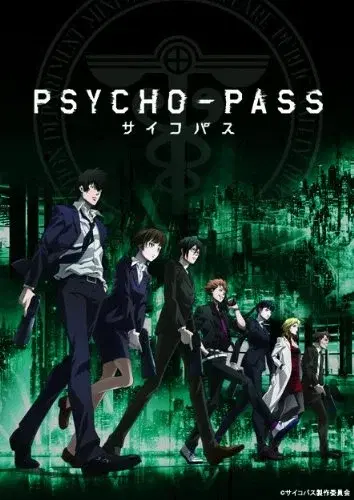
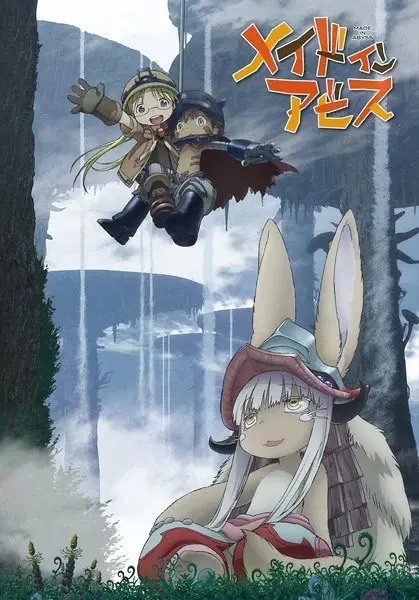
Watch From the New World if you want dystopian science fiction that treats psychic power as anthropology, not wish fulfillment. It scratches the same itch as Psycho-Pass’s systems-first moral dread and Made in Abyss’s child-perspective horror, but without the comfort of a case-of-the-week or adventure-game rhythm. A-1 Pictures’ adaptation asks you to read silences, classroom rules, folklore, and social rituals as evidence; the payoff is less “what happens next?” than “what kind of civilization would make this feel normal?” The 25-episode structure lets time skips change how you judge earlier scenes, while Shigeo Komori’s music and Saho Yamane’s rural art direction keep the mood ceremonial, pastoral, and wrong. Ideal for viewers who like slow-burn paranoia and ethical traps more than clean battles or easy catharsis.
Key Characters
- SSaki Watanabe
Saki stands out less as a chosen-one lead than as an observer whose moral vocabulary is forced to evolve with each time skip and institutional revelation.
- MMaria Akizuki
Maria gives the cast its most immediate emotional charge, because the series treats warmth, loyalty, and intimacy as forces that can destabilize an engineered society.
- SShun Aonuma
Shun is the group’s most intellectually sensitive presence, and his quiet perceptiveness helps turn the early episodes from school mystery into existential dread.
- SSatoru Asahina
Satoru’s blunt pragmatism makes him a counterweight to Saki’s hesitation, and his role gains weight because the story follows its cast across a broad span of adolescence and adulthood.
What Makes It Stand Out
- 1
The series adapts a full prose novel by Yusuke Kishi rather than the manga, light novel, or visual novel sources common to late-night anime, which helps explain its dense worldbuilding and delayed-reward structure.
- 2
A-1 Pictures’ production under director Masashi Ishihama favors atmosphere over spectacle: rural layouts, ritualized behavior, and uncanny stillness do much of the horror work before violence is foregrounded.
- 3
Its 25-episode format is built around major time skips, a structural choice reflected in AniList’s high Time Skip and Coming of Age tags; earlier scenes are repeatedly recontextualized rather than simply followed up.
- 4
The thematic mix is unusually explicit for TV anime: AniList’s top tags include Dystopian, Lost Civilization, Philosophy, Slavery, War, Environmental, and Cult, making the show closer to speculative social fiction than a standard superpower drama.
- 5
Shigeo Komori’s music and Satoshi Motoyama’s sound direction support the show’s ceremonial unease, giving quiet conversations and pastoral spaces the pressure of a horror scene.
Fun Facts & Trivia
- Fun fact 1
- From the New World ran for 25 episodes from September 29, 2012 to March 23, 2013, giving it a two-cour runway for its long chronological structure rather than compressing the novel into a single season.
- Fun fact 2
- Several reviews specifically single out the show’s willingness to “screw conventions” and take adaptation risks, with one critic calling it among the strongest work to come out of A-1 Pictures.
- Fun fact 3
- The core creative team paired Masashi Ishihama as director with Masashi Sogo on series composition, Chikashi Kubota on character design, Sada Morisaki on costume design, and Saho Yamane as art director.
- Fun fact 4
- Its reception has remained strong across major anime databases: MAL lists it at 8.24 from 290,192 votes with a #401 rank, while AniList records an 80/100 score and 6,152 favourites.
- Fun fact 5
- The source credit belongs to Yusuke Kishi, a detail critics often point to when explaining why the anime feels closer to a constructed speculative novel than to a premise-driven genre show.
Studios
- A-1 Pictures