Tokyo Ghoul √A
東京喰種√A
- Action
- Fantasy
- Horror
- Suspense
- Gore
- Psychological
- Urban Fantasy
- Episodes
- 12
- Duration
- 24 min per ep
- Aired
- Jan 9, 2015 to Mar 27, 2015
- Status
- Finished Airing
Synopsis
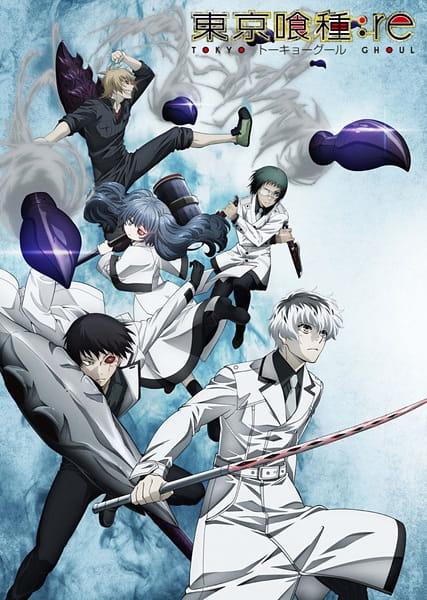
Ken Kaneki has begun to accept the flesh-hungry side of himself he once feared and rejected. After surviving captivity and torture, he makes a startling choice: joining Aogiri Tree, the militant ghoul group responsible for his abduction—leaving those close to him to wonder where his loyalties truly lie.
With conflict between ghouls and the government escalating, the Commission of Counter Ghoul intensifies its campaign to wipe ghouls from Tokyo. The crackdown endangers the fragile calm surrounding Anteiku and the friends Kaneki once fought alongside, forcing him into brutal confrontations where the remnants of his humanity are tested.
Otaku Consensus
Tokyo Ghoul √A remains one of the franchise’s most divisive entries: fans consistently praise Studio Pierrot’s slick action staging, oppressive atmosphere, and Yutaka Yamada’s score, but many criticize the season for feeling rushed and structurally incoherent. The central appeal is still Kaneki’s anti-hero spiral and the grim urban-fantasy mood, yet a common refrain across reviews and web commentary is that the story lands as incomplete—often pushing viewers toward Sui Ishida’s manga for clarity and payoff.
Why You Should Watch
Watch Tokyo Ghoul √A if you want a bleak, high-pressure sequel that leans into psychological horror and urban warfare aesthetics—where every fight feels like a moral compromise, not a victory lap. This is a season for viewers who value mood, momentum, and character torment: Kaneki’s internal fracture is framed with body-horror imagery, hard-edged gore, and a constant sense of surveillance from investigators and police. Studio Pierrot delivers sharp, kinetic confrontations, while Yutaka Yamada’s music (plus an insert performance by Donna Burke) sells the tragedy and dread. Just go in expecting a polarizing, anime-original-leaning narrative that prioritizes intensity and atmosphere over clean, fully explained plotting.
Key Characters
- KKaneki, Ken(VA: Hanae, Natsuki)
A traumatized young man caught between human ethics and ghoul survival, compelling precisely because his choices push him toward an unsettling anti-hero identity.
- KKirishima, Touka(VA: Amamiya, Sora)
A fierce, emotionally guarded ghoul whose loyalty and anger make her a volatile counterpoint to Kaneki’s self-destructive drift.
What Makes It Stand Out
- 1
A darker genre cocktail than many action sequels, emphasizing psychological pressure, gore, and body-horror imagery to externalize Kaneki’s unraveling.
- 2
High-impact action presentation from Studio Pierrot, with confrontations framed as brutal, desperate clashes rather than clean hero set pieces.
- 3
A strong musical identity from composer Yutaka Yamada, using tense, mournful cues to keep the season’s tragedy and dread front and center; includes insert vocals by Donna Burke.
- 4
A volatile, conversation-starting narrative approach: widely seen as rushed or uneven, but also memorable for how boldly it pivots Kaneki’s allegiance and isolates him from his former anchors.
- 5
Urban-fantasy worldbuilding through a law-enforcement lens (CCG, investigators, police), heightening the sense of a city under crackdown and constant pursuit.
Fun Facts & Trivia
- Fun fact 1
- Tokyo Ghoul √A aired for 12 episodes from January 9, 2015 to March 27, 2015 and is listed as finished airing.
- Fun fact 2
- The series is produced by Studio Pierrot, with Shuuhei Morita directing and Chuuji Mikasano handling series composition; Kazuhiro Miwa served as character designer and chief animation director.
- Fun fact 3
- Composer Yutaka Yamada returns to shape the season’s sound, and singer Donna Burke is credited for insert song performance.
- Fun fact 4
- Despite a mixed critical reputation, the season remains extremely visible in the fandom ecosystem: it sits at MAL Popularity #54 with over 1.26 million votes and a 7.03/10 score.
- Fun fact 5
- AniList tags and user discourse frequently frame it around anti-hero storytelling, body horror, and urban fantasy, reflecting how the season’s identity is tied to Kaneki’s moral collapse and the citywide crackdown.
Studios
- Studio Pierrot