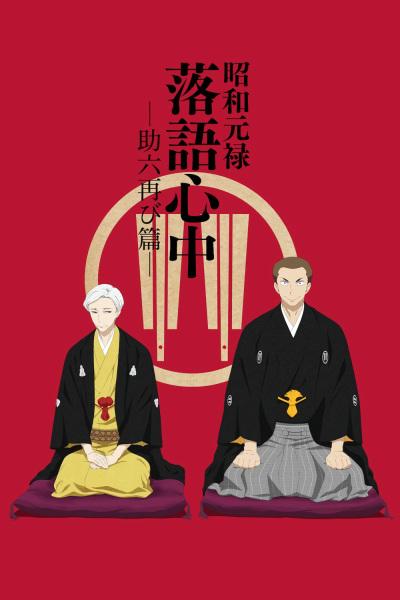
Showa Genroku Rakugo Shinju
昭和元禄落語心中 (Shouwa Genroku Rakugo Shinjuu)
- Drama
- Historical
- Love Polygon
- Performing Arts
- Episodes
- 13
- Duration
- 26 min per ep
- Aired
- Jan 9, 2016 to Apr 2, 2016
- Status
- Finished Airing
Synopsis
Fresh out of prison and determined to leave his yakuza past behind, Yotarou sets his sights on rakugo—the traditional Japanese art of comic storytelling. While incarcerated, he was captivated by a performance from the celebrated Yakumo Yuurakutei, and he now seeks out the master to ask for training. Moved by Yotarou’s fervent plea, Yakumo takes him on as his first apprentice.
As Yotarou begins learning Yakumo’s disciplined approach, he meets Konatsu, a sharp-tongued young woman raised under Yakumo’s roof since the death of her father, the renowned rakugo performer Sukeroku Yuurakutei. Drawn to Sukeroku’s distinctive style even as he studies under Yakumo, Yotarou inadvertently stirs long-buried memories in his mentor—echoes of a past shaped by rivalry, promises, and complicated bonds. Moving between present and earlier years of the Shōwa era, *Showa Genroku Rakugo Shinju* traces the relationships forged through performance and the lives devoted to keeping rakugo alive.
Otaku Consensus
Showa Genroku Rakugo Shinju earns its reputation through Shinichi Omata’s controlled direction, Jun Kumagai’s patient long-form structure, and a standout Kikuhiko youth arc that turns performance technique into character psychology. Critics and fans praise it as a rare adult anime where dialogue, staging, music, and rakugo routines all carry emotional information, though its deliberate pacing and culturally specific subject make it a harder initial sell than its acclaim suggests.
Why You Should Watch
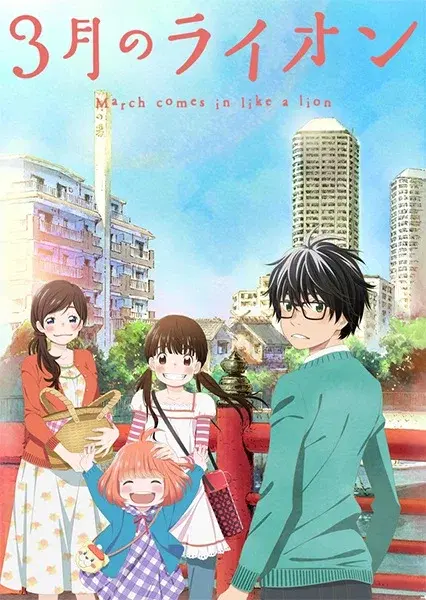
Watch Showa Genroku Rakugo Shinju if you want a character drama about artistic inheritance without tournament brackets, school-club sentimentality, or easy catharsis. It scratches the same mature itch as March Comes in like a Lion, but trades shogi boards for stage cushions and makes every vocal pause, posture shift, and audience reaction part of the drama. Studio Deen’s adaptation is unusually theatrical: conversations feel blocked like stage scenes, and the rakugo performances are not cutaways from the story but tests of identity, pride, and survival. Viewers drawn to josei storytelling, adult casts, historical change, and complicated creative rivalries will find more to chew on here than in most prestige dramas.
Key Characters
- YYotarou(VA: Tomokazu Seki)
Yotarou’s blunt enthusiasm gives the series its most accessible doorway into rakugo while keeping the art from feeling like a museum piece.
- YYakumo Yuurakutei(VA: Akira Ishida)
Yakumo fascinates because his elegance reads less like serenity than discipline hardened around old wounds.
- KKonatsu(VA: Yuu Kobayashi)
Konatsu’s sharp presence cuts through the reverence around rakugo, making every discussion of legacy feel personal rather than ceremonial.
- SSukeroku Yuurakutei(VA: Koichi Yamadera)
Sukeroku is remembered by fans as the series’ great counterforce: a performer whose instinctive style challenges Yakumo’s precision at every level.
What Makes It Stand Out
- 1
The first season uses a major time-skip and an extended flashback structure, spending much of its strongest material in Kikuhiko’s youth rather than treating the past as simple exposition.
- 2
Studio Deen’s production leans into theatrical restraint: rakugo scenes depend on posture, framing, voice modulation, and audience timing instead of spectacle or rapid editing.
- 3
The anime’s subject is unusually specific even within Japanese-culture-focused anime; reviewers noted that many longtime anime viewers encountered rakugo here for the first time.
- 4
Its AniList tag profile is unusually concentrated for a drama: Rakugo is marked at 100%, Acting at 93%, Historical at 91%, and Josei at 79%, reflecting how tightly the series binds craft, era, and adult characterization.
- 5
The cast focus is markedly adult, with AniList also tagging it as Primarily Adult Cast at 87% and Elderly Protagonist at 45%, separating it from the teen-centered defaults of seasonal anime.
Fun Facts & Trivia
- Fun fact 1
- The anime adapts Haruko Kumota’s original work, with Shinichi Omata directing and Jun Kumagai handling series composition for the 13-episode 2016 season.
- Fun fact 2
- Mieko Hosoi served as character designer, while Ayano Oowada handled prop design; those credits matter in a series where clothing, stage items, and body language carry period and performance detail.
- Fun fact 3
- Masaki Mayuzumi is credited for both art direction and art design, helping define the show’s restrained historical interiors and performance spaces.
- Fun fact 4
- Across database reception, the series sits in prestige territory: it holds an 8.54 MAL score from 99,935 votes and an AniList score of 84/100 with 2,856 favorites.
- Fun fact 5
- It aired from January 9 to April 2, 2016, a compact single-cour run that still covers years and decades through its historical structure.
Studios
- Studio Deen