Nana
NANA [ナナ]
- Drama
- Romance
- Adult Cast
- Love Polygon
- Music
- Episodes
- 47
- Duration
- 22 min per ep
- Aired
- Apr 5, 2006 to Mar 28, 2007
- Status
- Finished Airing
Synopsis
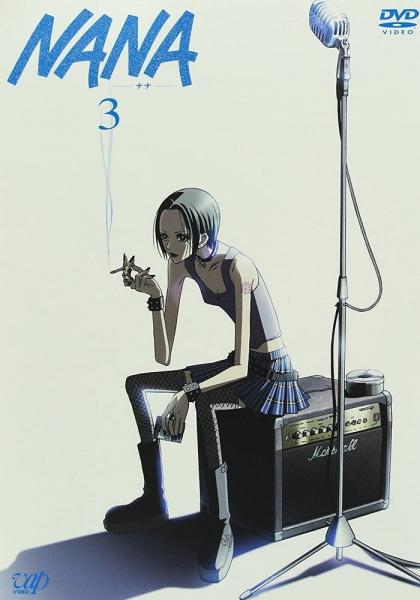
Leaving their hometowns behind for Tokyo, two young women who happen to share the name Nana meet at a turning point in their lives. Nana Komatsu is an openhearted romantic chasing the idea of happiness in love, while Nana Osaki is a fiercely independent punk vocalist determined to make her mark in music.
Komatsu’s trusting nature has often complicated her relationships, but she commits to following her boyfriend, Shouji Endo, after he moves to Tokyo for school—working to save enough money to join him. Osaki arrives with different baggage: a painful breakup with Ren Honjou, the bassist of her band, and a renewed resolve to pursue recognition as an artist. A chance coincidence brings them together again soon after, leading to an unexpected shared home and a bond that deepens as they navigate ambition, heartbreak, and the uncertain shape of adulthood.
Otaku Consensus
Nana’s reputation rests on Madhouse and director Morio Asaka treating shoujo melodrama as adult social realism, letting jealousy, dependence, ambition, and friendship accumulate through patient 47-episode pacing rather than tidy romantic escalation. Fans and critics consistently single out its adult cast, band-world atmosphere, fashion-conscious identity, and emotionally messy relationships as the reason it remains highly rated across MAL and AniList. The major criticism is structural rather than artistic: because Ai Yazawa’s manga remains on indefinite hiatus, the anime has no fully conclusive ending.
Why You Should Watch
Watch Nana if you want shoujo romance with the emotional consequences left in, not softened into wish fulfillment. It scratches the same grown-up relationship itch as Honey and Clover, but with a sharper rock-club edge, more toxic attraction, and a stronger sense of fashion as self-definition. The appeal is in how it studies adulthood as a series of compromises: work, rent, art, sex, insecurity, loyalty, and the fear of being replaceable. Viewers who like ensemble casts will get more than a central pairing; the show builds a social ecosystem where every romantic choice affects friendships, bands, and ambitions. If you want a music anime less about performance triumph and more about the emotional cost of chasing recognition, Nana is still one of the genre’s defining titles.
Key Characters
- NNana Komatsu
Fans often call her one of shoujo’s most painfully recognizable romantics: impulsive, affectionate, and vulnerable in ways the series refuses to flatter or condemn.
- NNana Osaki
Her punk-vocalist image is compelling because the show treats independence as both armor and burden, not as a simple empowerment pose.
- RRen Honjou
Ren functions as more than a musician love interest; he embodies the conflict between artistic opportunity and personal attachment that runs through the band side of the story.
- SShouji Endo
Shouji is memorable because Nana frames his relationship choices through everyday weakness and immaturity rather than cartoon villainy.
What Makes It Stand Out
- 1
The anime runs 47 episodes, an unusually roomy length for a romance-drama adaptation, allowing emotional shifts to play out through routine, repetition, and social fallout rather than compressed confession scenes.
- 2
Madhouse produced the adaptation with Morio Asaka directing and Tomoko Konparu handling series composition, a pairing that gives the show a controlled serialized rhythm across a full year of broadcast from April 2006 to March 2007.
- 3
Its identity is unusually specific for televised shoujo: AniList’s highest-confidence tags emphasize female protagonists, a primarily adult cast, coming of age, bands, rock music, urban life, fashion, office work, and college rather than high-school romance formulas.
- 4
The production credits include Mutsuaki Murata for accessory design, a detail that matches the series’ reputation for treating clothing, jewelry, and punk styling as part of character psychology instead of decorative garnish.
- 5
Nana’s most persistent modern talking point is its refusal to sanitize toxic relationships; fan essays and video criticism continue to focus on dependency, jealousy, and love as a destructive as well as sustaining force.
Fun Facts & Trivia
- Fun fact 1
- The anime is based on Ai Yazawa’s manga, which is on indefinite hiatus; that source-material situation is the reason the adaptation is widely discussed as brilliant yet unresolved.
- Fun fact 2
- Atsuko Ishizuka is credited as assistant director, while Kunihiko Hamada handled character design and Tomoyuki Shimizu served as art director, giving the adaptation a staff structure with distinct attention to layout, design, and urban atmosphere.
- Fun fact 3
- Nana holds a MAL score of 8.57 from over 306,000 votes, ranking around #123 while also sitting high in popularity at #295, a rare combination for a 2006 adult relationship drama.
- Fun fact 4
- On AniList, it carries an 85/100 score and more than 16,000 favorites, showing that its reputation extends beyond legacy shoujo circles into broader anime canon status.
- Fun fact 5
- The show’s demographic and tonal profile is unusually precise: AniList marks it 95% female protagonist, 95% shoujo, 91% primarily adult cast, and 88% band, which explains why it is often recommended to viewers looking for romance grounded in adult life and music culture.
Studios
- Madhouse