Steins;Gate 0
シュタインズ・ゲート ゼロ
- Drama
- Sci-Fi
- Suspense
- Time Travel
- Episodes
- 23
- Duration
- 23 min per ep
- Aired
- Apr 12, 2018 to Sep 27, 2018
- Status
- Finished Airing
Synopsis
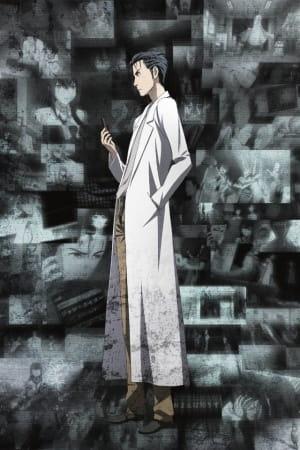
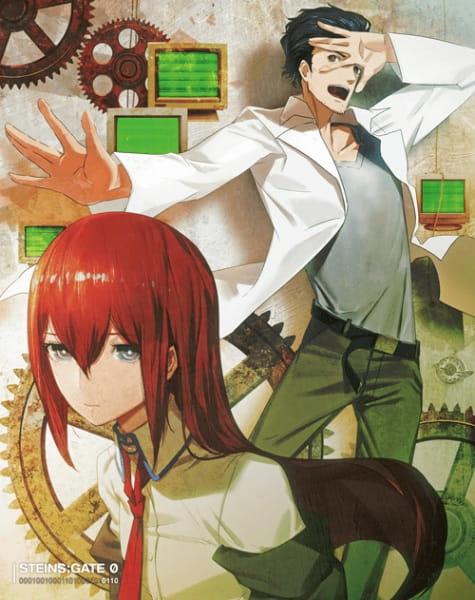
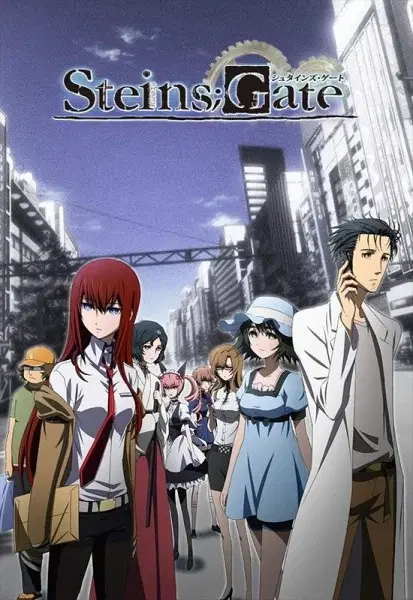
Rintarou Okabe, once the self-styled mad scientist, is left hollowed out by trauma after failing to save Makise Kurisu. Determined to abandon his alter ego, he tries to pass as an ordinary college student, keeping his time travel experiences to himself even as the memories refuse to fade.
While working as a receptionist at a university technology forum, Okabe meets the sharp, spirited Maho Hiyajo—soon revealed as the interpreter for a presentation led by Professor Alexis Leskinen. Together they introduce Amadeus, an AI that preserves a person’s memories and uses them to recreate a remarkably faithful simulation, down to personality and mannerisms. When Okabe learns that Amadeus includes a simulated Kurisu and is recruited to study its behavior, he’s drawn back toward the past he’s been running from—where every attempt to reach for what was lost risks stirring consequences tied to the fragile flow of time.
Otaku Consensus
Steins;Gate 0 lands as a high-value but contested sequel: fans have kept it in prestige territory with an 8.56 MAL score from 478,010 votes and an AniList score of 84/100, and its strongest material is the White Fox mood piece around Okabe’s trauma, Amadeus, and the franchise’s philosophy of choice. The common criticism is structural rather than conceptual: reviews complain the 23-episode adaptation takes too long to ignite, tries to fold in too many threads, and cannot match the original’s precision, making it essential for completists but frustrating for viewers expecting another perfectly calibrated thriller.
Why You Should Watch
Watch Steins;Gate 0 if you want time-travel drama that treats causality as psychological damage, not just puzzle mechanics. It scratches the same itch as Re:Zero’s punishment-loop anxiety and Serial Experiments Lain’s digital-identity paranoia, but keeps the focus on urban labs, college adults, military pressure, and otaku-coded conversations rather than fantasy combat or pure abstraction. The draw is not a cleaner version of Steins;Gate; it is the negative-space companion, slower, more depressive, and more interested in what happens when the “mad scientist” persona no longer works as armor. Viewers who enjoyed the original’s emotional collapse, AI ethics, and Jukki Hanada’s dialogue-driven tension will find the most value. Viewers who need every episode to escalate may bounce off its intentionally heavy middle stretch.
Key Characters
- RRintarou Okabe
Fans discuss Okabe here less as a comic chuunibyou icon and more as a rare anime lead defined by post-traumatic self-erasure, avoidance, and the cost of surviving a time-travel story.
- KKurisu Makise
Kurisu’s role turns the audience’s attachment to a fan-favorite heroine into a science-fiction argument about memory, personhood, and whether a perfect conversational copy can ever be emotionally neutral.
- MMaho Hiyajo
Maho stands out because she is neither a substitute heroine nor a simple sidekick; she brings academic insecurity, professional pride, and adult laboratory politics into the Steins;Gate cast dynamic.
- AAlexis Leskinen
Leskinen gives the sequel an unusually international research-industry texture, shifting the franchise’s science from Akihabara tinkering toward university spectacle and institutional ambition.
What Makes It Stand Out
- 1
White Fox produced Steins;Gate 0 as a 23-episode TV series airing from April to September 2018, giving the sequel the room to play as a slow-burn drama rather than a compressed epilogue or film-length add-on.
- 2
Jukki Hanada handled series composition for an adaptation rooted in a visual novel continuation, a format choice that explains both its density and the recurring criticism that it tries to reconcile too many route-like threads in one linear anime.
- 3
The anime’s speculative identity is not only “time travel”: AniList’s top tags include Artificial Intelligence at 91%, Philosophy at 75%, and Dissociative Identities at 79%, making digital personhood central to how the sequel differentiates itself.
- 4
Its setting profile is older and more institutional than many sci-fi thrillers: AniList marks it as Urban at 78%, College at 56%, Military at 60%, and Primarily Adult Cast at 40%.
- 5
Its reception is unusually polarized for a high-ranked sequel: it sits at MAL rank #136 and popularity #208, while linked critics range from “flawed but necessary” praise to Star Crossed Anime’s 40/100 dismissal and Mr. Flawfinder’s outright rejection.
Fun Facts & Trivia
- Fun fact 1
- MAGES. and Chiyomaru Shikura are credited as the original creators, tying the anime directly to the visual-novel and Science Adventure lineage rather than treating it as an anime-original sequel.
- Fun fact 2
- huke is credited for the original character designs, while Tomoshige Inayoshi handled the anime character designs, showing the production’s split between preserving the franchise’s visual identity and adapting it for TV animation.
- Fun fact 3
- Kenichi Kawamura directed the series, with Jukki Hanada on series composition and Asako Inayoshi credited for prop design, a useful production detail for viewers tracking how the sequel’s tech-heavy material was organized on screen.
- Fun fact 4
- Fumihiro Kitahara receives a specific title logo design credit, an unusually visible reminder that Steins;Gate 0’s branding and interface-like presentation are part of its production identity.
- Fun fact 5
- AniList records 8,154 favourites for the series, reinforcing that its divided critical reputation has not prevented it from becoming a major attachment point for Steins;Gate fans.
Studios
- White Fox