Ghost in the Shell
GHOST IN THE SHELL(攻殻機動隊) (Koukaku Kidoutai)
- Award Winning
- Mystery
- Sci-Fi
- Suspense
- Adult Cast
- Detective
- Mecha
- Psychological
- Episodes
- 1
- Duration
- 1 hr 22 min
- Aired
- Nov 18, 1995
- Status
- Finished Airing
Synopsis
In 2029, Niihama City stands as a hyper-connected metropolis where cybernetics have reshaped everyday life—so much so that many people can trade flesh-and-blood limbs for mechanical replacements. With technology accelerating globalization and blurring new lines of vulnerability, Public Security Section 9 works from the shadows to stop corruption, terrorism, and emerging high-tech threats.
Major Motoko Kusanagi leads Section 9 into a chilling investigation centered on an elusive hacker called the Puppet Master, whose victims are left with their memories erased. As the pursuit deepens, rival interests—including Public Security Section 6—begin to interfere, turning the case into a tangled contest of jurisdiction and hidden motives. Amid the escalating suspense, Motoko is drawn into unsettling questions about identity and purpose, sensing that the key to understanding them may lie with the Puppet Master.
Otaku Consensus
Mamoru Oshii’s 1995 Ghost in the Shell remains the defining screen version of Masamune Shirow’s cyberpunk world: leaner, darker, and more meditative than the source material, with Production I.G’s precision animation and Oshii’s controlled pacing turning a police-tech thriller into philosophical cinema. Critics and fans consistently single out its identity questions, noir city atmosphere, and lasting influence on science-fiction filmmaking; the main reservation is that its austerity can feel emotionally cold, with dense ideas taking priority over character warmth or conventional momentum.
Why You Should Watch
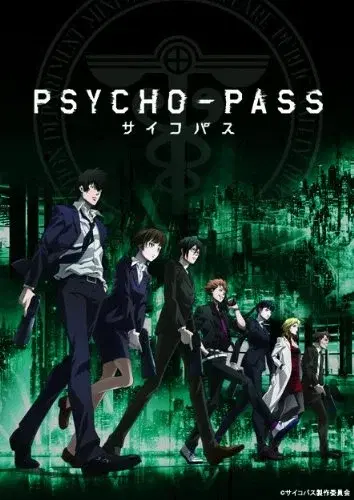
Watch Ghost in the Shell if you want cyberpunk that treats technology as an existential problem, not just set dressing. It scratches the same itch as Serial Experiments Lain’s identity anxiety and Psycho-Pass’s institutional paranoia, but in a tighter, more cinematic form: a single 1995 feature built on silence, surveillance, military hardware, and adult professional tension. Viewers who enjoy sci-fi that leaves room for interpretation will get more from it than those looking for constant action beats or ensemble banter. Oshii’s adaptation is especially rewarding if you want a film that compresses manga-scale worldbuilding into mood, architecture, procedure, and philosophical pressure. It is short, severe, and unusually rewatchable because its biggest ideas are carried as much by framing and sound as by dialogue.
Key Characters
- MMotoko Kusanagi(VA: Atsuko Tanaka)
Motoko is remembered as one of anime’s defining cyberpunk leads: composed, physically formidable, and written around questions of selfhood rather than conventional hero charisma.
- BBatou(VA: Akio Ootsuka)
Batou gives the film its most grounded human counterweight, balancing tactical competence with the kind of quiet concern that makes Section 9 feel lived-in.
- PProject 2501(VA: Iemasa Kayumi)
Project 2501 stands out because the character functions less like a standard antagonist and more like a philosophical challenge to every boundary the setting assumes.
- TTogusa(VA: Kouichi Yamadera)
Togusa is compelling as the comparatively human member of the team, a noir-detective presence whose limitations sharpen the film’s cybernetic worldview.
What Makes It Stand Out
- 1
Production I.G’s feature-film approach gives the 1995 movie a density of mechanical detail and urban texture that separates it from television-scale cyberpunk of the era.
- 2
Mamoru Oshii’s adaptation is notably streamlined compared with Masamune Shirow’s manga, reducing sprawl and comic elasticity in favor of a colder, more contemplative noir structure.
- 3
The design team is unusually specialized: Hiroyuki Okiura handled character design, Atsushi Takeuchi and Shouji Kawamori are credited on mechanical design, and Mitsuo Iso is credited on weapon design.
- 4
Hiromasa Ogura’s art direction and Takashi Watabe’s art design emphasize a rain-soaked, hyper-urban environment that reviewers often connect to the same cyberpunk lineage as Blade Runner.
- 5
Kenji Kawai’s score, especially its ritualistic choral sound, gives the film a sacred and uncanny atmosphere rather than the purely electronic texture many viewers expect from cyberpunk.
Fun Facts & Trivia
- Fun fact 1
- The film premiered on November 18, 1995 as a single theatrical anime entry, not a TV season, which helps explain its unusually compressed and deliberate structure.
- Fun fact 2
- Reviewers often credit Oshii’s dark, lean adaptation with kickstarting Ghost in the Shell as a major screen franchise, even though the property began with Masamune Shirow’s manga.
- Fun fact 3
- The staff list reflects how carefully the film separates visual responsibilities: art direction, art design, color design, photography, character design, mechanical design, and weapon design all have named leads.
- Fun fact 4
- AniList’s highest tags for the film are Cyberpunk at 96%, Artificial Intelligence at 94%, and Philosophy at 93%, a useful snapshot of how modern fans classify its appeal beyond simple action sci-fi.
- Fun fact 5
- Its MAL standing combines broad reach with strong approval: a score of 8.27 from 364,986 votes, ranking #364 overall while also sitting at #336 in popularity.
Studios
- Production I.G