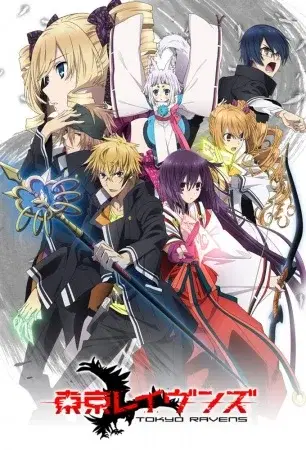
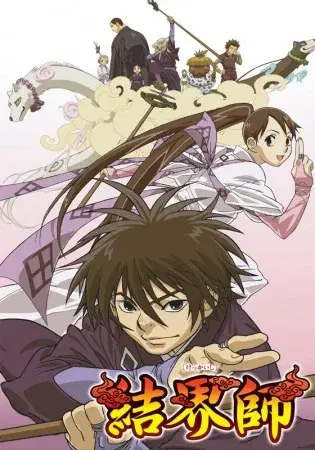
Twin Star Exorcists
双星の陰陽師 (Sousei no Onmyouji)
- Action
- Fantasy
- Romance
- Mythology
- Urban Fantasy
- Episodes
- 50
- Duration
- 24 min per ep
- Aired
- Apr 6, 2016 to Mar 29, 2017
- Status
- Finished Airing
Synopsis
Magano is a parallel world crawling with Kegare—monstrous “impurities” that exorcists are tasked with eliminating. Benio Adashino, a celebrated prodigy known for her strength, is called to Tokyo by the Exorcist Union. On the way, she literally crashes into Rokuro Enmadou, a young exorcist burdened by a difficult past.
When Kegare abduct two children, Benio charges into Magano to rescue them, pulling Rokuro into the danger alongside her. Cornered in a battle she can’t win alone, she’s saved by Rokuro—revealing he may be far more formidable than he lets on. *Twin Star Exorcists* follows the pair as fate binds them as the prophesied “Twin Star Exorcists,” destined to become the parents of the Miko, the reincarnation of Abe no Seimei who is said to purify the world.
Otaku Consensus
Twin Star Exorcists lands as a broadly liked but visibly uneven Studio Pierrot battle shounen: Tomohisa Taguchi’s direction and the yearlong pacing give its character duos, spell combat, and romantic tension enough momentum to hook viewers beyond the opening cour. Its strongest supporters point to the flashy exorcism system and sincere character growth, while the recurring criticism is that the anime-original-feeling structure, comedy beats, and familiar shounen framing often lack the sharpness of the genre’s best examples.
Why You Should Watch
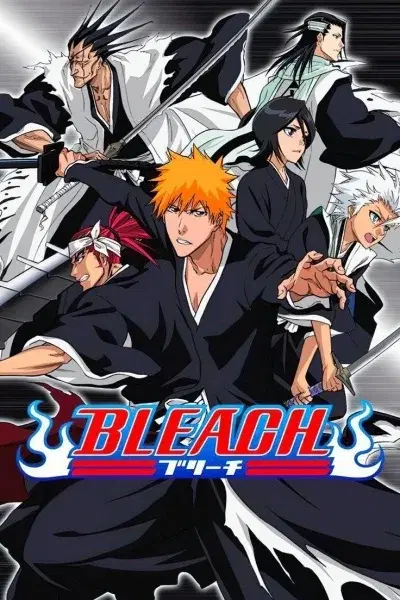
Watch Twin Star Exorcists if you want a long-form exorcism action series that treats romance as part of the engine rather than a late-game bonus. It scratches a similar itch to Blue Exorcist and Bleach: urban spiritual warfare, named techniques, swordplay, monster-of-the-week pressure, and emotionally loaded power-ups, but with a male-female co-lead dynamic closer to a supernatural battle partnership than a solo hero’s climb. The 50-episode run gives the show room to cycle through comedy, rivalry, trauma, and escalating magical rules without the compression of a one-cour adaptation. It is best for viewers who enjoy classic shounen structure with visible heart, not for anyone demanding ruthless originality or consistently polished comedy.
Key Characters
- RRokuro Enmadou
Rokuro is the kind of shounen lead fans remember for the gap between his abrasive comic energy and the much darker weight implied by his combat potential.
- BBenio Adashino
Benio stands out as a battle-ready female co-protagonist whose appeal comes from discipline, pride, and competence rather than being written only as romantic contrast.
What Makes It Stand Out
- 1
Studio Pierrot produced Twin Star Exorcists as a 50-episode continuous TV run from April 2016 to March 2017, giving it the shape of an old-school weekly shounen rather than a modern seasonal sampler.
- 2
The production pairs director Tomohisa Taguchi with series composer Naruhisa Arakawa, a combination that emphasizes clear episodic hooks, recurring emotional payoffs, and accessible battle-shounen escalation.
- 3
Action director Shou Yamamoto and character designer/chief animation director Kikuko Sadakata give the series a combat identity built around readable poses, talisman-like magic effects, and swordplay rather than abstract beam clashes alone.
- 4
The reception profile is unusually split between popularity and ranking: on MyAnimeList it has more than 230,000 votes and a popularity rank of #460, while its 7.29 score and #3209 rank reflect a fanbase larger than its critical reputation.
- 5
Its AniList tag spread is revealing: Shounen, Exorcism, Magic, and Demons dominate, but Love Triangle and Twins also register, signaling that relationship mechanics are baked into the appeal rather than incidental flavor.
Fun Facts & Trivia
- Fun fact 1
- The anime is based on Yoshiaki Sukeno’s original manga, but the TV version is best understood as a long-form Pierrot adaptation built for a full broadcast year rather than a short promotional cour.
- Fun fact 2
- Kikuko Sadakata handled both character design and chief animation direction, meaning the same key artist was credited with defining the cast’s look and supervising its consistency across the production.
- Fun fact 3
- The art direction credit is shared by Junichi Higashi and Yuki Maeda, a notable production detail for a series that constantly shifts between contemporary city spaces and supernatural battle environments.
- Fun fact 4
- Hajime Takakuwa served as sound director while Mikio Endou composed the music, giving the show a dedicated audio team for its mix of urban-fantasy atmosphere, ritual combat cues, and shounen impact beats.
- Fun fact 5
- Across fan platforms its reception sits in the solid-but-divisive zone: AniList lists it at 69/100 with 2,458 favourites, while web reviews frequently call it energetic and stylish but also formulaic or uneven in comedy and episode framing.
Studios
- Studio Pierrot