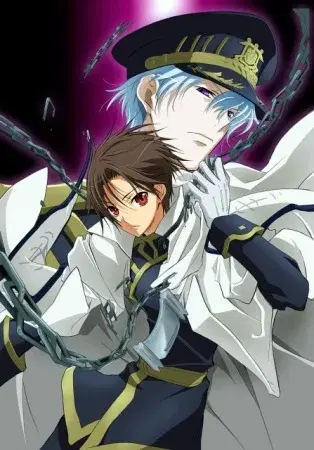
D.Gray-man
ディー・グレイマン
- Action
- Adventure
- Fantasy
- Urban Fantasy
- Episodes
- 103
- Duration
- 23 min per ep
- Aired
- Oct 3, 2006 to Sep 30, 2008
- Status
- Finished Airing
Synopsis
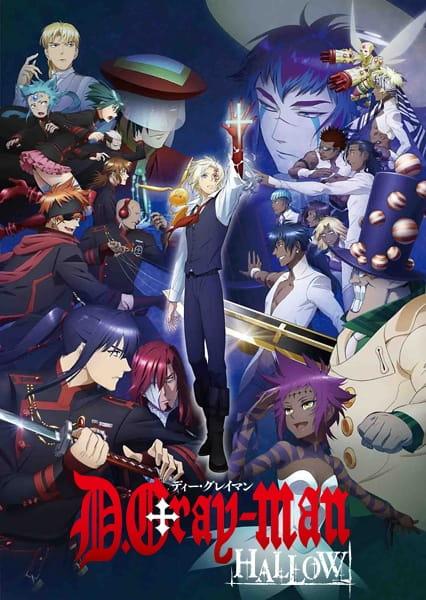
Grief can make the impossible feel tempting, and the mysterious Millennium Earl preys on that longing. By calling back the souls of the deceased, he forges his mechanical weapons—Akuma—binding those souls inside with no escape. The only release comes through exorcism, carried out with the Anti-Akuma power known as Innocence.
Trained for three years under General Cross, Allen Walker is dispatched to the Black Order, a group devoted to combating the Akuma and opposing the Millennium Earl, to take his place as an Exorcist. Armed with Innocence embedded in his arm and a cursed eye that reveals the anguish of the souls trapped within each Akuma, Allen joins fellow Exorcists in confronting a looming scheme that threatens to bring about the world’s destruction.
Otaku Consensus
D.Gray-man earns its lasting reputation by filtering long-form shounen escalation through Osamu Nabeshima’s gothic TV direction, with TMS Entertainment giving the series a distinctive early-2000s darkness rather than the brighter battle-anime polish of its peers. Fans and critics most often point to the Yu backstory material and the Noah family focus as the point where it stops feeling merely comparable to Naruto or Bleach and becomes its own tragic urban-fantasy epic. Its major drawback is equally consistent: the 103-episode adaptation ends open, leaving viewers with a weak sense of closure despite the strength of the journey.
Why You Should Watch
Watch D.Gray-man if you want the team-battle momentum of Naruto or Bleach without losing the feeling that every victory has a funeral bell behind it. Its appeal is not just “exorcists fight demons”; it is the texture around that formula: gothic architecture, anachronistic technology, steampunk edges, philosophical dread, and a mostly teen ensemble carrying adult-scale grief. The early stretch has the recognizable rhythm of mid-2000s shounen, but the tone darkens as the Noah family and Yu material push the story toward tragedy instead of tournament-style catharsis. It is best for viewers who like long casts, cursed aesthetics, and villains who feel grotesque rather than cool. If you need a fully resolved anime ending, know that its open finale is the price of admission.
Key Characters
- AAllen Walker
Allen stands out among shounen leads because his appeal comes from wounded restraint and visible empathy rather than loud bravado, making him a natural fit for the series’ gothic-tragedy reputation.
- MMillennium Earl
The Millennium Earl is frequently remembered less as a standard mastermind and more as a revolting, nightmare-fuel presence whose grotesque design gives the show much of its horror flavor.
- LLavi
Lavi is one of the ensemble members fans single out for charisma, helping balance the show’s bleak atmosphere with a more immediately likable presence.
- YYu Kanda
Yu Kanda’s backstory is widely cited as a turning point where the series’ character writing becomes harder to dismiss as typical shounen setup.
What Makes It Stand Out
- 1
The series is a 103-episode TMS Entertainment production that aired continuously from October 2006 to September 2008, giving it the scale to build an ensemble rather than functioning like a compressed seasonal adaptation.
- 2
Reiko Yoshida’s series composition lets the early battle-shounen framework gradually tilt toward gothic tragedy, with fan discussion often naming Yu’s backstory and the Noah family material as the moment the show becomes genuinely gripping.
- 3
Hideyuki Morioka’s character designs and the TMS visual approach preserve a distinctly mid-2000s anime identity: sharp silhouettes, ornate costuming, and moody foreign settings that viewers often remember as much as the fights.
- 4
Kaoru Wada’s credited music is part of the show’s tonal signature, supporting a mix of action, adventure, fantasy, urban fantasy, and tragic exorcism rather than treating it as straightforward superhero combat.
- 5
Its AniList tag profile is unusually specific for a shounen title: Shounen at 96%, Demons at 92%, Super Power at 89%, Exorcism at 85%, Philosophy at 80%, Foreign at 75%, Urban Fantasy at 73%, Anachronism at 70%, and Steampunk at 55%.
Fun Facts & Trivia
- Fun fact 1
- D.Gray-man has a strong database footprint: MyAnimeList lists it at 8/10 from 298,028 votes, with a rank of #746 and popularity of #322, while AniList records a 76/100 score and 3,235 favourites.
- Fun fact 2
- The core anime staff pairs original creator Katsura Hoshino with director Osamu Nabeshima, series composer Reiko Yoshida, character designer Hideyuki Morioka, composer Kaoru Wada, and key animator Tomoko Fukunaga.
- Fun fact 3
- The English production credits include Justin Cook, Christopher Sabat, and Clarine Harp as producers, notable names for fans who track the era’s major English-language anime releases.
- Fun fact 4
- June is credited with performing the second ending theme, giving the show one of its documented theme-song links beyond the main production staff.
- Fun fact 5
- The most repeated viewer caveat is not about the premise or cast but the ending: multiple fan comments describe the final episode as weak or the anime as an unconcluded story.
Studios
- TMS Entertainment