Restaurant to Another World
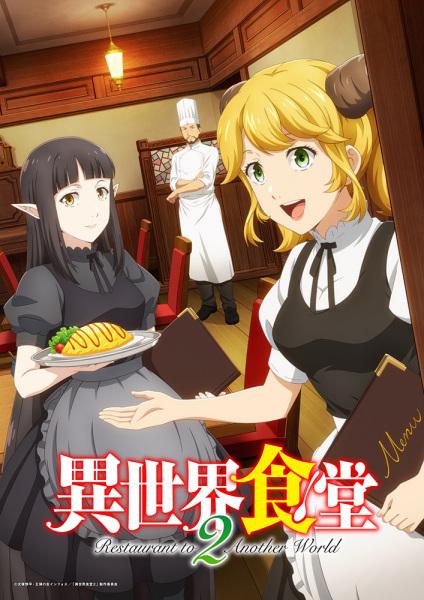
異世界食堂 (Isekai Shokudou)
- Fantasy
- Gourmet
- Isekai
- Slice of Life
- Urban Fantasy
- Workplace
- Episodes
- 12
- Duration
- 23 min per ep
- Aired
- Jul 4, 2017 to Sep 19, 2017
- Status
- Finished Airing
Synopsis
Western Restaurant Nekoya sits on a quiet corner of a Tokyo shopping district, welcoming locals with a menu that ranges from familiar Japanese favorites to classic Western plates. To most passersby, it’s simply a well-loved neighborhood spot with comforting food and a steady stream of regulars.
But Saturdays are different. Though it appears closed to Tokyo, Nekoya’s doors open once a week to visitors from other worlds—dragons, elves, fairies, mages, and more—each arriving for a dish they’ve come to cherish. Behind the counter, the chef known only as “Master” greets them with calm warmth, serving their favorites and drawing them back again and again.
Otaku Consensus
Restaurant to Another World earns its solid 7.42 MAL score and 72/100 AniList reception by committing fully to Masato Jinbou’s calm, episodic direction: the pleasure is in ritual, menu repetition, and the ensemble’s weekly return rather than in isekai conquest. SILVER LINK.’s adaptation works best as comfort-food television with a workplace rhythm, a primarily adult cast, and food-centered vignettes, while the most common criticism is that its formula can feel too static for viewers expecting escalation, conflict, or a stronger through-line.
Why You Should Watch
Watch Restaurant to Another World if you want isekai without power leveling, villain arcs, or lore dumps taking over the room. It scratches a similar low-stress itch to Laid-Back Camp and the food-appreciation side of Food Wars!, but trades competition and spectacle for a weekly service-industry ritual built around returning regulars. The appeal is precise: adults with recognizable routines, a restaurant that functions like a neutral embassy between fantasy cultures, and episodes that treat a favorite dish as character history rather than background decoration. If your ideal fantasy anime is less “defeat the demon lord” and more “what would an elf, dragon, or mage order if comfort food crossed dimensions,” this is one of the genre’s cleanest answers.
Key Characters
- MMaster
Master is compelling because he operates less like an isekai protagonist and more like a veteran restaurateur, anchoring the series with professional calm instead of heroic self-importance.
- AAletta
Aletta gives the restaurant its clearest workplace perspective, turning the fantasy doorway into a job, a routine, and a found place of dignity.
- KKuro
Kuro stands out among the otherworldly regulars because her quiet presence reframes the restaurant’s hospitality as something meaningful even to beings far beyond ordinary human scale.
What Makes It Stand Out
- 1
The series uses a strict episodic structure: individual dishes and regular customers drive the episodes more than a central adventure plot, matching AniList’s high Episodic, Food, Work, and Ensemble Cast tags.
- 2
Masato Jinbou handled both direction and series composition, giving the adaptation a unified rhythm built around repeated service rituals rather than tonal whiplash between comedy, action, and drama.
- 3
SILVER LINK. keeps the visual emphasis on plated meals, dining reactions, and the contrast between Tokyo’s ordinary restaurant space and fantasy visitors, rather than turning the premise into an effects-heavy battle isekai.
- 4
The cast profile is unusual for a 2010s isekai: AniList identifies it as a primarily adult ensemble, and the restaurant format allows dragons, demons, elves, fairies, mermaids, and mages to share the same social space without requiring a quest party setup.
- 5
Its urban-fantasy angle is unusually literal: the magical intrusion is not a new world swallowing modern Tokyo, but a normal commercial restaurant becoming a weekly access point for other cultures.
Fun Facts & Trivia
- Fun fact 1
- The anime aired as a 12-episode summer 2017 series from July 4 to September 19, placing it in the same seasonal window as several louder action and fantasy titles while offering a deliberately quieter counterprogramming niche.
- Fun fact 2
- Original story credit goes to Junpei Inuzuka, while Katsumi Enami is credited with the original character designs; the anime character designs were handled by Takao Sano and Keiichi Sano.
- Fun fact 3
- Masato Jinbou served in two major creative roles at once: director and series composition, an important reason the show’s pacing feels consistently anthology-like across the season.
- Fun fact 4
- The opening theme was performed by May’n and Wake Up, Girls!, while the ending theme was performed by Kiyono Yasuno, giving the production notable music-side names despite its modest, slice-of-life presentation.
- Fun fact 5
- Its database footprint is stronger in popularity than ranking: MAL lists it at #969 in popularity with over 127,000 votes, while its score of 7.42 places it at #2539, reflecting a widely sampled but comfort-food-specific appeal.
Studios
- SILVER LINK.