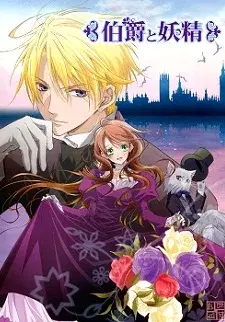
The Ancient Magus' Bride
魔法使いの嫁 (Mahoutsukai no Yome)
- Drama
- Fantasy
- Romance
- Mythology
- Urban Fantasy
- Episodes
- 24
- Duration
- 24 min per ep
- Aired
- Oct 8, 2017 to Mar 25, 2018
- Status
- Finished Airing
Synopsis
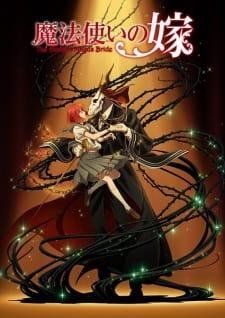
Fifteen-year-old Chise Hatori has spent much of her life unwanted—abandoned early on and mocked for the strange way she seems to draw the uncanny to her. With nowhere left to belong, she allows herself to be sold at an auction for five million pounds, resigned to whatever buyer will take her in. On the journey that follows, hushed voices among robed onlookers remark on the rarity of what’s been purchased: a Sleigh Beggy.
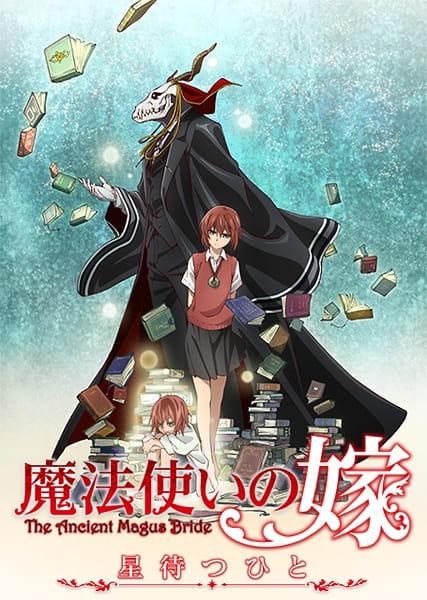
Her buyer is a tall, masked gentleman who soon reveals himself as Elias Ainsworth, a magus. After a tense first meeting and a display of teleportation magic, Chise awakens at Elias’ cottage in the English countryside, where fairies and other unsettlingly beautiful beings linger at the edges of everyday life. There, Chise’s new role begins—taken in as Elias’ apprentice and named as his prospective bride.
Otaku Consensus
The Ancient Magus' Bride earns its reputation through Wit Studio's lush fantasy staging, Norihiro Naganuma's patient direction, and an adaptation approach that critics singled out as unusually strong for a manga-to-TV transition. Its best qualities are atmospheric world-building and the slow construction of trust between Chise and Elias; its main sticking points are the deliberately unhurried pacing and the discomfort some viewers feel around the age-gap, teacher-student, bride framing.
Why You Should Watch
Watch The Ancient Magus' Bride if you want folklore fantasy that feels old, dangerous, and emotionally restorative without turning into an isekai power trip. It scratches a similar itch to Mushishi or Natsume's Book of Friends in the way supernatural encounters carry moral and emotional weight, but it adds a gothic romance tension and a more fragile found-family core. The series is especially rewarding for viewers who like magic systems rooted in myth rather than game mechanics: fairies, dragons, monstrous bodies, bargains, and rural English occultism are treated as part of a living culture. Its 24-episode run gives the relationship work room to breathe, so the appeal is less about plot momentum and more about watching wounds, dependency, and trust change shape over time.
Key Characters
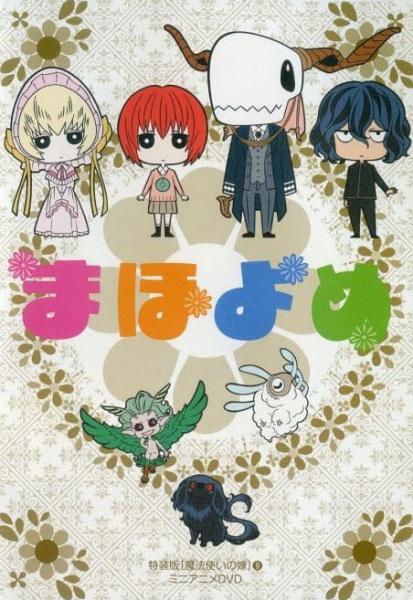
- CChise Hatori(VA: Atsumi Tanezaki)
Chise stands out because the series treats her magical gift and emotional damage as inseparable, making her growth feel less like empowerment fantasy and more like recovery under supernatural pressure.
- EElias Ainsworth(VA: Ryota Takeuchi)
Elias is compelling as a monster-shaped mentor whose knowledge of magic far exceeds his grasp of human intimacy, which keeps fan discussion focused on both his tenderness and his alienness.
What Makes It Stand Out
- 1
Wit Studio's adaptation leans heavily into environmental fantasy, using the English countryside, cottage interiors, and fairy spaces as storytelling tools rather than simple backdrops.
- 2
Norihiro Naganuma served as both director and series composition writer, giving the 24-episode TV version a notably unified rhythm instead of separating visual direction from narrative structure.
- 3
The anime's identity is unusually concentrated around mythic beings: AniList tags place Magic at 94%, Fairy at 87%, Mythology at 82%, Dragons at 72%, and Interspecies at 73%, reflecting a fantasy texture broader than a standard spellcaster romance.
- 4
Critical write-ups repeatedly point to the show's slow building of trust and emotion as a strength, making its pacing closer to a healing drama than a conventional action-fantasy escalation.
- 5
The central dynamic is intentionally uneasy as well as romantic: AniList tags such as Teacher, Age Gap, Monster Boy, Skeleton, and Heterosexual capture why the series generates more complicated discussion than a straightforward magical love story.
Fun Facts & Trivia
- Fun fact 1
- The anime adapts Kore Yamazaki's shōnen manga, a source that reviewers noted translated especially well to television compared with many manga-to-anime adaptations.
- Fun fact 2
- Norihiro Naganuma handled both direction and series composition, a dual role that helps explain the show's consistent emphasis on mood, pacing, and emotional continuity across its two-cour run.
- Fun fact 3
- Hirotaka Katou is credited with character design, while Masafumi Yokota and Reina Igawa handled sub-character design; the production also lists Reina Igawa and Saki Hasegawa specifically for prop design, pointing to how detailed the visual world-building pipeline was.
- Fun fact 4
- Yuusuke Takeda served as art director with Izumi Hirabayashi on art board, key credits for a series whose reception often highlights background atmosphere and fantasy setting.
- Fun fact 5
- The show's audience footprint remained strong after airing: the provided database figures list a MAL score of 8.05 from 427,629 votes, MAL popularity at #183, and 8,216 AniList favourites.
Studios
- Wit Studio