Mushi-Shi
蟲師 (Mushishi)
- Adventure
- Mystery
- Slice of Life
- Supernatural
- Adult Cast
- Historical
- Iyashikei
- Episodes
- 26
- Duration
- 23 min per ep
- Aired
- Oct 23, 2005 to Jun 19, 2006
- Status
- Finished Airing
Synopsis
Mushi are the most elemental life-forms in the world—beings that simply exist, untouched by ideas of good or evil. Taking on countless shapes, they can imitate aspects of nature, from plants and illnesses to strange phenomena like rainbows. Even so, that definition barely scratches the surface; for most people, Mushi go unseen, and reliable knowledge about them is rare.
Ginko is a Mushishi, a traveler who studies these elusive entities and the disturbances they leave behind. Following rumors of inexplicable incidents, he moves from place to place in search of answers—questioning what Mushi are, why they exist, and what their presence might reveal about life itself.
Otaku Consensus
Artland’s Mushi-Shi is treated by critics and long-time viewers as a benchmark for episodic anime: Hiroshi Nagahama’s dual role as director and series composer gives Yuki Urushibara’s material a rare unity of silence, unease, and humane observation. Its 8.65 MAL score and 85/100 AniList score reflect unusually durable esteem for a series with almost no conventional momentum, while the most consistent criticism is also the point of entry: the pacing is so deliberately low-key that binge-watching can blunt its effect.
Why You Should Watch
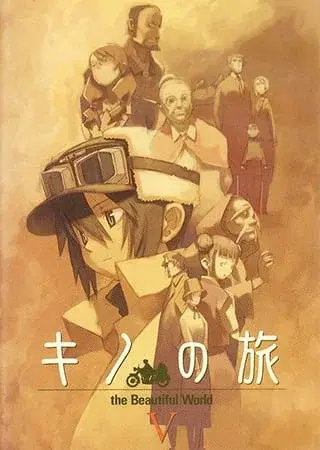
Watch Mushi-Shi if you want supernatural anime without power scaling, mascot spirits, or tidy moral lessons. It scratches the contemplative itch of Kino’s Journey and the gentle otherworldliness of Natsume’s Book of Friends, but with a more adult, ecological sensibility: the strange is approached like weather, illness, folklore, and field research rather than as an enemy to defeat. The appeal is in how each episode behaves like a polished short story, complete enough to sit with afterward and ambiguous enough to keep turning over in your head. Viewers who like rural atmosphere, historical texture, philosophical fantasy, and quiet dread will get far more from watching one or two episodes at a time than from treating it like a plot marathon.
Key Characters
- GGinko
Ginko is compelling because he is less a heroic fixer than a patient adult observer, bringing bedside-manner calm and field-research pragmatism to situations that other anime would escalate into battles.
- MMushi
The mushi function as a collective presence rather than a villain class, giving the series its unusual mix of folklore, ecology, illness, tragedy, and wonder.
What Makes It Stand Out
- 1
The series is structurally episodic to an extreme degree: contemporary criticism notes that its episodes can largely be viewed separately and even out of order, with Ginko serving as the connective tissue rather than a serial plot engine.
- 2
Hiroshi Nagahama handled both direction and series composition, which helps explain the show’s unusually consistent rhythm across 26 self-contained stories aired from October 2005 to June 2006.
- 3
Its genre profile is unusually specific: AniList’s highest tags place Environmental at 98%, Iyashikei at 96%, Youkai at 94%, Mythology at 91%, Episodic at 89%, and Philosophy at 88%, a combination that captures why the show feels closer to ecological folklore than standard supernatural adventure.
- 4
The critical shorthand around Mushi-Shi often calls it realistic fantasy and short-story storytelling, emphasizing how the supernatural elements are presented with mundane textures such as rural labor, local rumor, and bodily consequence.
- 5
The show’s most repeated viewing advice is not to binge it; several reviewers highlight that its slow pacing and reflective endings are designed to breathe between episodes.
Fun Facts & Trivia
- Fun fact 1
- Mushi-Shi was produced by Artland and ran for 26 episodes, finishing its broadcast on June 19, 2006 after beginning on October 23, 2005.
- Fun fact 2
- Hiroshi Nagahama’s authorship over the adaptation is unusually concentrated: he is credited as both director and series composition writer for this season.
- Fun fact 3
- Yoshihiko Umakoshi is credited with character design, while the title logo design is separately credited to Izumi Ichirou and Akito Sumiyoshi, reflecting how carefully the production treated its visual identity.
- Fun fact 4
- The first season’s reputation remained strong enough that a second season followed in 2014 with Hiroshi Nagahama again associated with the anime’s direction, according to contemporary coverage.
- Fun fact 5
- Its database performance is notable for a quiet, non-action seinen work: MAL lists it at 8.65 from 299,212 votes with a #87 rank and #228 popularity, while AniList records an 85/100 score and 8,620 favourites.
Studios
- Artland