Meow Meow Japanese History
ねこねこ日本史 第3期 (Neko Neko Nihonshi 3rd Season)
- Comedy
- Anthropomorphic
- Historical
- Parody
- Samurai
- Episodes
- 32
- Status
- Finished Airing
Synopsis
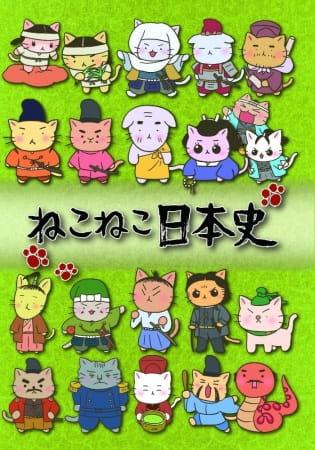
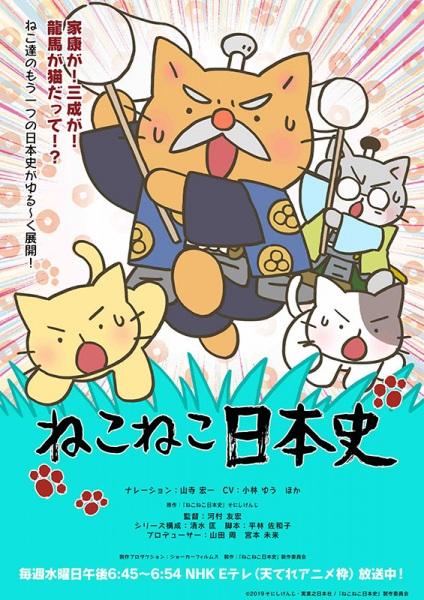
In the third installment of Meow Meow Japanese History, the whimsical world of anthropomorphic cats takes center stage once again, blending historical events with playful parody. Each episode continues to explore pivotal moments in Japanese history through the eyes of these charming feline characters, offering a unique and humorous perspective on the past.
As the narrative unfolds, viewers are treated to a delightful mix of comedy and historical intrigue, all while engaging with the personalities and antics of the cat samurai and their companions. The series cleverly intertwines educational elements with lighthearted storytelling, making it both entertaining and informative for audiences of all ages.
Otaku Consensus
Meow Meow Japanese History 3rd Season lands as a niche comfort-comedy rather than a broad critical breakout: Crunchyroll viewers rate the franchise warmly at 4.1 from 468 ratings, while database metrics are much cooler, with a 6.25 MAL score and 50/100 on AniList. Tomohiro Kawamura’s short-form, gag-forward handling keeps Kenji Sonishi’s feline history conceit easy to sample, but the recurring criticism is that the educational angle can be uneven, with one outside critique singling out its treatment of Christian topics as researched yet still surface-level.
Why You Should Watch
Watch this if you want historical comedy in snack-size form without the homework load of a serious period drama. It scratches the same itch as Hetalia’s playful compression of history, but with a softer, younger-skewing cat-gag sensibility that also overlaps with the “fun and silly” appeal viewers associate with shows like Bananya. The third season is especially for viewers who enjoy recognizing names and eras more than tracking a continuous plot: its value is in quick caricature, vocal exaggeration, and the absurdity of famous figures behaving with cat logic. With 32 episodes, Joker Films gives it enough volume to function as casual viewing, classroom-adjacent entertainment, or a palate cleanser between heavier samurai anime.
Key Characters
- RRyouma Sakamoto(VA: Yuu Kobayashi)
Ryouma Sakamoto stands out because Yuu Kobayashi’s energetic performance fits a historical figure often associated with restless momentum and reform-minded charisma.
What Makes It Stand Out
- 1
The season is a 32-episode production from Joker Films, giving it a larger episode count than many modern short-form comedy seasons and making it more of a recurring educational-comedy fixture than a one-off novelty.
- 2
Kenji Sonishi is credited as the original creator, which ties the anime’s identity to a specific gag-manga sensibility rather than to a committee-created mascot concept.
- 3
Tomohiro Kawamura directs the season with a format built for rapid historical sketches, prioritizing immediate comic payoff over long continuity or dramatic escalation.
- 4
The sound team pairs Kisuke Koizumi as sound director with music by Kosen, an important combination for a comedy that depends on timing, reaction beats, and quick tonal shifts.
- 5
The theme-song credits are unusually international for a light historical parody: Brian the Sun performs and arranges the first opening, while Diana Garnet is credited for English lyrics and performance on the second ending.
Fun Facts & Trivia
- Fun fact 1
- Crunchyroll lists Meow Meow Japanese History as a subtitled comedy with an average rating of 4.1 from 468 user ratings, showing a friendlier streaming-audience response than its MAL and AniList scores suggest.
- Fun fact 2
- AniList records only 1 favourite for this season, underlining how deeply niche the third installment is even within anime database communities.
- Fun fact 3
- The opening theme credits concentrate around Brian the Sun and Ryouta Mori: Brian the Sun handles performance and arrangement, while Mori is credited for both composition and lyrics.
- Fun fact 4
- Diana Garnet, known to anime fans for English-language vocal work, is credited here for both English lyrics and English performance on the second ending theme.
- Fun fact 5
- A critical blog post about theology in anime praised the franchise’s research interest in unusual historical subjects while criticizing its treatment of Christian material as not going far enough.
Studios
- Joker Films