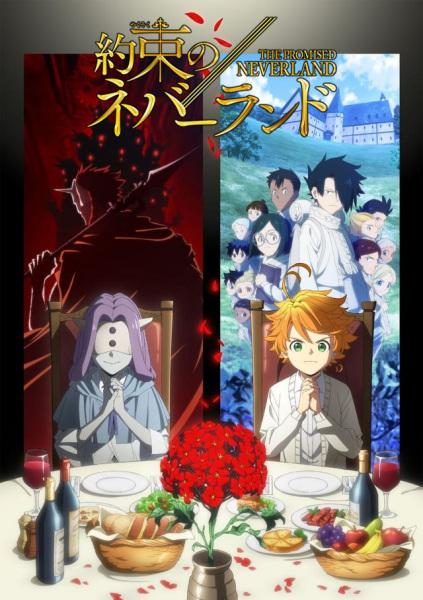
The Promised Neverland
約束のネバーランド (Yakusoku no Neverland)
- Mystery
- Suspense
- Psychological
- Survival
- Episodes
- 12
- Duration
- 22 min per ep
- Aired
- Jan 11, 2019 to Mar 29, 2019
- Status
- Finished Airing
Synopsis
Tucked behind a high gate and surrounded by dense woods, Grace Field House seems like an idyllic orphanage where children live as close-knit siblings under the gentle care of their “Mama,” Isabella. Days are filled with play and routine exams, and the only strict rule is to never stray too far beyond the grounds. Every few months, though, one child is “adopted” and leaves for a new home—only to vanish from everyone’s life without a trace.
As the oldest children begin to question the orphanage’s comforting facade, their curiosity turns into dread. What they uncover reveals a grim truth about Grace Field and the unsettling reality behind Isabella’s kindness, forcing them into a desperate fight for survival.
Otaku Consensus
CloverWorks’ 12-episode first season of The Promised Neverland landed as a breakout mystery-suspense hit—praised for its razor-tight pacing, oppressive atmosphere, and psychological cat-and-mouse tension built around a primarily child cast. Fan scores and rankings reflect how effectively it weaponizes innocence into dread, with Episode 1 frequently cited as a model hook. A minority of viewers argue the show’s immense setup and “endless possibilities” outpace its follow-through, but the prevailing verdict remains that Season 1 is smart, gorgeously produced, and absolutely worth watching—especially compared to the widely criticized reception of Season 2 in broader discourse.
Why You Should Watch
Watch The Promised Neverland if you want a thriller that doesn’t rely on action spectacle, but on intelligence, paranoia, and pressure-cooker decision-making. It’s a survival story where the most dangerous weapon is information—and every conversation feels like it has a hidden agenda. CloverWorks pairs storybook warmth with creeping menace, making the “safe” spaces feel increasingly hostile as the mystery tightens. The child ensemble isn’t a gimmick; it’s the point, amplifying both vulnerability and ingenuity in a way few anime attempt. If you like psychological mind games, contained settings with escalating stakes, and suspense that rewards close attention, this is one of the sharpest, most bingeable seasons in modern shounen-adjacent anime.
Key Characters
- EEmma(VA: Sumire Morohoshi)
An empathetic yet fiercely determined leader whose optimism becomes a strategic strength under pressure.
- NNorman(VA: Maaya Uchida)
A calm prodigy who approaches impossible problems with unsettling composure and precision.
- RRay(VA: Mariya Ise)
A sharp, guarded realist whose cynicism hides a deeper investment in the people around him.
What Makes It Stand Out
- 1
A masterclass in suspense structure: the season sustains tension through secrets, tests, and shifting alliances rather than constant action, keeping every episode feeling like a step deeper into the trap.
- 2
Psychological warfare with a child-cast twist: the “Primarily Child Cast” setup intensifies the survival theme, forcing cleverness and emotional resilience to matter as much as bravery.
- 3
CloverWorks’ visual contrast: soft, idyllic character designs and homey environments are framed to feel increasingly claustrophobic, turning comfort into unease through composition and lighting.
- 4
A tightly scoped first season (12 episodes) that prioritizes momentum—one reason it’s so binge-friendly and why many viewers recommend going in as blind as possible for maximum impact.
Fun Facts & Trivia
- Fun fact 1
- The anime adapts a Weekly Shounen Jump property (original story by Kaiu Shirai with original character design by Posuka Demizu), yet it’s frequently singled out by fans as unusually thriller-forward for the magazine’s lineup.
- Fun fact 2
- Its popularity is massive for a suspense series: MAL Popularity #37 with a high 8.47/10 score from 1,386,942 votes, reflecting broad mainstream reach beyond typical horror-leaning anime.
- Fun fact 3
- Director Mamoru Kanbe and series composer Toshiya Oono are key to the season’s tight pacing and episode-to-episode escalation—often cited by reviewers as the reason Season 1 feels so sharply constructed.
- Fun fact 4
- In wider community and critic commentary, Season 1 is consistently recommended as ‘worth watching,’ while Season 2 is commonly referenced as receiving mixed-to-negative reception—making the first season the clear must-see entry point.
Studios
- CloverWorks