Domestic Girlfriend
ドメスティックな彼女 (Domestic na Kanojo)
- Drama
- Romance
- Love Polygon
- School
- Episodes
- 12
- Duration
- 25 min per ep
- Aired
- Jan 12, 2019 to Mar 30, 2019
- Status
- Finished Airing
Synopsis
Natsuo Fujii is a high schooler nursing a painful crush on Hina, his bright and friendly teacher—feelings he knows he can’t act on. Trying to distract himself, he joins a mixer at his friends’ insistence and meets Rui, a reserved girl who seems just as out of place as he is. Their shared awkwardness leads to an impulsive night together when Rui asks him to sleep with her, hoping it will change how others see her, and Natsuo agrees despite his lingering thoughts of Hina.
They part intending to forget it ever happened, but Natsuo’s life turns upside down when his father announces a sudden remarriage. The new family arrives, and Natsuo discovers his step-sisters are Rui—and Hina. Caught between a teacher he loves and a girl tied to his first experience, he’s forced to confront complicated emotions and the unsettling, messy side of romance.
Otaku Consensus
Domestic Girlfriend succeeds when Shouta Ibata’s brisk direction and Tatsuya Takahashi’s front-loaded scripting treat romance like a pressure cooker rather than a courtship fantasy; viewers who praise it consistently point to the speed, the non-bait intimacy, and Minami’s instantly recognizable opening as the hooks. Its weakest and most divisive trait is also its identity: the adaptation compresses Kei Sasuga’s melodrama into 12 episodes, making character motives feel appalling, rushed, or soap-operatic to viewers who need moral grounding from romance.
Why You Should Watch
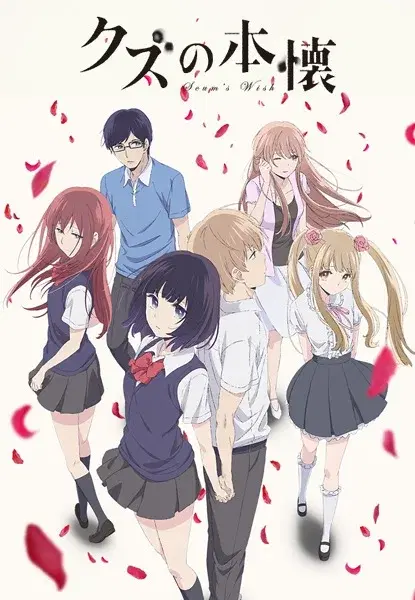
Watch Domestic Girlfriend if you want romance anime where the emotional damage starts immediately and nobody gets to hide behind five seasons of almost-confessions. It scratches the same messy-adult itch as Scum’s Wish more than the comfort-food rhythm of a school romcom: attraction is physical, decisions have fallout, and the series is far more interested in bad timing than in ideal compatibility. The appeal is not wholesomeness; it is velocity. Diomedéa’s 12-episode adaptation moves like a tabloid serialized into late-night anime, with enough kisses, silence, guilt, and escalation to make every episode feel consequential. If you enjoy love polygons, cohabitation tension, teacher-student taboo, and characters making choices you want to argue about afterward, this is engineered for that exact reaction.
Key Characters
- NNatsuo Fujii(VA: Taku Yashiro)
Natsuo is the kind of romance protagonist fans debate less for charm than for volatility, because his insecurity and impulsiveness keep turning private feelings into public damage.
- HHina Tachibana(VA: Youko Hikasa)
Hina’s appeal comes from the tension between her warm adult presence and the dangerous emotional ambiguity that makes her one of the show’s most criticized and defended figures.
- RRui Tachibana(VA: Maaya Uchida)
Rui is often treated by viewers as the sharpest point of the triangle, a reserved heroine whose bluntness and awkward emotional logic give the melodrama its most grounded counterweight.
What Makes It Stand Out
- 1
The anime is a compact 12-episode Diomedéa adaptation of Kei Sasuga’s manga, airing from January to March 2019, which gives the series a notably compressed, high-escalation structure compared with longer romance adaptations.
- 2
Tatsuya Takahashi handled series composition and also wrote episodes 1-4, 11, and 12, meaning the same writer shaped both the opening run that establishes the show’s emotional rules and the closing stretch that defines the anime’s endpoint.
- 3
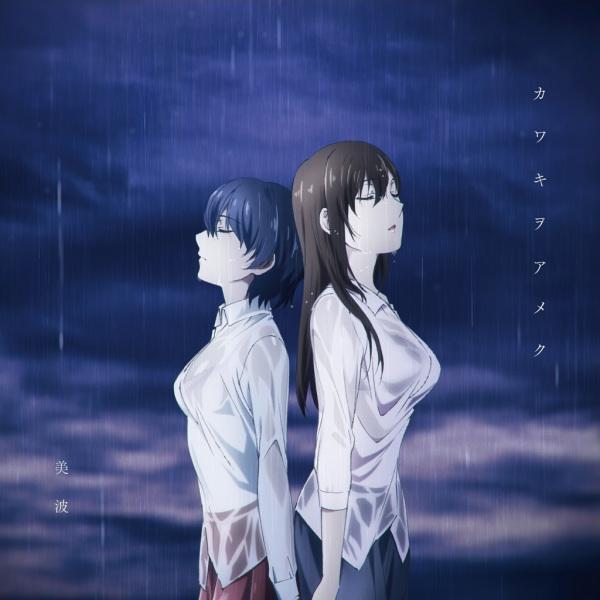
Minami’s opening theme, widely known as “Kawaki wo Ameku” or “Crying for Rain,” became one of the show’s biggest cultural calling cards; multiple viewers cite the song itself as a reason people discover the anime.
- 4
Its audience profile is unusually polarized: it sits at 6.6 on MyAnimeList with over 501,000 votes and a low rank around #7317, yet remains highly visible at MAL popularity #270 and has over 5,000 AniList favourites.
- 5
The show’s tag profile is unusually explicit for a school romance, with AniList marking Inseki at 100%, Love Triangle at 96%, Cohabitation at 79%, Age Gap at 76%, and Nudity at 70%, reflecting why viewers frame it more as melodrama than conventional romcom.
Fun Facts & Trivia
- Fun fact 1
- Domestic Girlfriend was produced by Diomedéa, with Shouta Ibata directing and Naomi Ide handling character designs.
- Fun fact 2
- The music was composed by Masato Kouda, while the sound direction was handled by Yayoi Tateishi.
- Fun fact 3
- The opening theme was performed by Minami, and the ending theme was performed by Alisa Takigawa, giving the anime two named vocal anchors despite its short one-cour run.
- Fun fact 4
- The reception split is visible across platforms: the research data lists a 4.4 rating on Crunchyroll and 7.2 on IMDb, while anime-database scores trend lower at 6.6 on MAL and 64/100 on AniList.
- Fun fact 5
- The original creator is Kei Sasuga, and the anime’s most common adaptation criticism from reader-viewers is that the 12-episode version rushes through material that the manga handles over a longer melodramatic arc.
Studios
- Diomedéa