Higehiro: After Being Rejected, I Shaved and Took in a High School Runaway
ひげを剃る。そして女子高生を拾う。 (Hige wo Soru. Soshite Joshikousei wo Hirou.)
- Drama
- Romance
- Love Polygon
- Workplace
- Episodes
- 13
- Duration
- 23 min per ep
- Aired
- Apr 5, 2021 to Jun 28, 2021
- Status
- Finished Airing
Synopsis
Yoshida, an ordinary salaryman, wakes up on a quiet Sunday to find a stranger asleep in his small apartment: Sayu Ogiwara, a high school girl he doesn’t recognize. The night before, after working up the nerve to confess to his boss and longtime crush Airi Gotou—only to be turned down—he drank with his friend Hashimoto and stumbled home, where he met Sayu, a runaway asking for a place to stay.
With his memory hazy, Yoshida presses Sayu to explain what happened and why she’s there. Learning more about her situation, including that she came all the way from Hokkaido, he can’t bring himself to send her back out, even as he wrestles with the implications of taking in an underage girl. Their unexpected shared life begins from that uneasy, compassionate decision.
Otaku Consensus
Higehiro earns its reputation as a solid, emotionally serious drama by letting Manabu Kamikita’s direction and Hitomi Mieno’s series composition foreground recovery, boundaries, and adult decision-making rather than rom-com wish fulfillment. Its strongest stretch is the first half, where viewers praised the unusually grounded office-adult cast and the slow domestic recalibration, while the most persistent criticism is that the age-gap premise and especially the early sexual-bargain material around episode 2 can feel stomach-turning even when the show condemns it.
Why You Should Watch
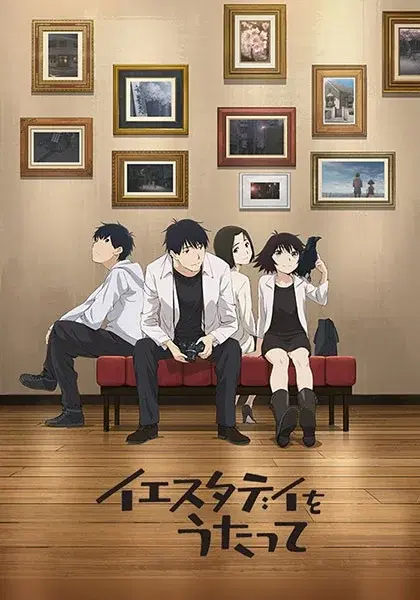
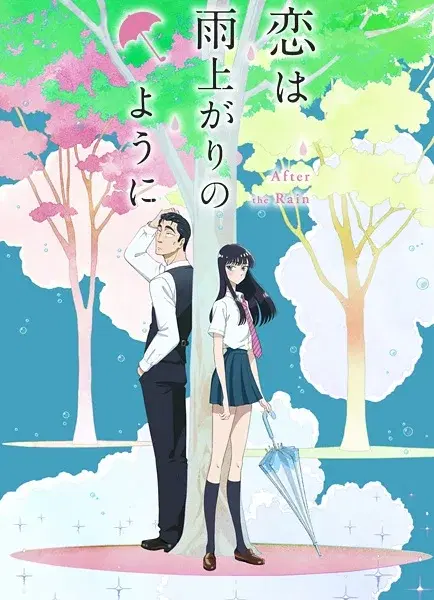
Watch Higehiro if you want a romance-adjacent drama about responsibility, damage, and restraint without the escapist gloss of a standard cohabitation comedy. It scratches a similar itch to After the Rain in the way it uses an uncomfortable adult/teen dynamic to test emotional boundaries, and to Sing “Yesterday” for Me in its attention to working adults who are messy but not cartoonishly immature. The hook is not “will they or won’t they”; it is whether compassion can stay ethical when loneliness, attraction, guilt, and dependency all occupy the same room. Viewers who like quiet workplace scenes, convenience-store found-family textures, and characters trying to make better choices after bad ones will get more from it than viewers looking for clean wish fulfillment.
Key Characters
- YYoshida
Yoshida stands out because the drama continually measures him by his restraint, not by fantasy-hero generosity, making him one of the show’s main ethical pressure points.
- SSayu Ogiwara
Sayu is framed less as a manic-pixie disruption than as a recovery-centered character whose guarded cheerfulness keeps fans debating coping, agency, and vulnerability.
- AAiri Gotou
Airi Gotou gives the office side of the cast real weight, functioning as a mature romantic counterforce rather than a simple workplace crush.
- HHashimoto
Hashimoto is memorable as the adult friend who keeps the series from isolating Yoshida inside the apartment drama, adding social context to his decisions.
What Makes It Stand Out
- 1
The series is a compact 13-episode Project No.9 production that aired in a single Spring 2021 run from April 5 to June 28, giving the drama a clear one-cour shape rather than a sprawling slow burn.
- 2
AniList’s tag weighting tells you how viewers actually categorize it: Rehabilitation at 94%, Coming of Age at 86%, and Cohabitation at 80%, placing emotional repair above romance in the show’s identity.
- 3
The cast balance is unusual for a runaway-high-schooler premise: AniList marks it with Work at 66%, Primarily Adult Cast at 63%, Office Lady at 59%, Office at 55%, and Konbini at 56%, reflecting how much of the drama is routed through adult labor spaces and part-time work rather than school life.
- 4
The most praised section in web discussion is the first half, where the appeal comes from adults acting like adults: flawed, emotionally compromised, but not written as impulsive caricatures.
- 5
Its most divisive material is front-loaded, with episode 2 frequently singled out by viewers as a “pit of the stomach” episode because the series directly confronts exploitation and discomfort instead of sanding the premise into harmless rom-com setup.
Fun Facts & Trivia
- Fun fact 1
- The anime credits Shimesaba for the original story and booota for the original character designs, with Takayuki Noguchi handling the anime character designs for the Project No.9 adaptation.
- Fun fact 2
- Hitomi Mieno handled series composition, a key role for a show whose reception depends heavily on pacing ethical tension and emotional recovery across only 13 episodes.
- Fun fact 3
- The production credits separate visual-detail roles in a way database readers often miss: Haruo Miyagawa is listed for prop design, Youko Naeki for costume design, and Daisuke Unno for the title logo design.
- Fun fact 4
- Its database profile shows a split between reach and rating: on MyAnimeList it has a 7.25 score from 363,159 votes, a popularity rank of #362, and a much lower ranking position of #3423.
- Fun fact 5
- AniList’s numbers echo that middle-ground reception: a 70/100 score paired with 4,202 favourites, indicating a show with a sizable devoted audience despite a generally mixed-to-positive critical average.
Studios
- Project No.9