Yosuga no Sora: In Solitude, Where We Are Least Alone
ヨスガノソラ (Yosuga no Sora)
- Drama
- Ecchi
- Romance
- Harem
- Episodes
- 12
- Duration
- 25 min per ep
- Aired
- Oct 4, 2010 to Dec 20, 2010
- Status
- Finished Airing
Synopsis
After a sudden accident takes their parents’ lives, twin siblings Haruka and Sora Kasugano return to their childhood home to start over. Back in the quiet rural town they left four years earlier, they try to settle into a familiar place that now feels changed by loss.
Old memories surface as they reconnect with past acquaintances and meet new faces, drawing them into an increasingly tangled web of relationships. As affection, friendship, jealousy, and desire begin to shape their days, Haruka and Sora find their attempt at a fresh beginning complicated by the emotions the town brings back.
Otaku Consensus
Yosuga no Sora remains divisive because its strongest qualities are inseparable from its most alienating choices: Takeo Takahashi’s route-based direction, feel.’s soft rural presentation, and Manabu Miwa and Jun Ichikawa’s music give it a distinct visual-novel atmosphere, while the Sora material turned the series into a lasting controversy. Admirers single out the soundtrack, fast pacing, and the final route’s emotional charge; detractors most often attack the omnibus structure as disorienting and the drama as too sexually blunt to earn its intended pathos. Its 5.98 MAL score and high popularity tell the real story: not a consensus classic, but an anime people keep debating long after average romances disappear.
Why You Should Watch
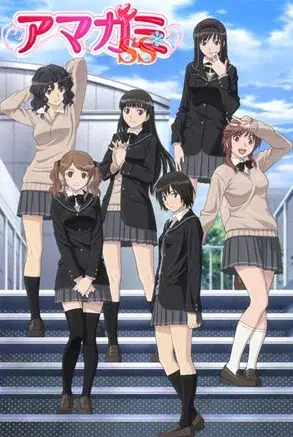
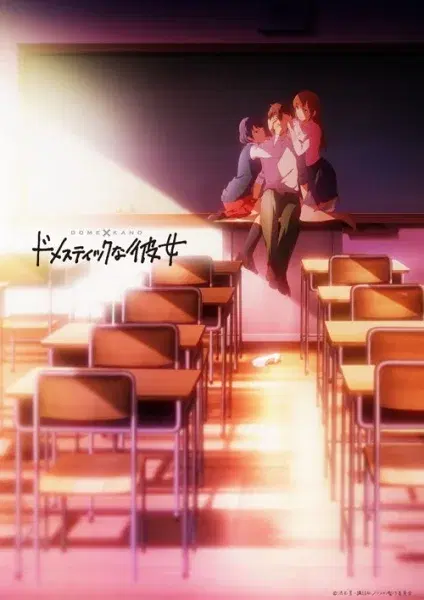
Watch Yosuga no Sora if you want a romance anime that behaves like an adult visual novel instead of a tidy TV harem: separate emotional routes, abrupt resets, and intimacy treated as a source of damage as much as wish fulfillment. It scratches the Amagami SS omnibus itch, but with the safety rails removed; it also sits near Domestic Girlfriend in its willingness to make taboo desire the engine rather than a side scandal. The appeal is not comfort-romance polish. It is the mix of quiet countryside staging, sentimental piano-led music, explicit ecchi framing, and a finale that forces the audience to decide whether emotional sincerity can coexist with moral revulsion. Viewers who like clean continuity and restrained melodrama should stay away; visual-novel fans and controversy archaeologists will find plenty to dissect.
Key Characters
- HHaruka Kasugano(VA: Hiro Shimono)
Haruka functions less like a standard harem lead and more like a route-dependent pressure point, with each arc testing a different version of his passivity, guilt, and desire.
- SSora Kasugano(VA: Hiroko Taguchi)
Sora is the character most responsible for the anime’s reputation, discussed by fans as both a fragile emotional core and the point where the series abandons safe romance conventions.
- AAkira Amatsume(VA: Kayo Sakata)
Akira brings shrine-maiden iconography and outward brightness into the ensemble, giving the rural setting one of its clearest links between local tradition and character drama.
- KKazuha Migiwa(VA: Ryouko Ono)
Kazuha fits the polished, guarded heroine mold, but her appeal comes from how the show uses social distance and restraint rather than simple tsundere banter.
What Makes It Stand Out
- 1
The anime uses an omnibus, visual-novel-style route structure rather than a single continuous harem narrative, a choice reflected by AniList’s high Anthology tag and frequently cited as both a hook and a source of confusion.
- 2
Studio feel. gives the series a soft, humid rural look built around quiet roads, trains, shrine spaces, and summer light, aligning closely with the Rural, Shrine Maiden, and Trains tags that define its atmosphere.
- 3
The soundtrack by Manabu Miwa and Jun Ichikawa is one of the most consistently praised elements in fan reactions, with viewers often singling out the peaceful music even when criticizing the writing.
- 4
Its ecchi content is not incidental background fanservice: AniList’s Nudity tag sits at 82%, and the show’s reputation depends on how directly it ties sexuality to romantic escalation and melodrama.
- 5
The Sora route is the series’ cultural fingerprint, producing extreme review splits from 1/10 condemnations to 10/10 defenses and keeping the title visible despite middling aggregate scores.
Fun Facts & Trivia
- Fun fact 1
- The production pairs director Takeo Takahashi with series composer Naruhisa Arakawa, while Hiro Suzuhira’s original character designs were adapted for animation by Kanetoshi Kamimoto.
- Fun fact 2
- Team.Nekokan [Neko] is credited for theme song performance, a detail that helps explain why the music is often remembered separately from the show’s polarizing content.
- Fun fact 3
- Yosuga no Sora has a low MAL rank and a 5.98 score, yet it also sits at MAL popularity #465 with 288,992 votes, making it far more widely watched than many better-rated romances.
- Fun fact 4
- AniList’s tag spread is unusually specific for a harem romance: Orphan at 92%, Twins at 91%, Anthology at 79%, Rural at 78%, and Shrine Maiden at 72% outline the show’s identity more accurately than genre labels alone.
- Fun fact 5
- The show aired as a compact 12-episode fall 2010 TV series from Oct 4 to Dec 20, a short format that contributes to its fast route pacing and abrupt tonal turns.
Studios
- feel.