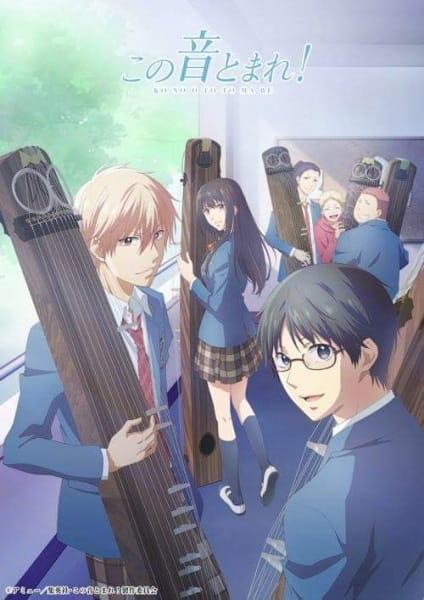
Kono Oto Tomare!: Sounds of Life Season 2
この音とまれ! (Kono Oto Tomare! Part 2)
- Drama
- Music
- Performing Arts
- School
- Episodes
- 13
- Duration
- 23 min per ep
- Aired
- Oct 6, 2019 to Dec 29, 2019
- Status
- Finished Airing
Synopsis
After a fractured, out-of-sync showing at the Kanto Region Traditional Japanese Music Festival, the Tokise High School Koto Club is left reeling when the results come back harsh. Chika Kudou, Satowa Houzuki, Takezou Kurata, Hiro Kurusu, Kouta Mizuhara, Saneyasu Adachi, and Michitaka Sakai take the disappointment to heart—but also recognize how much potential they still have. Determined to turn their weaknesses into strength, they commit to serious practice with the national qualifiers in winter as their next target.
With advisor Suzuka Takinami finally on their side, the path forward starts to feel possible as they learn what makes a performance truly musical, hone their technique, and seek more chances to play in front of others to gain the experience they’re missing. Even so, progress doesn’t come easily: formidable rival schools loom, and everyday school concerns—new feelings, shifting relationships, and the realities of seniors nearing graduation—test both their focus and the club’s future.
Otaku Consensus
Kono Oto Tomare!: Sounds of Life Season 2 is the cour where the anime’s competition-drama machinery fully locks in, with Ryouma Mizuno’s steadier direction and Ayumu Hisao’s scripts turning the winter qualifier material into the series’ emotional peak rather than a simple tournament escalation. Fans and database audiences reward it accordingly, with an 8.42 MAL score and an 83/100 AniList score, especially for its ensemble balance, musical buildup, and adaptation of Amyuu Sakura’s manga. The recurring criticism is that Platinum Vision’s visuals remain more functional than luxurious for a performance anime, relying more on staging, sound direction, and character reaction than consistently lavish instrument animation.
Why You Should Watch
Watch Season 2 if you want the catharsis of a competition arc without the cold perfectionism that can make music anime feel untouchable. It scratches a similar itch to Hibike! Euphonium in its attention to ensemble sound, and to Chihayafuru in the way every practice room adjustment becomes a character beat. The appeal is not just “will they win,” but watching a club learn how tone, timing, posture, and trust change the emotional meaning of a performance. Viewers who like shounen growth structures but prefer interpersonal drama over power systems will find this cour especially satisfying. It is also a strong pick for anyone interested in traditional Japanese instruments being treated as living performance culture rather than background flavor.
Key Characters
- CChika Kudou
Chika remains the series’ combustible emotional center, compelling because his rough reputation clashes with how seriously he learns to listen to other players.
- SSatowa Houzuki
Satowa is the technical standard the club keeps measuring itself against, but her appeal comes from watching discipline turn from isolation into communication.
- TTakezou Kurata
Takezou gives the ensemble its quiet spine, earning fan affection as a leader whose uncertainty never stops him from doing the unglamorous work.
- HHiro Kurusu
Hiro stands out because her growth is framed less as redemption theater and more as the slow rebuilding of trust inside a demanding group.
What Makes It Stand Out
- 1
The second season functions as a payoff cour: its 13 episodes narrow the focus toward winter qualification, giving the adaptation a cleaner competitive spine than a broader school-club slice of life structure.
- 2
Hajime Takakuwa’s sound direction is central to the drama, because the series repeatedly asks viewers to hear differences in cohesion, confidence, and phrasing rather than treating the koto performances as interchangeable inserts.
- 3
Kei Haneoka’s music supports the performing-arts theme without replacing the koto as the main attraction, using the score to frame tension around rehearsal, stage pressure, and emotional release.
- 4
Platinum Vision’s production emphasizes character acting, reaction shots, and performance atmosphere over constant instrumental sakuga, a choice that gives the season its intimate feel while also explaining the common visual criticism.
- 5
The AniList tag profile is unusually specific for a school music drama: School Club at 93%, Ensemble Cast and Coming of Age both at 81%, and Band at 60%, reflecting how strongly the season is read as a group-development story rather than a single-protagonist vehicle.
Fun Facts & Trivia
- Fun fact 1
- Amyuu Sakura is credited as the original creator, and the anime’s second season adapts her manga under the alternate title Kono Oto Tomare! Part 2.
- Fun fact 2
- Ayumu Hisao handled both series composition and script, giving the 13-episode season a unified dramatic throughline rather than a patchwork of separately steered episodes.
- Fun fact 3
- Junko Yamanaka served as both character designer and chief animation director, with Toshimitsu Kobayashi also credited as chief animation director, tying the season’s character consistency directly to its design staff.
- Fun fact 4
- Shouta Aoi performed the opening theme and is also credited for the ending theme performance in episode 13, making the finale’s music credit distinct within the season.
- Fun fact 5
- The season aired from October 6, 2019 to December 29, 2019, placing its entire run inside the Fall 2019 anime season and concluding just before the end of the year.
Studios
- Platinum Vision