Ai Yori Aoshi
藍より青し
- Comedy
- Drama
- Romance
- Harem
- Episodes
- 24
- Duration
- 23 min per ep
- Aired
- Apr 11, 2002 to Sep 26, 2002
- Status
- Finished Airing
Synopsis
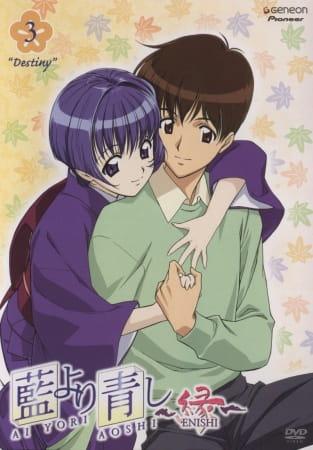
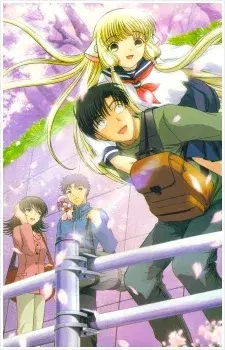
Kaoru Hanabishi is a Tokyo college student living on his own when he encounters a striking yet clearly lost young woman in a kimono at a train station. Offering to help, he escorts her to the address she’s searching for—only to find it’s an empty lot in his neighborhood. With nowhere else to go, Kaoru invites her back to his apartment and asks if she has anything that might explain why she came.
She produces an old photograph of two children, which Kaoru recognizes as himself and Aoi Sakuraba, his childhood friend. The bewildered visitor is Aoi—now his betrothed—who has traveled to Tokyo to marry him, a confession that catches Kaoru off guard and stirs painful memories of why he once walked away from the Hanabishi family.
Otaku Consensus
Ai Yori Aoshi earns its staying power by treating its central couple as the engine of the series rather than using romance as a punchline machine; critics consistently single out its relationship development, sentimental pacing, polished J.C.Staff presentation, and unusually satisfying ending for a harem-era TV anime. Its weakness is just as consistent: viewers outside the genre often find the series too straightforward, too conventionally lovey-dovey, and lacking the sharp hook or formal surprise that would elevate it beyond a sincere early-2000s comfort watch.
Why You Should Watch
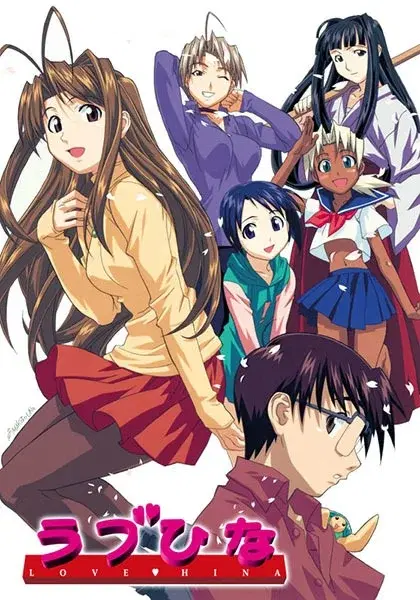
Watch Ai Yori Aoshi if you want a harem romance where the “harem” setup does not erase the emotional priority of the lead relationship. It scratches a similar early-2000s itch as Love Hina, but trades heavier slapstick chaos for a softer domestic melodrama built around loyalty, old wounds, and slow reassurance. The appeal is not in guessing an endgame or chasing constant reversals; it is in seeing a seinen-leaning romance give its main pair room to breathe across a full 24-episode run. Viewers who like college-age casts, gentle comedy, traditional romantic sentiment, and lower-intensity fanservice will get the most from it. Viewers who need subversion, fast plotting, or a genuinely competitive harem will likely find it too modest.
Key Characters
- KKaoru Hanabishi
Kaoru stands out as a harem-era male lead defined less by indecision than by emotional baggage, making the romance play more like recovery than wish fulfillment.
- AAoi Sakuraba
Aoi is remembered by fans as the series’ emotional anchor: openly devoted, traditional in presentation, and central enough that the show feels like a romance first and a harem second.
What Makes It Stand Out
- 1
J.C.Staff produced the 24-episode television run that aired from April 11 to September 26, 2002, giving the series a full two-cour structure rather than a compressed single-season romance sprint.
- 2
The series is frequently described by viewers as a “faux harem,” because the surrounding romantic comedy elements orbit a clearly prioritized central relationship instead of functioning as a balanced romantic free-for-all.
- 3
Masaharu Amiya handled series composition, and the show’s reputation rests heavily on that steady sentimental build: reviews praise the relationship development while critics who bounce off it usually cite the same straightforwardness.
- 4
Kazunori Iwakura served as character designer, with Yumi Nakayama as chief animation director and Yuuko Kusumoto and Shinya Hasegawa credited for design works, reflecting a production pipeline focused on polished character presentation.
- 5
Toshio Masuda composed the music under sound director Masafumi Mima, supporting the show’s softer dramatic mode rather than pushing it toward high-energy farce.
Fun Facts & Trivia
- Fun fact 1
- Ai Yori Aoshi comes from original creator Kou Fumizuki, and the anime’s reception often centers on how directly it preserves the appeal of a sincere romantic setup within a harem framework.
- Fun fact 2
- AniList classifies the show with Female Harem at 79% and Seinen at 70%, a useful snapshot of its unusual placement: genre mechanics associated with harem anime filtered through a more adult romantic tone.
- Fun fact 3
- Its cast profile is not the standard high-school harem template; AniList tags it as Primarily Adult Cast at 60% and College at 20%, which helps explain why its drama feels more domestic than classroom-driven.
- Fun fact 4
- The show holds a 7.1/10 MAL score from 55,685 votes, while AniList lists it at 67/100 with 153 favourites, suggesting a series with a stable niche audience rather than broad modern hype.
- Fun fact 5
- THEM Anime Reviews singled out the artwork, the developed leads, and the ending, while other fan reviews criticized the same simplicity as one-dimensional, making it a clean example of a romance whose strengths and weaknesses are inseparable.
Studios
- J.C.Staff