Berserk
剣風伝奇ベルセルク (Kenpuu Denki Berserk)
- Action
- Adventure
- Drama
- Fantasy
- Horror
- Gore
- Military
- Psychological
- Episodes
- 25
- Duration
- 23 min per ep
- Aired
- Oct 8, 1997 to Apr 1, 1998
- Status
- Finished Airing
Synopsis
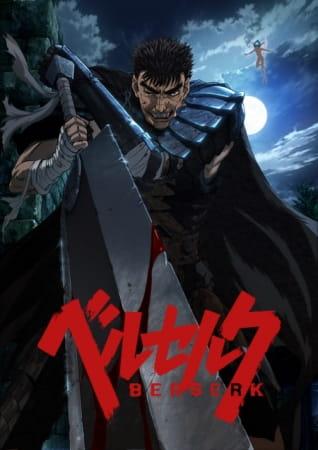
Guts is a young, wandering mercenary fated to be remembered as the Black Swordsman, recognizable by the massive blade he carries and a habit of taking only the best-paying work. He keeps his distance from any one company—until a clash with the Band of the Falcon leaves many of its soldiers cut down. Their commander and founder, Griffith, becomes intrigued and challenges Guts to a duel, ending the fight in a single decisive strike.
Brought to the Falcons’ camp to recover, Guts demands a rematch and is offered terms: if he loses, he joins them. Still wounded, he’s defeated and inducted into the Band of the Falcon. Over the next three years, Guts rises to become one of their commanders, carving through enemy ranks with a ferocity rivaled only by Griffith’s own prowess. Together, his strength and Griffith’s leadership drive the Falcons from victory to victory—until a darker presence begins to stir, poised to upend Guts’ life.
Otaku Consensus
Berserk 1997 endures as the strongest animated gateway to Kentarou Miura's manga because Naohito Takahashi turns the Golden Age material into a lean, emotionally escalating 25-episode war tragedy rather than a generic dark-fantasy action show. Its strengths are the severe direction, adult-cast psychology, Japanese voice performances, and fatalistic pacing; its persistent drawback is OLM's visibly economical TV animation, which leaves some battles and motion-heavy scenes feeling underpowered.
Why You Should Watch
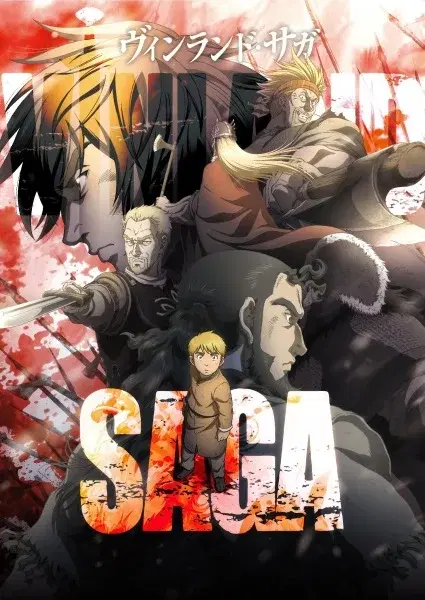
Watch Berserk 1997 if you want dark fantasy where military ambition, trauma, loyalty, and class politics matter more than spell systems or tournament escalation. It scratches a similar itch to Vinland Saga in its adult war-drama focus, but with the horror pressure and moral rot pushed closer to Devilman Crybaby territory. The appeal is not slick choreography; it is the way every duel, promotion, silence, and campfire conversation tightens the emotional noose around three damaged people. Viewers who like anti-heroes, found-family tension, medieval campaigns, and philosophy filtered through blood-soaked choices will get the most from it. Viewers looking for modern animation polish or a complete manga adaptation should know the famous compromise upfront: the series is powerful television, not a full replacement for Miura's source.
Key Characters
- GGuts(VA: Nobutoshi Canna)
Guts is compelling because his brutality never plays as simple toughness; fans remember him as a character whose survival instincts clash with an almost unbearable need to be seen as more than a weapon.
- GGriffith(VA: Toshiyuki Morikawa)
Griffith remains one of anime's most discussed commanders because his charisma, strategic brilliance, and dreamlike self-possession make admiration and distrust feel inseparable.
- CCasca(VA: Yuuko Miyamura)
Casca stands out as a battlefield leader rather than a token heroine, with loyalty, pride, and emotional restraint making her central to the series' harshest interpersonal conflicts.
What Makes It Stand Out
- 1
The 1997 series is a 25-episode adaptation of the Golden Age portion of Kentarou Miura's manga, a structural choice that concentrates on military rise, political maneuvering, and psychological dependency instead of trying to summarize the entire Berserk mythos.
- 2
OLM's production is often criticized for limited animation, but the show leans into 1990s TV techniques such as held cels, stark close-ups, painted still compositions, and abrupt editorial rhythm to create a grim, theatrical mood.
- 3
Naohito Takahashi's direction emphasizes dread through restraint: long pauses, hard cuts, and quiet aftermath scenes often carry more weight than the swordplay itself.
- 4
The production separates visual responsibilities across Norihiro Matsubara's character designs, Kouji Fukazawa's prop design, and Shichirou Kobayashi's art direction, which helps the armor, weapons, camps, and court spaces feel materially grounded.
- 5
Susumu Hirasawa's score gives the adaptation a distinct identity, mixing uncanny synth textures and ritual-like vocal tracks with medieval tragedy rather than relying on conventional heroic fantasy music.
Fun Facts & Trivia
- Fun fact 1
- Berserk aired from October 8, 1997 to April 1, 1998, giving it a two-cour television run that ended long before later anime adaptations revived the property.
- Fun fact 2
- The series is listed under the Japanese title Kenpuu Denki Berserk and was produced by OLM, the same studio better known internationally for long-running family and game-adaptation franchises, making its grim seinen tone stand out in the studio's catalog.
- Fun fact 3
- The critical conversation around Berserk 1997 is unusually split between admiration and frustration: The Anime Review highlighted its capacity to provoke grief and anger, while fan discussions commonly praise the Japanese voice acting and warn about cheap animation.
- Fun fact 4
- Online reception still favors the 1997 version over the 2016 anime, which is frequently described in fan commentary as not disastrous so much as disappointingly average.
- Fun fact 5
- Across database audiences, its reputation remains unusually durable for a late-1990s TV production: AniList records an 84/100 score and more than 11,000 favorites, while MyAnimeList places it near the upper tier with an 8.61 score from over 417,000 votes.
Studios
- OLM