The Girl I Like Forgot Her Glasses Short Episode
好きな子がめがねを忘れた ショートアニメ (Suki na Ko ga Megane wo Wasureta Short Episode)
- Comedy
- Romance
- Love Status Quo
- School
- Episodes
- 4
- Status
- Finished Airing
Synopsis
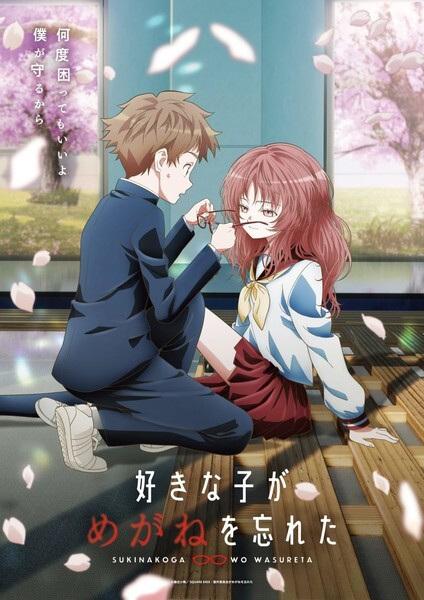
In a lighthearted exploration of young love and everyday mishaps, **The Girl I Like Forgot Her Glasses** invites viewers into the charming world of school life. The story revolves around a shy boy who harbors feelings for his classmate, a girl whose endearing forgetfulness often leads to amusing situations. Each short episode captures the subtle nuances of their relationship, blending comedic moments with tender interactions.
As the boy navigates his feelings, the series highlights the awkward yet heartwarming dynamics of adolescence. With a perfect balance of humor and romance, the episodes offer a delightful glimpse into the ups and downs of teenage affection, leaving audiences both entertained and wistfully reflective.
Otaku Consensus
Otaku Consensus: The Girl I Like Forgot Her Glasses Short Episode works best as a snack-size extension of a featherlight school romance, with its four-episode brevity, pleasant rom-com mood, and Ai Mie’s endearing screen presence carrying more weight than plot momentum. The verdict is divided on GoHands’ highly stylized visual direction: it gives the material a distinct identity, but critics repeatedly flagged tonal clashes between the loopy digital presentation and the simple classroom-cute writing. The most common complaint is not that it lacks drama, but that Komura’s heavy internal monologuing and the thin gag structure can make the romance feel awkward in the wrong way.
Why You Should Watch
Watch this if you want a low-commitment classroom crush vignette without confession arcs, rival love interests, or emotional blowups. Its four-short format makes it closer to a bonus dessert than a full meal: quick, repetitive by design, and built around tiny shifts in comfort between two classmates. It scratches a nearby itch to Teasing Master Takagi-san or Kubo Won’t Let Me Be Invisible, but with less teasing strategy and more bashful observation. The main draw is the contrast between GoHands’ attention-grabbing visual style and an intentionally small “love status quo” setup, which makes even throwaway exchanges feel oddly magnified. Viewers who enjoy romance as mood, voice-acted hesitation, and school-life micro-comedy will get the most from it.
Key Characters
- KKaede Komura(VA: Masahiro Itou)
Komura is the series’ nervous romantic lens, and fan reaction often hinges on whether his nonstop inner commentary reads as painfully relatable or too intensely fixated.
- AAi Mie(VA: Shion Wakayama)
Mie is the character critics most consistently singled out as endearing, giving the short episodes their soft comedic pull even when the writing stays deliberately simple.
What Makes It Stand Out
- 1
The anime is produced by GoHands, a studio whose glossy digital camera movement and stylized character presentation made the franchise’s first episode a bigger visual talking point than many school rom-com premieres.
- 2
Its structure is unusually compact: only four episodes, all finished airing, which positions it as a short-form side experience rather than a conventional seasonal romance build.
- 3
The critical debate around the title centers on tonal fit rather than basic competence; The New Leaf Journal noted clashes between the animation style and the simple content, while The Magic Planet attacked the writing and Komura’s monologues more directly.
- 4
The credited main cast is a tight two-hander: Masahiro Itou as Kaede Komura and Shion Wakayama as Ai Mie, keeping the focus on vocal timing and small interpersonal reactions instead of ensemble comedy.
- 5
Its public reception is niche and modest rather than broadly embraced, with a 6.23 MAL score from 564 votes, a #9045 rank, and #12586 popularity at the time of the provided data.
Fun Facts & Trivia
- Fun fact 1
- The short is tagged with Comedy and Romance on MAL, while one streaming listing for the broader title also files it under Drama and includes a profanity content advisory, showing how differently platforms frame its tone.
- Fun fact 2
- Anime Corner’s coverage of the franchise praised the theme songs in particular, calling the opening a banger and the ending cute enough to capture the series’ mood.
- Fun fact 3
- The web criticism is unusually visual-focused for such a small romance title: multiple first-impression pieces spent significant space on GoHands’ wobbly, loopy presentation rather than only on the characters.
- Fun fact 4
- The title’s official theme classification includes “Love Status Quo” and “School,” a useful label for viewers expecting a romance built on repeated near-moments instead of rapid relationship progress.
Studios
- GoHands