Summer Wars
サマーウォーズ
- Award Winning
- Comedy
- Sci-Fi
- Adult Cast
- Gag Humor
- High Stakes Game
- Video Game
- Episodes
- 1
- Duration
- 1 hr 54 min
- Aired
- Aug 1, 2009
- Status
- Finished Airing
Synopsis
OZ is a massively popular online world where people, through personalized avatars, can do everything from shopping to sports. Protected by powerful encryption, it’s trusted with sensitive personal data and has become so woven into daily life that society even relies on it for critical tasks, including guiding the unmanned asteroid probe Arawashi back to Earth.
Seventeen-year-old math prodigy Kenji Koiso, who also works part-time as an OZ moderator, joins his crush Natsuki Shinohara on a summer trip—only to learn he’s expected to pose as her fiancé. At Natsuki’s family estate, as preparations begin for her great-grandmother’s 90th birthday, Kenji receives an anonymous, encrypted message daring him to decode it. He succeeds, but the solution sets off consequences far beyond a simple puzzle, putting the real world at risk.
Otaku Consensus
Summer Wars earns its reputation through Mamoru Hosoda’s confident original-film direction, Madhouse’s sharp separation of warm family realism and sterile OZ spectacle, and a late decryption/card-battle stretch that fans still cite as pure tournament-arc adrenaline. Its most persistent weakness is writing precision: critics and mixed viewers point to thin romantic development and techno-plot holes that make the emotional sweep stronger than the logic underneath.
Why You Should Watch
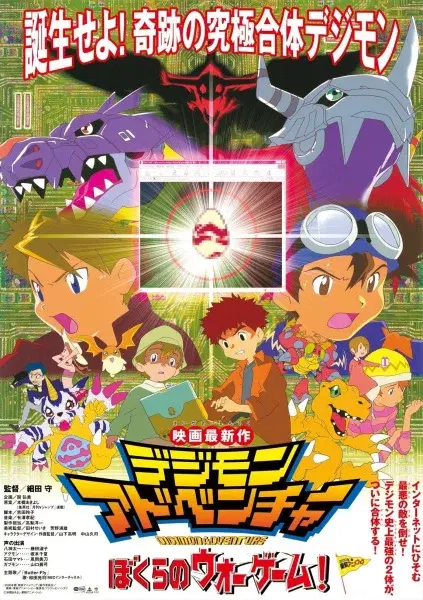
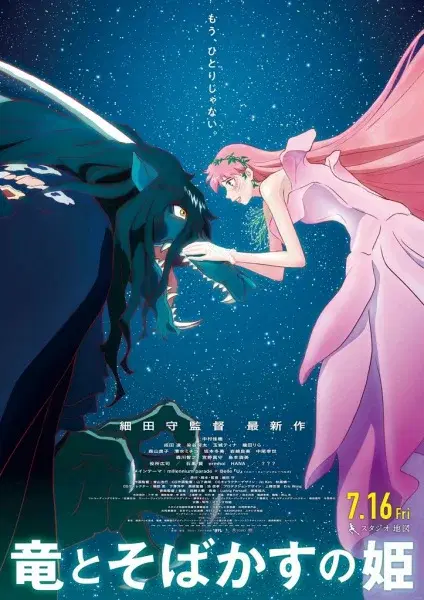
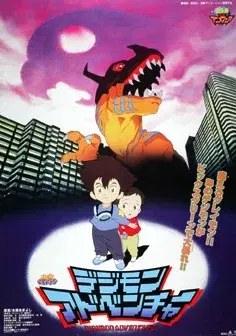
Watch Summer Wars if you want a self-contained anime film where a social-network catastrophe is filtered through family politics instead of lone-wolf cyberpunk. It scratches the same itch as Hosoda’s Digimon Adventure: Our War Game!! in its internet-disaster momentum, but the emotional texture sits closer to Wolf Children and The Girl Who Leapt Through Time: domestic comedy, generational friction, and sudden bursts of absurd digital spectacle. The real hook is contrast: Madhouse’s warm, crowded country-house staging keeps colliding with OZ’s clean, avatar-driven game space, so even minor arguments feel connected to the endgame. Viewers who like ensemble casts, high-stakes puzzle solving, and climaxes that make math feel like a tournament arc will get the most out of it; viewers needing airtight techno-logic or deep romance should temper expectations.
Key Characters
- KKenji Koiso(VA: Ryunosuke Kamiki)
Kenji is remembered less as a standard shy genius than as the film’s anxiety engine, turning calculation, embarrassment, and panic into surprisingly kinetic action beats.
- NNatsuki Shinohara(VA: Nanami Sakuraba)
Natsuki works because she is not just a romantic catalyst; her status inside the Jinnouchi household lets the film pivot between teen comedy and family hierarchy.
- SSakae Jinnouchi(VA: Sumiko Fuji)
Sakae is the film’s moral center, the kind of matriarch fans single out because her authority makes the adult cast feel like a living institution rather than background relatives.
- KKazuma Ikezawa(VA: Mitsuki Tanimura)
Kazuma gives the OZ sequences their competitive-game edge, bringing the movie closest to a shounen arena fight without abandoning its family-drama frame.
What Makes It Stand Out
- 1
Madhouse builds the film around two deliberately different visual systems: grounded rural domestic spaces for the Jinnouchi family and a cleaner, icon-heavy virtual world for OZ.
- 2
Yoshiyuki Sadamoto handled the human character designs, while OZ’s avatar side received separate design credits from Takashi Okazaki, Masaru Hamada, and Mina Okazaki, making the human and digital casts feel intentionally mismatched.
- 3
The film is an original Mamoru Hosoda work rather than an adaptation, with Hosoda credited as both original creator and director; that authorship is visible in its blend of family rituals, youth embarrassment, and digital-scale crisis.
- 4
The late-film decryption sequence has become one of the movie’s most discussed fan moments because it frames abstract code-breaking with the intensity of a physical action climax.
- 5
AniList’s highest tags, Family Life and Virtual World at 91% each, capture the movie’s unusual balance better than genre labels alone: it is as invested in household dynamics as it is in sci-fi spectacle.
Fun Facts & Trivia
- Fun fact 1
- Summer Wars premiered on August 1, 2009 as a single theatrical feature from Madhouse, not as part of a TV franchise.
- Fun fact 2
- Its reception remains broad rather than niche: the film holds an 8.01/10 MAL score from 308,946 votes, with a MAL popularity rank of #463 and an AniList score of 77/100.
- Fun fact 3
- The production assigns separate art responsibility to OZ through Anri Joujou’s OZ art design credit, underlining that the virtual world was treated as its own visual environment rather than a simple background layer.
- Fun fact 4
- Tomohiko Itou is credited as assistant director, placing another notable anime director alongside Hosoda in the film’s core production staff.
- Fun fact 5
- Critical writeups split in a telling way: even reviews that call the story lackluster still single out the animation and visual structure, while positive pieces frame it as a classic Hosoda family-and-crisis film.
Studios
- Madhouse




![[C] CONTROL - The Money and Soul of Possibility](/_next/image?url=https%3A%2F%2Fd111jwrw4u3bt.cloudfront.net%2Fanime-posters%2Fposter-10163.webp&w=1920&q=75)