Paprika
パプリカ
- Avant Garde
- Award Winning
- Mystery
- Sci-Fi
- Suspense
- Adult Cast
- Psychological
- Episodes
- 1
- Duration
- 1 hr 30 min
- Aired
- Nov 25, 2006
- Status
- Finished Airing
Synopsis
Dreams offer a revealing passage into the mind—its longings, ambitions, and buried memories. At a research lab developing the “DC Mini,” a device capable of entering another person’s dreams, Atsuko Chiba and Kousaku Tokita push the technology forward with a clear goal: using dream therapy to better understand patients and treat psychological disorders.
That promise turns dangerous when the DC Mini is stolen. With people around them beginning to behave unsettlingly, Chiba and Tokita realize the device could be weaponized for psychological terror, driving victims toward mental collapse. Joined by Officer Konakawa, a detective undergoing the experimental treatment, they pursue the culprit across the boundary between waking life and the dream world.
Otaku Consensus
Paprika endures as one of Satoshi Kon’s most concentrated achievements: a Madhouse feature where direction, editing, color, and music turn psychological sci-fi into a cinematic fever state rather than a puzzle box with tidy answers. Its 90-minute pacing is widely praised for packing in action, comedy, horror, and philosophy without losing momentum, while the most consistent criticism is that its multi-path, multi-layered structure can feel alienating to viewers who want clean emotional handholds or linear exposition.
Why You Should Watch
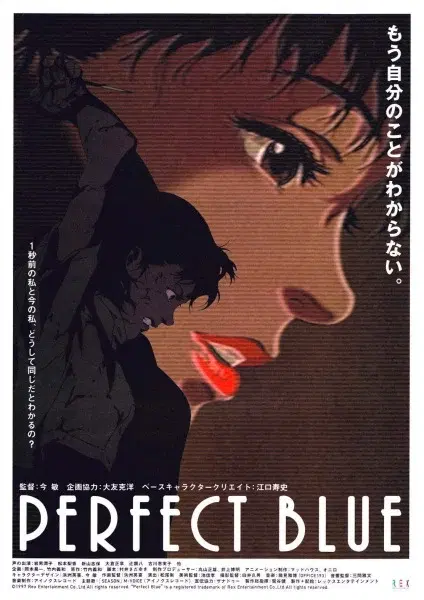
Watch Paprika if you want adult psychological sci-fi that treats animation as cinema’s most flexible language, not as a vehicle for exposition. It scratches the same itch as Perfect Blue and Paranoia Agent: identity under pressure, reality slipping out of frame, and Satoshi Kon cutting between mental states with surgical confidence. Compared with the more procedural side of Ghost in the Shell, Paprika is looser, stranger, and more carnivalesque, using detective-fiction momentum as a way into philosophy, technology, and desire. The appeal is not just “what is real?” but how sound, editing, color, and body movement make that question feel unstable in real time. If you want Inception’s dream-logic conversation without Hollywood’s rulebook approach, this is the sharper, wilder ancestor.
Key Characters
- AAtsuko Chiba(VA: Megumi Hayashibara)
Atsuko’s reserved professionalism gives the film a sharp adult center, making her compelling because she is defined as much by control and compartmentalization as by compassion.
- PPaprika(VA: Megumi Hayashibara)
Paprika is the film’s most iconic presence, a quicksilver persona whose confidence, humor, and theatricality let Megumi Hayashibara play a striking contrast to Atsuko.
- TToshimi Konakawa(VA: Akio Ootsuka)
Konakawa gives the movie its noir texture, with Akio Ootsuka’s grounded performance turning the detective role into a study of regret rather than simple investigation.
- KKosaku Tokita(VA: Toru Furuya)
Tokita stands out as a rare anime scientist whose genius is inseparable from social awkwardness, comic timing, and a visibly imperfect adult body.
What Makes It Stand Out
- 1
Madhouse’s animation leans into transformation as a core visual principle: bodies, crowds, objects, and spaces mutate with a fluidity that would be difficult to stage in live action without losing immediacy.
- 2
Satoshi Kon’s direction is inseparable from the editing credited to Yumi Jinguuji and Takeshi Seyama; the film often moves between scenes through visual association rather than conventional transitions, which is central to its disorienting rhythm.
- 3
The film is a single feature rather than a series, and its commonly noted 90-minute compactness is part of its reputation: it compresses detective beats, horror imagery, satire, comedy, and philosophical speculation into one escalating cinematic movement.
- 4
The adult cast changes the flavor of the psychological drama; instead of adolescent self-discovery, the tension comes from professional identity, institutional power, repression, and the ethics of experimental technology.
- 5
The soundtrack, widely singled out in reviews for its haunting and beautiful atmosphere, helps give the film its parade-like momentum, with music functioning as an engine for unease rather than background decoration.
Fun Facts & Trivia
- Fun fact 1
- Paprika is based on an original story by Yasutaka Tsutsui, a major Japanese speculative-fiction author whose work gives the film its mix of science fiction, psychology, and absurdist social unease.
- Fun fact 2
- The film was released on November 25, 2006, four years before Satoshi Kon’s death from pancreatic cancer, and is remembered as his final completed feature film.
- Fun fact 3
- Megumi Hayashibara voices both Atsuko Chiba and Paprika, making the contrast between clinical restraint and playful charisma a performance choice rather than just a design concept.
- Fun fact 4
- The production credits highlight how visually coordinated the film is: Nobutaka Ike served as art director, Kazuki Higashiji as assistant art director, Satoshi Hashimoto handled color design, and Michiya Katou is credited for both photography direction and CG direction.
- Fun fact 5
- Its database footprint reflects long-term fan interest beyond cult status: MyAnimeList lists it with an 8.05 score from over 311,000 votes, while AniList records a 79/100 score and 4,449 favorites.
Studios
- Madhouse