Noein: To Your Other Self
ノエイン もうひとりの君へ (Noein: Mou Hitori no Kimi e)
- Adventure
- Drama
- Sci-Fi
- Time Travel
- Episodes
- 24
- Duration
- 25 min per ep
- Aired
- Oct 12, 2005 to Mar 29, 2006
- Status
- Finished Airing
Synopsis
During their final summer in elementary school, Haruka Kaminogi and her friends plan a late-night test of courage at a nearby graveyard. Before they go, Haruka tries one more time to coax Yuu Gotou away from his overbearing mother—only to be struck by an unsettling vision of blue snow and the sudden presence of a stern, silver-haired stranger. At the graveyard, the same eerie phenomenon returns, leaving the children scrambling as what they mistake for ghosts closes in.
What they don’t realize is that the figures confronting them are Dragon Soldiers, a specialized unit from the alternate dimension of La’cryma. They’ve crossed into Haruka’s world in search of the “Dragon Torque,” a force they believe is their last chance at survival—only to discover it’s Haruka herself. Hunted for what she is, Haruka’s one refuge may be the silver-haired man, who insists he’s another version of Yuu.
Otaku Consensus
Kazuki Akane’s assured direction, Satelight’s restless visual experimentation, and a remarkably committed coming-of-age core make Noein more emotionally immediate than its dense dimensional mechanics suggest. Its atmosphere, music, and character relationships inspire unusually passionate praise, but the opening stretch can be difficult to parse, and the production’s conspicuous early-CGI imagery contributes to an uneven presentation. Even divided critics tend to recognize it as a singular piece of mid-2000s science-fiction anime rather than a routine genre exercise.
Why You Should Watch
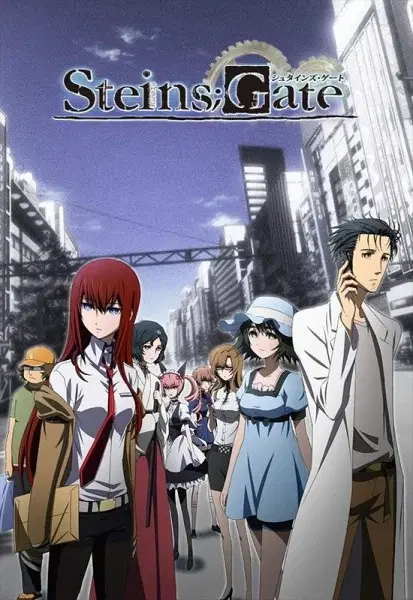
Noein is for viewers who want heady science fiction without sacrificing the messy emotional lives of its young cast. It scratches some of the same itch as Steins;Gate’s branching possibilities and Evangelion’s psychological pressure, but filters those concerns through childhood friendships, family expectations, and the fear of becoming someone unrecognizable. Kazuki Akane’s direction favors urgent motion, eerie spatial dislocation, and sudden stylistic shifts over polished visual uniformity; that volatility gives the action a distinctive energy. Satelight’s hand-drawn work and conspicuous early-digital CGI make it unmistakably a product of the mid-2000s, while the 24-episode format leaves room for its ensemble to develop. Watch it if you value ambitious ideas, sustained atmosphere, and emotional payoff more than a tidy opening explanation or rigidly consistent artwork.
Key Characters
- HHaruka Kaminogi(VA: Haruka Kudou)
Haruka anchors the abstract science fiction with curiosity and emotional resilience, functioning as a genuine young protagonist rather than a vehicle for technical exposition.
- YYuu Gotou(VA: Fujiko Takimoto)
Yuu’s anxiety under an overbearing parent gives the series’ coming-of-age themes a painfully grounded expression, particularly in its questions about identity and possible futures.
- KKarasu(VA: Kazuya Nakai)
Karasu turns the idea of an alternate self into a tense character study, with Kazuya Nakai’s stern performance emphasizing the distance between childhood potential and hardened adulthood.
What Makes It Stand Out
- 1
Original creator Kazuki Akane also directed the series and co-wrote its series composition, giving the production an unusually unified authorial center across concept, structure, and screen direction.
- 2
Satelight combines expressive 2D character work with highly visible early-2000s CGI, a hybrid approach reflected in AniList’s prominent CGI tag and in the sharply divided responses to the show’s visual consistency.
- 3
The series places ordinary childhood and family tensions beside post-apocalyptic and alternate-universe imagery rather than separating them into distinct modes; reviewers repeatedly identify this atmosphere as a major reason the 24 episodes become difficult to stop watching.
- 4
A dedicated Science Fiction Investigation credit for Mondo Hattori signals how seriously the production treated its speculative framework, even though the initial presentation remains deliberately disorienting.
- 5
Kazuya Nakai voices both Karasu and Noein, using one performer across two central roles tied to the series’ preoccupation with identity, divergence, and other selves.
Fun Facts & Trivia
- Fun fact 1
- Noein is credited as an original creation by Kazuki Akane rather than an adaptation, freeing its television staff to build the narrative specifically around a complete 24-episode run.
- Fun fact 2
- Series composition was shared by Akane and Hiroshi Oonogi, while Kenji Yasuda served as assistant director; the production therefore divided long-form structural work between its creator-director and a dedicated co-composer.
- Fun fact 3
- Takahiro Kishida handled character design, Takeshi Satou served as art director, and Sumio Takeda received a separate credit for the title logo design.
- Fun fact 4
- Haruka Kaminogi’s voice actor, Haruka Kudou, shares her given name with the character.
- Fun fact 5
- The series aired continuously from October 12, 2005 through March 29, 2006, placing its entire run within the period when television anime was visibly negotiating the transition between traditional drawing and digital production.
Studios
- Satelight