Now and Then, Here and There
今、そこにいる僕 (Ima, Soko ni Iru Boku)
- Adventure
- Drama
- Fantasy
- Isekai
- Sci-Fi
- Military
- Episodes
- 13
- Duration
- 24 min per ep
- Aired
- Oct 14, 1999 to Jan 20, 2000
- Status
- Finished Airing
Synopsis
Shuuzou “Shuu” Matsutani is a regular middle-schooler with friends, a quiet crush, and a love of kendo. After a discouraging loss to his rival, he climbs a smokestack to catch the sunset and meets Lala-Ru, a reserved blue-haired girl wearing an unusual pendant. Shuu tries to reach out to her, but her distant replies leave him doing most of the talking—until strangers arrive with a single purpose: take Lala-Ru.
When Shuu impulsively intervenes, he’s pulled into a harsh desert world ruled by soldiers and defined by scarcity. Shuu learns that Lala-Ru can produce water through her pendant—an ability that makes her invaluable in a land where water is precious—but the pendant soon goes missing, and suspicion falls on him. Caught in the machinery of a militarized dystopia, Shuu is forced to endure brutality, hunger, and the realities of war as he clings to one goal: protecting the girl he tried to befriend.
Otaku Consensus
Now and Then, Here and There remains a cult benchmark for anti-escapist isekai: Akitarou Daichi’s direction, Hideyuki Kurata’s compressed 13-episode structure, and Taku Iwasaki’s music give its war allegory a severity that reviewers repeatedly single out as emotionally convincing rather than sensational. Its reputation is stronger than its mainstream footprint, with solid but not blockbuster scores on MAL and AniList, and the most consistent criticism is also its identity: the relentless bleakness can feel punishing enough to limit rewatch value.
Why You Should Watch
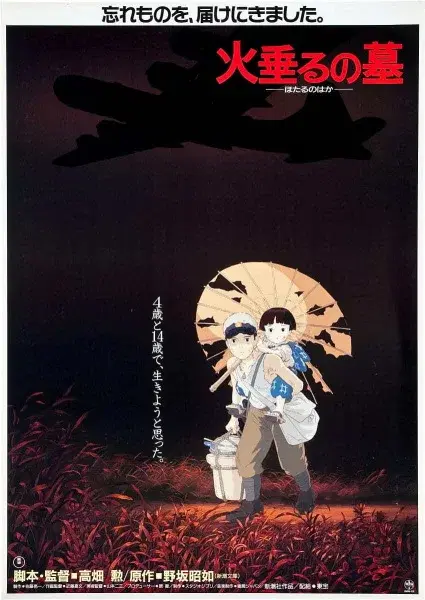
Watch Now and Then, Here and There if you want isekai stripped of wish fulfillment, leveling systems, and heroic catharsis. It scratches the same bruised nerve as Grave of the Fireflies, but filters wartime moral injury through a late-90s TV sci-fi dystopia with a primarily child cast and a military machine that never feels safely fictional. The appeal is not spectacle; it is the precision of a 13-episode original that uses scarcity, obedience, and survival to test optimism until it becomes an argument rather than a personality trait. Viewers who admire compact, character-driven tragedies and can handle material tagged for war, torture, and post-apocalyptic despair will find one of anime’s harshest rebuttals to escapist adventure.
Key Characters
- SShuuzou “Shuu” Matsutani
Shuu is remembered because his stubborn optimism is not treated as genre armor; the series keeps asking whether decency can survive when it has no tactical value.
- LLala-Ru
Lala-Ru stands out as a deliberately quiet focal point whose emotional distance makes the surrounding violence feel less like melodrama and more like accumulated historical exhaustion.
What Makes It Stand Out
- 1
It is an original TV anime conceived and directed by Akitarou Daichi, not a manga or light-novel adaptation, which helps explain why its isekai setup is used as a moral pressure chamber rather than a franchise premise.
- 2
The series runs only 13 episodes, and Hideyuki Kurata’s series composition gives it the shape of a controlled descent instead of a long campaign narrative; there is little room for side-quest relief or power escalation.
- 3
AIC’s production leans into the late-1999 dystopian mood through a harsh desert and post-apocalyptic visual identity, with Masanobu Nomura as art director, Masahiro Satou on art design, and Kumi Akiyama handling color design.
- 4
AniList’s tag profile is unusually severe for an isekai: Tragedy at 100%, Dystopian at 97%, War at 93%, Survival at 92%, and Primarily Child Cast at 88%, which accurately signals the show’s refusal to soften its subject matter.
- 5
Taku Iwasaki’s music is repeatedly mentioned in critical writing on the series, pairing the militarized setting with a score that supports dread and grief rather than adventure momentum.
Fun Facts & Trivia
- Fun fact 1
- The broadcast straddled the millennium, airing from October 14, 1999 to January 20, 2000, which is why critics often frame it as a turn-of-the-millennium dystopian anime.
- Fun fact 2
- Akitarou Daichi is credited as both original creator and director, making the show a rare case where the central concept and final direction stayed under the same creative lead.
- Fun fact 3
- Hideyuki Kurata handled series composition, while Makoto Sokuza and Nagisa Miyazaki served as assistant directors, giving the compact production a clearly defined senior staff structure.
- Fun fact 4
- Its reception numbers show cult endurance rather than mass dominance: MAL lists it at 7.58 from 45,967 votes, while AniList records a 73/100 score and 604 favourites.
- Fun fact 5
- The show’s database identity is unusually consistent across platforms: MAL classifies it under Adventure, Drama, Fantasy, and Sci-Fi with Isekai and Military themes, while AniList’s highest tags emphasize tragedy, dystopia, war, survival, and post-apocalypse.
Studios
- AIC
No community data yet. Be the first to add Now and Then, Here and There to your list!