Den-noh Coil
電脳コイル (Dennou Coil)
- Adventure
- Award Winning
- Drama
- Mystery
- Sci-Fi
- Detective
- Pets
- Psychological
- School
- Episodes
- 26
- Duration
- 25 min per ep
- Aired
- May 12, 2007 to Dec 1, 2007
- Status
- Finished Airing
Synopsis
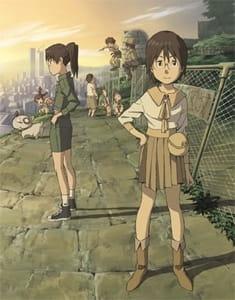
In the near future, augmented reality overlays have become an everyday necessity. Mild-mannered middle schooler Yuuko “Yasako” Okonogi moves with her family to Daikoku City, a place shadowed by unsettling rumors of people vanishing. Waiting there is her grandmother “Mega-baa,” proprietor of Megasia—a shop known for dealing in illegal tools that can meddle with the hidden layers of the virtual world.
Through Mega-baa’s connections, Yasako is drawn into Coil, an unofficial child-run detective group that tracks down glitches, corruption, and other digital anomalies. Her involvement begins when Fumie Hashimoto, a spirited Coil member, helps save Yasako’s cyberdog Densuke after he becomes trapped in virtual space while chasing a strange virus. As Coil digs deeper, they also find themselves crossing paths with the sharp-edged hacker Yuuko Amasawa—dubbed Isako—who is pursuing the same disturbances for reasons of her own.
Otaku Consensus
Den-noh Coil has the profile of a cult classic: modest mainstream visibility compared with its 8.02 MAL score and 77/100 AniList score, but unusually durable critical respect for Mitsuo Iso’s tightly controlled original vision at Madhouse. Its best qualities are the patient shift from kids-on-bikes mischief into philosophical science fiction, the way urban kaidan folklore is rebuilt through augmented-reality rules, and a child cast written with real tactical intelligence. The most common barrier is its deliberate early pacing: viewers expecting constant cyberpunk escalation may find the episodic schoolyard investigations slow before the larger mystery locks into place.
Why You Should Watch
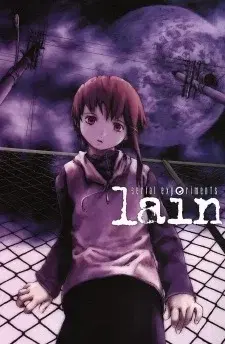
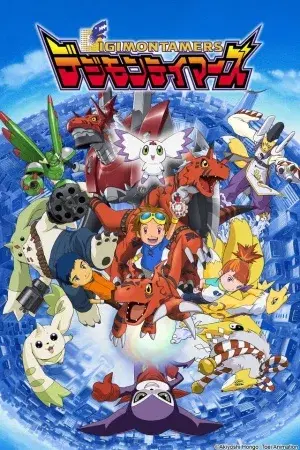
Watch Den-noh Coil if you want near-future science fiction that treats technology as lived-in civic infrastructure rather than neon wallpaper. It scratches a similar itch to Serial Experiments Lain in its anxiety over networked identity, but filters that unease through a warmer, Spielberg-style children’s adventure instead of pure alienation. The appeal is in the rules: illegal tools, corrupted virtual spaces, software-like problem solving, and rumors that behave like modern folklore. Viewers who enjoy Digimon Tamers’ mix of childhood perspective and systems-based danger will find a sharper, more urban cousin here. It is especially rewarding if you want mystery and philosophy without adult characters constantly explaining what the story means.
Key Characters
- YYuuko Okonogi
Yasako stands out because her quietness is not passivity; she observes rules, social friction, and technological oddities with the patience of someone learning how a city thinks.
- FFumie Hashimoto
Fumie gives the series its field-agent energy, turning school-age curiosity into a practical detective method rather than simple comic relief.
- YYuuko Amasawa
Isako is the character fans remember for making childhood competence feel dangerous, with hacking treated less as magic and more as discipline, secrecy, and willpower.
- MMega-baa
Mega-baa is the rare adult in a child-centered mystery who understands the underground rules better than the children and profits from that knowledge.
What Makes It Stand Out
- 1
It is an original Madhouse television anime created, directed, and written by Mitsuo Iso, giving the 26-episode series a stronger authorial fingerprint than many committee-driven sci-fi projects of the same era.
- 2
The show’s worldbuilding fuses old-fashioned Japanese town imagery and urban-legend kaidan with augmented reality, which is why its technology feels folkloric rather than merely futuristic.
- 3
AniList’s tag profile is unusually specific for a 2007 TV anime: Augmented Reality at 96%, Urban at 92%, Primarily Child Cast at 82%, Denpa at 73%, Philosophy at 67%, and Software Development at 62%.
- 4
Its structure begins with localized investigations and child-scale problem solving before tightening into a broader mystery, a pacing choice that makes the later revelations feel earned rather than dumped.
- 5
The production credits foreground craft specialists across the pipeline, including Takeshi Honda on character design, Hiroshi Gouroku as art director, Terumi Nakauchi on color design, Naoyuki Ooba as director of photography, and Keiichi Momose as sound director.
Fun Facts & Trivia
- Fun fact 1
- Den-noh Coil is also known in English contexts as Cyber Coil and Coil – A Circle of Children, titles that emphasize different sides of its identity: technological mystery and child ensemble drama.
- Fun fact 2
- The series aired on NHK Educational TV from May 12, 2007 to December 1, 2007, an unusual home for a science-fiction work that becomes increasingly dense in its mystery and philosophical concerns.
- Fun fact 3
- Despite ranking only #1698 in MAL popularity, it holds an 8.02 score from 46,172 votes and a MAL rank of #715, reflecting a gap between reach and reputation.
- Fun fact 4
- AniList records 830 favorites for the series, reinforcing its status as a smaller but devoted fan favorite rather than a broad seasonal phenomenon.
- Fun fact 5
- Mitsuo Iso’s role was unusually central: the available production data credits him as original creator and director, while web reference material also identifies him as the writer.
Studios
- Madhouse