Journal with Witch
違国日記 (Ikoku Nikki)
- Drama
- School
- Episodes
- 13
- Duration
- 23 min per ep
- Aired
- Jan 4, 2026 to Mar 29, 2026
- Status
- Finished Airing
Synopsis
Makio Koudai has always moved through life on her own terms. A successful novelist with a small circle of acquaintances, she keeps others at a distance and pays little mind to social expectations. That detachment also left a deep rift with her older sister, Minori, whose harsh criticism in their childhood turned their relationship into a long-standing estrangement.
At thirty-five, Makio is shaken when Minori and her husband die suddenly in an accident. She then meets Asa Takumi, her fifteen-year-old niece, for the first time—an unsure teenager left without anyone willing to take her in. Though hesitant to form a connection with a stranger, Makio brings Asa into her home, where grief, isolation, and quiet reminders of Minori begin to shape their everyday life. As Makio continues to write and both confront what family means to them, aunt and niece gradually learn to understand each other—and themselves—on their own terms.
Otaku Consensus
Otaku Consensus: Journal with Witch earns its top-tier reputation through Miyuki Ooshiro’s restrained direction, Shuka’s intimate visual handling, and Kouhei Kiyasu’s unusually cohesive adaptation work across composition and script. Critics and fans consistently point to its empathetic writing, fluid movement between memory and present, and the Makio-Minori material as what elevates it beyond standard healing drama. Its main limitation is also its artistic principle: the quiet pacing and interior focus can feel too withholding for viewers who need overt catharsis or plot-driven escalation.
Why You Should Watch
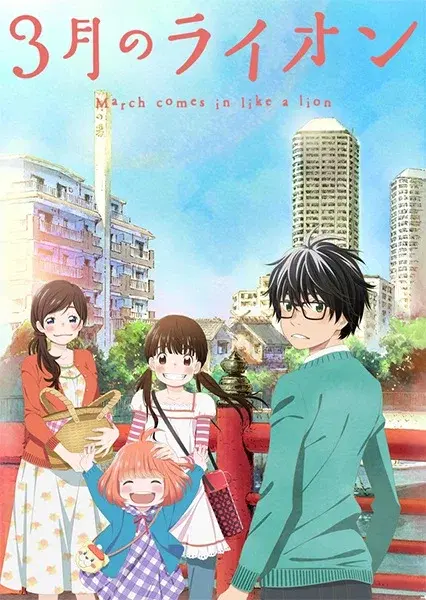
Watch Journal with Witch if you want adult josei drama that treats emotional distance as something lived in daily habits, not solved through speeches. It scratches the same itch as March Comes in Like a Lion’s wounded-household intimacy and Only Yesterday’s reflective interiority, but with a sharper focus on chosen boundaries, writing, and the awkward ethics of care. The appeal is in the small calibrations: how a room is shared, how silence changes meaning, how an old family wound can remain active without turning into melodrama. Viewers who want grief handled without sentimentality, female-led drama without romance as the default engine, and a 13-episode series paced around observation rather than plot mechanics will find its precision rewarding.
Key Characters
- MMakio Koudai(VA: Miyuki Sawashiro)
Makio stands out as a rare adult anime lead whose solitude is neither glamorized nor cured, with Miyuki Sawashiro giving her guardedness a dry, alert intelligence.
- AAsa Takumi(VA: Fuuko Mori)
Asa gives the series its coming-of-age pulse, and fan discussion often centers on how naturally her uncertainty disrupts Makio’s carefully managed emotional space.
What Makes It Stand Out
- 1
Shuka’s adaptation is repeatedly praised for an understated animation approach that favors lived-in gestures, room tone, and expressive transitions over theatrical outbursts.
- 2
Reviewers singled out the anime’s transitions between time periods, scenes, and surrealistic depictions as a major strength, making memory feel like part of the present rather than a separate flashback device.
- 3
Kouhei Kiyasu is credited with both series composition and script, giving the 13-episode run a consistent authorial rhythm rather than the tonal drift that can affect multi-writer adaptations.
- 4
Episode-review discussion described the adaptation as faithful to the manga through roughly volume 7, which helps explain why the emotional beats feel accumulated rather than compressed.
- 5
The Makio-Minori relationship became one of the key critical talking points, not as backstory decoration but as the series’ sharpest lens on how childhood judgment can keep shaping adult identity.
Fun Facts & Trivia
- Fun fact 1
- Journal with Witch is adapted from Tomoko Yamashita’s manga Ikoku Nikki, with the anime produced by Shuka and aired as a 13-episode Winter 2026 series from January 4 to March 29.
- Fun fact 2
- Its reception is unusually strong relative to its reach: the series holds an 8.73 MAL score and rank #54 while sitting at popularity #2144, suggesting a smaller but highly enthusiastic audience.
- Fun fact 3
- AniList’s tag distribution is unusually concentrated, with Female Protagonist at 97%, Adoption, Coming of Age, and Estranged Family all at 95%, and Josei at 92%.
- Fun fact 4
- Kensuke Ushio is credited for the music, placing the series in the hands of a composer known for anime scores built around atmosphere, texture, and emotional restraint.
- Fun fact 5
- The final episode had Kahoko Koseki credited on key animation, with Manaka Nitta and Mayumi Kitamura also listed for second key animation on episode 13.
Studios
- Shuka