Look Back
ルックバック
- Award Winning
- Drama
- Otaku Culture
- Episodes
- 1
- Duration
- 57 min
- Aired
- Jun 28, 2024
- Status
- Finished Airing
Synopsis
Fourth-grader Ayumu Fujino is used to applause for her hand-drawn four-panel comics in the school newspaper—until she’s told to split the page with Kyoumoto, a secluded classmate she’s never met. Seeing Kyoumoto’s astonishingly detailed artwork beside her own lively sketches leaves Fujino facing doubt for the first time.
Determined to close the gap, Fujino spends the next year shutting herself away to study manga-making and draw relentlessly. The difference in skill proves overwhelming, and she eventually walks away—until graduation day brings a long-awaited meeting with Kyoumoto. Awkward, timid, and sincere, Kyoumoto reveals she’s been Fujino’s biggest supporter, rekindling Fujino’s drive and setting the two on a path of friendship shaped by rivalry, respect, and a shared devotion to manga.
Otaku Consensus
Look Back has been received as one of 2024’s most concentrated anime achievements: a short, tightly directed creator-drama whose best sequences trust gesture, silence, and draftsmanship more than dialogue. Critics and fans especially praise Kiyotaka Oshiyama’s adaptation for preserving Tatsuki Fujimoto’s bruised emotional logic while making Studio DURIAN’s animation feel intimate rather than showy. The recurring complaint is proportional, not dismissive: its sub-hour format leaves some viewers wanting more breathing room, and a few find the late narrative turn emotionally powerful but thematically uneven.
Why You Should Watch
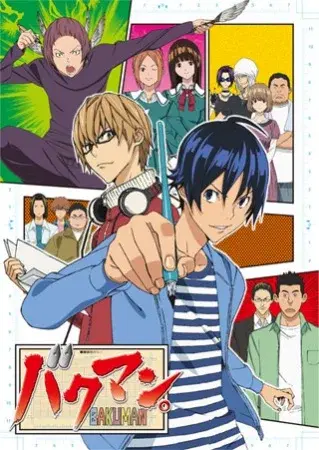
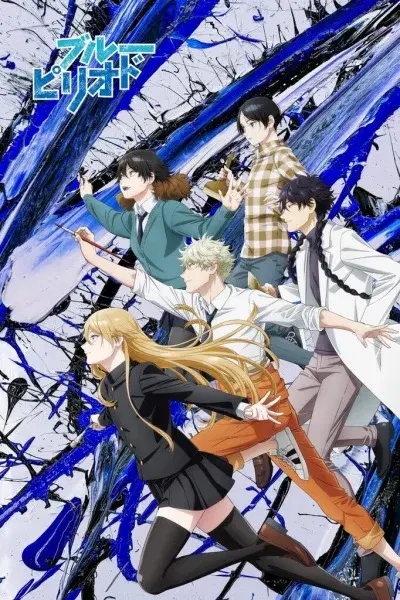
Watch Look Back if you want an anime about making art that understands the labor, ego, envy, and isolation behind the page without turning creation into a sports-tournament ladder. It scratches some of the same itch as Blue Period’s artist psychology and Bakuman’s manga-making obsession, but in a leaner, quieter, more wound-like form. The appeal is not worldbuilding or plot mechanics; it is the way small changes in posture, room layout, pencil movement, and facial restraint carry emotional information. Viewers who like anime that trusts negative space, visual storytelling, and imperfect creative relationships will get the most from it. If you want catharsis without sentimentality and a film that can be finished in one sitting yet linger longer than many series, this is its lane.
Key Characters
- AAyumu Fujino
Fujino is compelling because the film treats her confidence, insecurity, and work ethic as inseparable parts of the same artistic temperament rather than as simple flaws to be corrected.
- KKyoumoto
Kyoumoto stands out as a character whose presence is felt through draftsmanship, hesitation, and admiration, making her interior life unusually legible without heavy exposition.
What Makes It Stand Out
- 1
Studio DURIAN’s adaptation leans into linework, facial acting, and bodily hesitation; critics specifically noted that the film reduces dialogue pressure and lets images carry scenes.
- 2
The film is a single finished installment released on June 28, 2024, and its sub-hour structure is central to both its force and its controversy: many praise the compression, while others wanted a longer cut.
- 3
Kiyotaka Oshiyama serves as both director and character designer, giving the film a unified visual identity from acting style to character silhouette rather than splitting those priorities across departments.
- 4
AniList’s high-confidence tags place Drawing at 99%, Meta at 81%, and Autobiographical at 76%, reflecting how directly the film frames manga-making as both subject matter and self-examination.
- 5
The production’s image pipeline is unusually visible in the credited staff: Kiyoshi Sameshima leads art direction, Maya Kusumoto handles color design, Kazuto Izumita directs photography, and Kiyoshi Hirose edits the final rhythm.
Fun Facts & Trivia
- Fun fact 1
- Look Back is based on work by Tatsuki Fujimoto, the original creator credited here, and its reception has often been tied to how openly it reads as a reflection on artistic devotion and artistic damage.
- Fun fact 2
- Despite being only one episode, it holds a major database footprint: a MAL score of 8.61 from 145,803 votes, MAL rank #109, AniList score 86/100, and 8,147 AniList favourites in the provided data.
- Fun fact 3
- The film’s AniList tags include Rotoscoping at 68%, Hikikomori at 73%, Work at 77%, and Philosophy at 72%, which helps explain why discussion around it often focuses on process and psychology rather than genre spectacle.
- Fun fact 4
- Youhei Okashita is specifically credited for title logo design, a detail that fits a production where the act of drawing, lettering, and making printed work is not just background texture but part of the film’s identity.
- Fun fact 5
- Several critics singled out the theatrical experience as unusually effective, citing the Fujimoto-like animation sensibility and the choice to let art and facial expression do the emotional heavy lifting.
Studios
- Studio DURIAN