Bunny Drop
うさぎドロップ (Usagi Drop)
- Slice of Life
- Childcare
- Iyashikei
- Episodes
- 11
- Duration
- 22 min per ep
- Aired
- Jul 8, 2011 to Sep 16, 2011
- Status
- Finished Airing
Synopsis
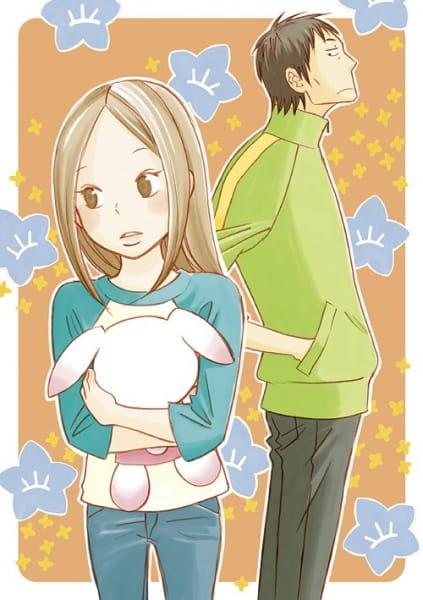
Daikichi Kawachi, a 30-year-old bachelor with a steady job but little direction, returns to his family home for his grandfather’s funeral. There he meets Rin, a quiet young girl whose presence shocks everyone: she is revealed to be his grandfather’s illegitimate daughter.
With the relatives treating Rin as a disgrace and refusing to care for her after her father’s death, Daikichi can’t accept their cold dismissal. Despite having no experience raising a child and living alone, he decides to take Rin in himself, beginning an unplanned new chapter built around everyday routines, gentle growth, and the kind of family formed through choice as much as blood.
Otaku Consensus
Bunny Drop earns its 8.31 MAL score and 81/100 AniList rating by treating childcare as lived routine rather than sitcom fuel, with Kanta Kamei’s restrained direction and Taku Kishimoto’s compact 11-episode composition giving every domestic adjustment room to breathe. Critics and fan reviewers consistently single out its rare realism, gentle pacing, and found-family warmth as the reason it stood out in 2011; the recurring criticism is that its softness can feel low-conflict or too modest for viewers who want sharper melodrama.
Why You Should Watch
Watch Bunny Drop if you want the emotional satisfaction of found family without manufactured tragedy, comic overreaction, or a fantasy hook. It scratches a similar itch to Sweetness & Lightning and Barakamon, but its focus is more adult: work schedules, childcare logistics, family obligation, and the quiet ways routine changes a person. Production I.G keeps the presentation clean and unobtrusive, letting glances, pauses, and household details carry weight instead of pushing for catharsis every episode. The result is ideal for viewers who like iyashikei with social texture: soft enough to unwind with, observant enough to feel written by someone who understands how exhausting and clarifying responsibility can be.
Key Characters
- DDaikichi Kawachi
Daikichi is memorable because the series frames adulthood through ordinary competence rather than heroism, making his growth feel practical, awkward, and earned.
- RRin
Rin stands out as a child character written with restraint: quiet, observant, and emotionally specific without being turned into a mascot.
What Makes It Stand Out
- 1
Production I.G’s animation approach is deliberately low-key for the studio: the show prioritizes body language, daily movement, and domestic spacing over spectacle, which supports its childcare realism.
- 2
The series is only 11 episodes, and Taku Kishimoto’s series composition keeps the adaptation tightly focused on small transitions rather than broad dramatic arcs.
- 3
Kanta Kamei’s direction gives the iyashikei tone a grounded edge, using silence and routine to make family life feel constructed day by day rather than declared in big speeches.
- 4
The visual team is unusually specified around everyday texture: Ayako Hata is credited for prop design, while Ichirou Tatsuda handled both art direction and art design, reinforcing how important rooms, objects, and household environments are to the show’s identity.
- 5
Its reception profile is unusually strong for a quiet slice-of-life title: MAL lists it at 8.31 from more than 256,000 votes, with a rank of #324 and popularity at #488, while AniList records 2,237 favourites.
Fun Facts & Trivia
- Fun fact 1
- Bunny Drop aired during the Summer 2011 season, running from July 8 to September 16, and finished as a concise 11-episode TV anime rather than a long-form family drama.
- Fun fact 2
- The anime is based on Yumi Unita’s original work, and its genre labeling reflects that manga lineage: AniList tags it as 72% josei, a useful clue to its adult perspective on family life.
- Fun fact 3
- The AniList tag breakdown is unusually decisive: Iyashikei and Found Family both sit at 100%, with Family Life at 98% and Adoption at 95%, showing how strongly viewers identify its core appeal.
- Fun fact 4
- Multiple review excerpts describe it as one of the sweetest stories they had seen, a hidden gem, and a rare touch of realism in anime, which explains why its reputation has stayed warmer than its modest scale might suggest.
- Fun fact 5
- The production credits emphasize craft roles often overlooked on character dramas: Miho Tanaka handled color design, Kouji Tanaka served as director of photography, and Junichi Uematsu edited the series.
Studios
- Production I.G