Tune In to the Midnight Heart
真夜中ハートチューン (Mayonaka Heart Tune)
- Comedy
- Romance
- Harem
- School
- Episodes
- 12
- Duration
- 23 min per ep
- Aired
- Jan 6, 2026 to Mar 24, 2026
- Status
- Finished Airing
Synopsis
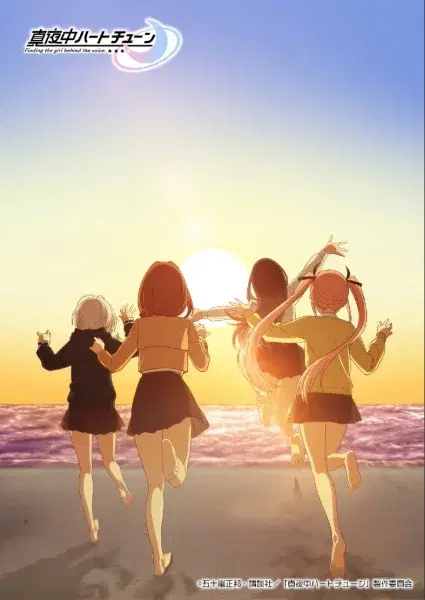
In middle school, Arisu Yamabuki found comfort in a late-night radio program hosted by a girl who called herself “Apollo.” He listened faithfully until the broadcasts suddenly ended, and with only a handful of hints to go on, he dug into her identity—eventually choosing to enroll in the newly co-ed Furin High School in hopes of finally finding her.
His instincts seem right when the broadcasting club’s first announcement carries the voice he remembers. But when he steps into the clubroom, the search turns complicated: Rikka Inohana, Shinobu Uzuki, Nene Himekawa, and Iko Kirino each resemble Apollo in their own way. Yamabuki joins the club determined to uncover the truth, and as he gets involved, he also begins supporting the girls’ individual ambitions to build futures through their voices—without letting go of the mystery that brought him there.
Otaku Consensus
Tune In to the Midnight Heart landed as a solidly liked but not breakout Winter 2026 school rom-com, reflected in its 7.31 MAL score and 73/100 AniList score. Its strongest asset is the way Masayuki Takahashi’s direction and Yukie Sugawara’s series composition keep the harem setup tied to performance, broadcasting, and voice-based ambitions rather than pure romantic stalling. The common limitation is that its central mystery and heroine-balance structure can feel mechanically harem-shaped, especially for viewers who want sharper romantic progress over club-ensemble rotation.
Why You Should Watch
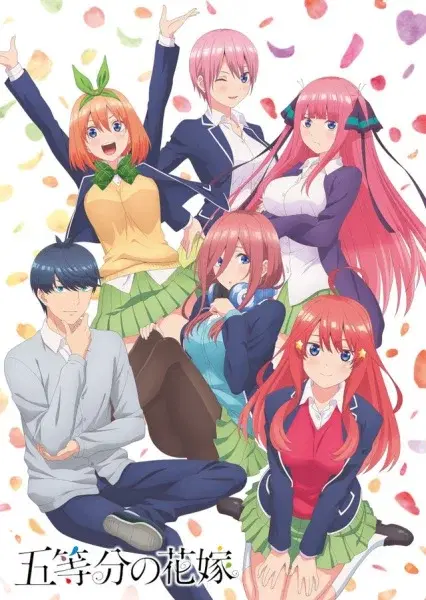
Watch Tune In to the Midnight Heart if you want a harem rom-com with a specific craft obsession: voices, broadcasting, acting, and the strange intimacy of being heard before being known. It scratches part of the same itch as The Quintessential Quintuplets, with a romantic mystery built around multiple heroines, but it swaps tutoring-room mind games for a school club ecosystem where each girl’s appeal is tied to vocal performance and future-facing ambition. The 12-episode run makes it an easy, contained watch, and Studio Gekkou’s adaptation leans into clean character focus rather than spectacle. If you like school romance that has comedy, heroine variety, and a recurring creative pursuit without becoming an idol show, this is a precise fit.
Key Characters
- AArisu Yamabuki
Arisu stands out less as a passive harem lead and more as a listener-turned-investigator whose fixation on voices gives the romance a more personal and unusually audio-centric texture.
- RRikka Inohana
Rikka is one of the four broadcasting-club heroines whose connection to performance makes her more than a standard school-romance candidate.
- SShinobu Uzuki
Shinobu adds to the ensemble’s central appeal by giving the show another distinct vocal identity for viewers to measure against the Apollo mystery.
- NNene Himekawa
Nene helps define the series’ heroine competition through voice, presence, and club dynamics rather than simple archetype labeling.
What Makes It Stand Out
- 1
The anime frames its harem through broadcasting-club activity, a structure reflected by AniList’s high School Club tag at 90% and Acting tag at 71%. That gives the romance a performance-based hook rather than relying only on date episodes or misunderstanding comedy.
- 2
AniList’s VTuber tag at 64% marks the series as part of a newer wave of anime that treats mediated voices and online-style personas as romantic and character-building material. That angle separates it from older school club rom-coms built around music, literature, or sports.
- 3
Studio Gekkou produced the 12-episode TV run, which aired in a compact Winter 2026 window from January 6 to March 24. The single-cour format gives the adaptation a defined seasonal footprint rather than an open-ended long-form harem rollout.
- 4
The character-design pipeline is unusually visible in the credits: Tomoyuki Shitaya is credited for character design, with Minori Homura, Yurika Someya, Mikio, and Akihiro Kikuchi all listed for sub character design. For a heroine-driven ensemble, that many credited design hands signals close attention to differentiating the cast visually.
- 5
The series’ audience data shows respectable but niche traction: MAL lists it at 36,956 votes with a 7.31 score, while AniList records 1,115 favourites. Those numbers place it as a mid-tier rom-com success rather than a mass-market seasonal phenomenon.
Fun Facts & Trivia
- Fun fact 1
- Tune In to the Midnight Heart is credited to original creator Masakuni Igarashi, with the anime production handled by Studio Gekkou.
- Fun fact 2
- Masayuki Takahashi directed the adaptation, while Yukie Sugawara handled series composition, making the show’s balance of comedy, romance, and mystery a staff-level responsibility rather than just a premise-level gimmick.
- Fun fact 3
- The art side lists Masakazu Miyake as art director and Yukiko Uegaki for art design, separate credits that distinguish background direction from broader visual setting design.
- Fun fact 4
- On MAL, the show finished its run with a 7.31/10 score, rank #3057, and popularity #2496, positioning it as a positively received but not top-charting romance title.
- Fun fact 5
- AniList categorizes the show very strongly as Heterosexual at 100%, Female Harem at 92%, Male Protagonist at 92%, and Ensemble Cast at 90%, which accurately signals its genre machinery before a viewer ever checks the episode list.
Studios
- Gekkou