The Announcement
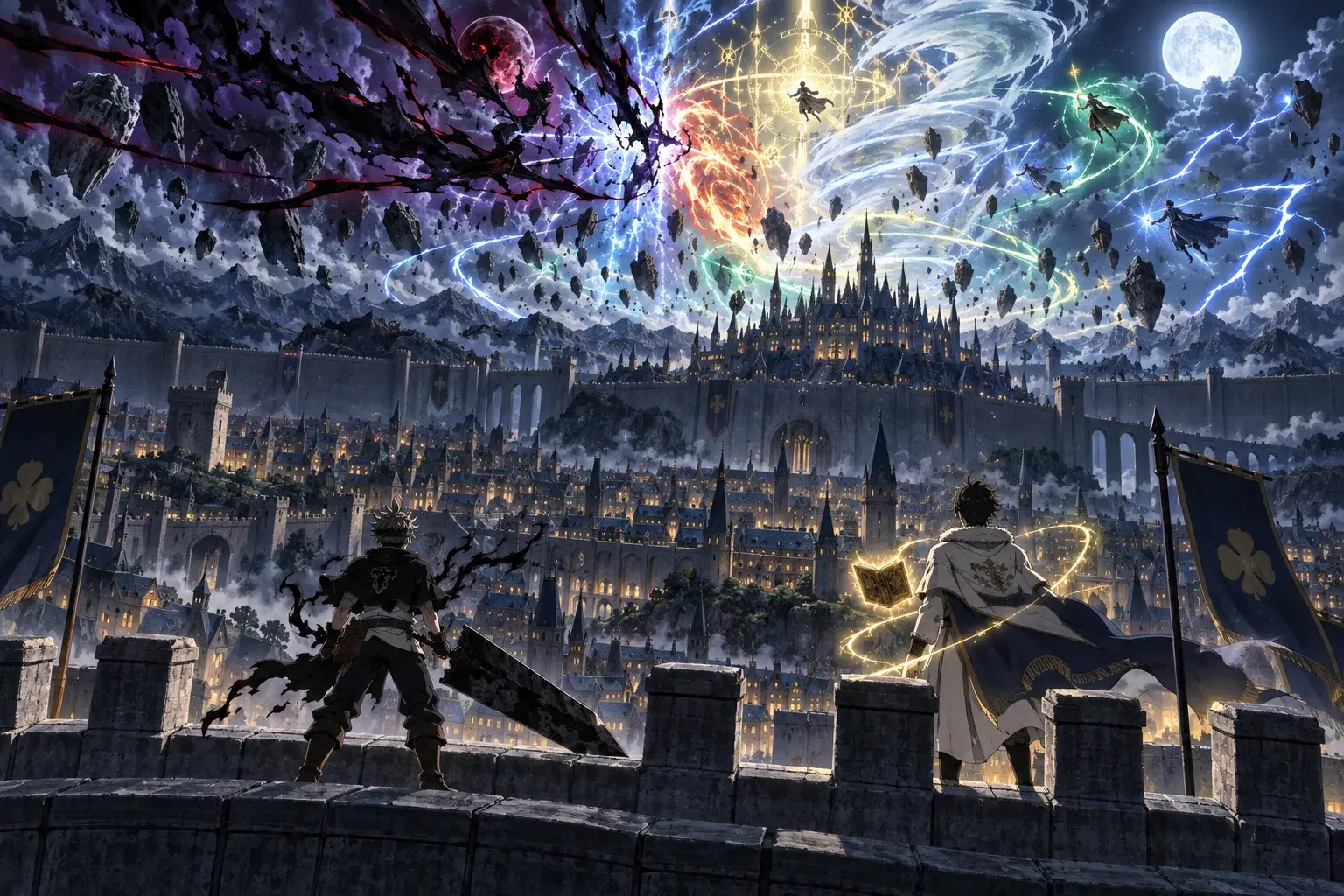
Black Clover Season 2 will begin broadcasting in Japan on October 3, 2026, at 11:00 p.m. JST on TV Tokyo and its affiliated stations. The confirmed release date arrives with fresh insight from director Ayataka Tanemura, whose interview with Crunchyroll News was published on September 24 following a conversation held earlier at Anime Expo 2026.
Tanemura described the sequel as a more polished evolution of the franchise, supported by a stronger production schedule and more opportunities for director-level quality checks. His involvement is not a clean break from the past: he joined the original Black Clover production around episode 4, eventually became director during its latter stretch and subsequently led the franchise’s 2023 theatrical project. Calling him a “new director” therefore undersells the continuity involved. He is a veteran of Asta’s animated journey now receiving greater control over how its next phase is presented.
The first episode was screened early at Anime Expo on July 4, but that event presentation was not the public television or streaming premiere.
What We Know So Far
Studio Pierrot remains responsible for animation production on Black Clover Season 2. Tanemura is directing, with Keiichiro Ochi handling series composition and Itsuko Takeda serving as character designer. Other confirmed staff include sub-character designer Kumiko Tokunaga, art director Yuki Maeda, color designer Aiko Shinohara, director of photography Keisuke Nozawa, editor Ayumu Takahashi, composer Minako Seki and sound director Hajime Takakuwa.
The returning Japanese cast includes Gakuto Kajiwara as Asta, Nobunaga Shimazaki as Yuno, Junichi Suwabe as Yami, Kana Yuuki as Noelle, Hiro Shimono as Nacht and Nobuhiko Okamoto as Liebe. Rikiya Koyama, Tatsuhisa Suzuki and Yui Ogura return as members of the Dark Triad.
Episode 1 is titled “Kaisen,” translated along the lines of “War Begins” or “Opening of Hostilities.” More importantly, it is officially numbered Page 171, directly continuing the 170-episode run of Black Clover. The story opens with preparations to rescue Yami and William, Asta and Liebe training to master Devil Union, Yuno pursuing his rematch with Zenon, and Morris moving forward with the plan to open the underworld’s gates.
WANIMA performs the opening theme, “Kienai Riyu,” while ONE OR EIGHT performs the ending, “Yellow Brick Road.” An episode count has not been announced as of September 25, so viewers should not assume either a single cour or a complete adaptation of the remaining manga.
In Japan, advance streaming begins October 4 at noon JST on Anime Times, Lemino, U-NEXT and Anime Hodai. Wider Japanese distribution starts October 8. Crunchyroll has separately confirmed that it will stream the season, although exact times, territories and subtitle availability remain unspecified.
Context & Background
The original Black Clover television run aired continuously from 2017 until March 30, 2021. While some international platforms divided those 170 episodes into multiple catalog “seasons,” the official Japanese branding treats the returning production as its second season.
That distinction matters because Black Clover Season 2 resumes an unfinished conflict rather than resetting the series. Its Spade Kingdom Raid storyline follows directly from the earlier cliffhanger, making an episode recap—or at least the official arc-summary videos—a sensible investment before October 3.
The source manga concluded in 2026, giving the production team access to a finished narrative in a way the weekly original did not have. However, no authoritative announcement says this season will adapt everything remaining or serve as the final season.
The production also reflects an industry shift away from the relentless weekly model historically associated with long-running titles such as Naruto, Bleach and One Piece. Its more deliberate return resembles the seasonal approach used by franchises including My Hero Academia and Attack on Titan, where breaks can create more planning time—though they never guarantee flawless execution.
What This Means for Fans
Tanemura’s most encouraging comments concern oversight rather than hype. He says the schedule allows him to inspect animation and completed material more broadly than he could during the original run. That could address one of the biggest weaknesses of weekly Black Clover: dramatic peaks often looked excellent, but visual consistency could fluctuate between major episodes.
The director is also emphasizing purposeful tempo, inventive magical effects and character relationships shaped by separation and loss. Asta voice actor Gakuto Kajiwara has similarly highlighted both the hero’s strength and vulnerability, stressing that the coming enemies cannot be defeated by Asta alone. That suggests the sequel’s production upgrade is intended to serve ensemble storytelling, not merely produce brighter explosions.
Fans should nevertheless keep expectations measured. A secure schedule and stronger funding are promising production-side statements, not independent proof that every episode will match the trailer. The unconfirmed episode count is the largest practical unknown: it will determine how much breathing room the Spade Kingdom Raid receives and whether later material is saved for another installment.
Otaku Insider's Take
Black Clover Season 2 has a better foundation than a rushed revival would: an experienced franchise director, returning studio, completed source material and an explicitly improved production pipeline. Tanemura’s history makes this feel less like a reinvention and more like the version of Black Clover he previously lacked the time to supervise fully.
Our biggest reason for optimism is not the promise of “powered-up” action; it is the possibility of consistency. If Studio Pierrot converts its longer runway into stable character acting, clear magical combat and disciplined pacing, this return could demonstrate why battle-shonen franchises benefit from planned seasonal production. Until the episode count and regional streaming schedule are confirmed, however, fans should treat October 3 as the Japanese broadcast date—not a universal release time.
Sources
- [1] Black Clover Director Ayataka Tanemura on the Highly Anticipated Second Season (CRUNCHYROLL)
- [2] Black Clover Director Ayataka Tanemura on the Highly Anticipated Second Season (clashanime.com)
- [3] TVアニメ「ブラッククローバー」2nd Seasonが2026年10月3日より放送開始決定! エンディングテーマ・先行配信サービス・特番情報を一挙解禁! - News|TVアニメ「ブラッククローバー」2nd Season公式サイト (bclover.jp)
- [4] TVアニメ「ブラッククローバー」2nd Seasonが2026年10月放送決定! 監督は種村綾隆、Anime Expo 2026開催&振り返り映像公開! - News|TVアニメ「ブラッククローバー」2nd Season公式サイト (bclover.jp)
- [5] STAFF&CAST|TVアニメ「ブラッククローバー」2nd Season公式サイト (bclover.jp)
- [6] INTERVIEW: Black Clover's Director And Asta Voice Actor Look Back On The Series - Crunchyroll News (crunchyroll.com)
- [7] STAFF/MUSIC|映画『ブラッククローバー 魔法帝の剣』 (bclover-movie.jp)
- [8] Interview: Ayataka Tanemura and Gakuto Kajiwara Talk Black Clover Season 2 | Anime Atelier (t.co)
- [9] Black Clover Interview: Ayataka Tanemura (Director) and Gakuto Kajiwara (Asta) - Anime Corner (animecorner.me)
- [10] 第1話(ページ171)『開戦』 - STORY|TVアニメ「ブラッククローバー」2nd Season公式サイト (bclover.jp)
- [11] 本PV公開&オープニングテーマ情報解禁!公式TikTokも開設! 原作・田畠裕基先生よりコメント&描きおろしイラスト到着! - News|TVアニメ「ブラッククローバー」2nd Season公式サイト (bclover.jp)
- [12] ON AIR|TVアニメ「ブラッククローバー」2nd Season公式サイト (bclover.jp)
- [13] Black Clover Season 2 Anime Announces October 2026 Broadcast, New Director - Crunchyroll News (crunchyroll.com)
- [14] TVアニメ「ブラッククローバー」2nd Seasonが2026年10月放送決定! 監督は種村綾隆、Anime Expo 2026開催&振り返り映像公開! - News|TVアニメ「ブラッククローバー」2nd Season公式サイト (bclover.jp)
- [15] El manga de Black Clover concluyó con un final de 3 capítulos - Crunchyroll Noticias (crunchyroll.com)
- [16] Road to 2nd Season|TVアニメ「ブラッククローバー」2nd Season公式サイト (bclover.jp)
- [17] www.clashanime.com (clashanime.com)
- [18] TVアニメ「ブラッククローバー」2nd Season豪華キャストからコメントが到着! 第1話先行場面カット&あらすじ・配信情報を一挙解禁!日本赤十字社とのコラボ決定! - News|TVアニメ「ブラッククローバー」2nd Season公式サイト (bclover.jp)
- [19] New Black Clover Anime Announced, Will Stream on Crunchyroll - Crunchyroll News (crunchyroll.com)
- [20] VIZ | Read Black Clover Manga Free - Official Shonen Jump From Japan (viz.com)
- [21] Black Clover (TV series) (en.wikipedia.org)
- [22] The Apothecary Diaries Season 3 Anime's 2nd Trailer Reveals Eve's Ending Theme (ANN)
- [23] The Apothecary Diaries Season 3 New Trailer Previews Ending Song by Eve (ANIME_CORNER)
- [24] The Apothecary Diaries Season 3 Anime Trailer Reveals Eve Ending Theme Song (CRUNCHYROLL)
- [25] 'Yozakura-san Chi no Daisakusen 2nd Season Part 2' Announces Additional Cast, Character Promo (MAL_RSS)
- [26] Mission: Yozakura Family Season 2 Cour 2 Anime Reveals Cast for 5 Gold Rank Spies (CRUNCHYROLL)
- [27] Mission: Yozakura Family Season 2 Part 2's Video Reveals 5 Cast Members (ANN)
- [28] Marvelous Announces Story of Seasons: Your Wonderful Life Virtual Reality Farming Game (ANN)
- [29] Fall 2026 Most Anticipated Anime Rankings (ANIME_CORNER)
- [30] Hotel Inhumans Anime's 2nd Season Casts Shōya Chiba (ANN)
- [31] The Iceblade Sorcerer Shall Rule the World 2nd Season Anime Casts Shiki Aoki, Kazuyuki Okitsu (ANN)
- [32] Rudy Takes Action in Mushoku Tensei Season 3 Episode 14 Preview (ANIME_CORNER)
- [33] 'Tsuihou sareta Tensei Juukishi wa Game Chishiki de Musou suru' Unveils Additional Cast, Theme Songs, Main Promo for Second Cour (MAL_RSS)
- [34] From Old Country Bumpkin to Master Swordsman Anime Gets 3rd Season (ANN)
- [35] From Old Country Bumpkin to Master Swordsman Season 3 Anime Announced (CRUNCHYROLL)
Written by Ranen with AI support — Ranen picks every story, shapes the angle, and reviews each article before it's published. Learn more in our editorial policy.