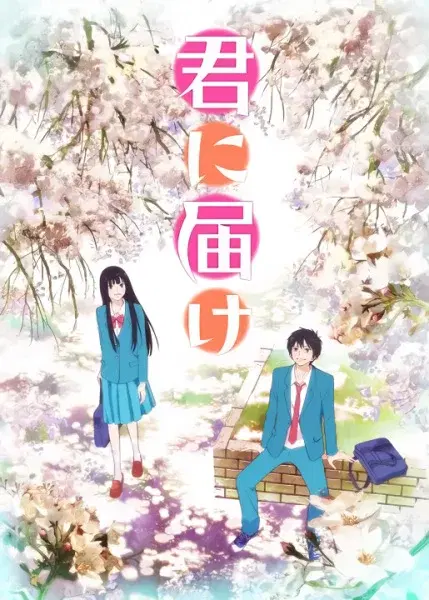
Fruits Basket
フルーツバスケット
- Drama
- Romance
- Supernatural
- Love Polygon
- School
- Episodes
- 26
- Duration
- 24 min per ep
- Aired
- Jul 5, 2001 to Dec 27, 2001
- Status
- Finished Airing
Synopsis
After losing her mother, 16-year-old Tooru Honda goes to live with her grandfather. When home renovations leave her without a place to stay, she hides her situation from relatives and friends and quietly moves into a tent in the woods.
A sudden landslide buries her campsite, and classmate Yuki Souma—known at school as “the prince”—along with his cousin Shigure, a well-known author, offer her a temporary home until her grandfather’s place is ready. Living under the Souma roof, Tooru learns the family’s closely guarded secret: when hugged by someone of the opposite sex, they briefly transform into animals of the zodiac. What seems strange at first is tied to a painful curse and a shadowed past, and as Tooru meets more of the zodiac-afflicted Soumas, her steady kindness is tested by what the household keeps behind closed doors.
Otaku Consensus
Fruits Basket’s 2001 adaptation endures because Akitarou Daichi gives the material a rare early-2000s shoujo rhythm: broad comic timing, quiet domestic pauses, and emotional scenes that land without needing spectacle. Critics and fans consistently point to its character-centered writing, Ritsuko Okazaki’s gentle theme work, and the late-season Kyou material as the show’s strongest assets, while the most persistent criticism is that this Studio Deen version is an incomplete, looser adaptation that the 2019 remake later surpassed in visual polish and narrative coverage.
Why You Should Watch
Watch Fruits Basket if you want supernatural shoujo used as emotional language rather than action mechanics: the fantasy hook matters because it externalizes shame, fear of intimacy, and the ache of wanting a family that feels safe. It scratches a similar itch to Clannad in its interest in grief and chosen family, and to Ouran High School Host Club in its approachable school-era charm, but without turning its ensemble into pure farce. The 2001 version is especially worth seeing as a time capsule of gateway anime: 26 episodes, soft TV-era staging, a memorable Yui Horie lead performance, and a tone that lets small conversations carry the weight usually reserved for climaxes. If you want romance and melodrama without constant escalation, this is the version’s enduring appeal.
Key Characters
- TTooru Honda(VA: Yui Horie)
Tooru is beloved less as a passive sweetheart than as a character whose politeness becomes a form of endurance, making her kindness feel practiced rather than naïve.
- KKyou Souma(VA: Tomokazu Seki)
Kyou gives the series its sharpest emotional voltage, with Tomokazu Seki turning his anger and competitiveness into a defense mechanism fans still read as painfully transparent.
- YYuki Souma(VA: Aya Hisakawa)
Yuki’s popularity inside the story contrasts with a guarded loneliness that makes him more than the standard princely shoujo rival.
What Makes It Stand Out
- 1
This is the 26-episode 2001 Studio Deen adaptation, not the later full remake, which gives it a more compact and selective structure centered on early character introductions and emotional payoffs.
- 2
Akitarou Daichi served as both director and sound director, a notable production overlap that helps explain the show’s tight control over comic beats, pauses, and sudden tonal drops into drama.
- 3
Ritsuko Okazaki performed both the opening and ending themes, giving the series a unified musical identity that many fans associate with the softer, more intimate feel of the 2001 version.
- 4
The series composition by Rika Nakase favors episodic character focus over plot density, which makes the show read as a sequence of emotional case studies rather than a conventional fantasy-romance progression.
- 5
Its reception profile remains unusually durable for an early-2000s shoujo TV anime: a 7.69 MAL score from 295,398 votes, MAL popularity rank #442, and 2,444 AniList favourites indicate continued visibility even after the 2019 adaptation.
Fun Facts & Trivia
- Fun fact 1
- Natsuki Takaya is credited as the original creator, while Akemi Hayashi handled the anime’s character designs for the Studio Deen version.
- Fun fact 2
- The show aired from July 5 to December 27, 2001, placing it in the wave of early-2000s anime that became especially accessible to newer Western fans.
- Fun fact 3
- Seiji Mutou and Jun Abe are credited for the music, while Yasunori Ebina shares sound director credit with Akitarou Daichi.
- Fun fact 4
- The English-language production has John Burgmeier credited for the ADR script, a detail relevant to viewers who encountered Fruits Basket through its dubbed release.
- Fun fact 5
- AniList’s tag profile captures how the series is categorized beyond its official genres: Family Life and Mythology both sit at 95%, while Shoujo is 92%, Male Harem 84%, and Found Family 65%.
Studios
- Studio Deen