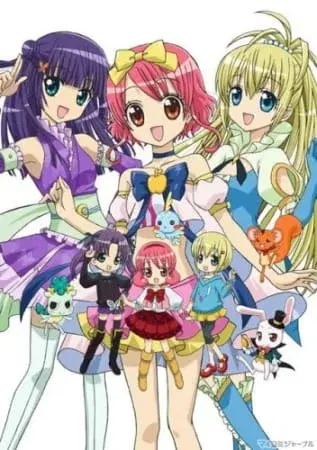
Shugo Chara!
しゅごキャラ!
- Comedy
- Mahou Shoujo
- School
- Episodes
- 51
- Duration
- 24 min per ep
- Aired
- Oct 6, 2007 to Sep 27, 2008
- Status
- Finished Airing
Synopsis
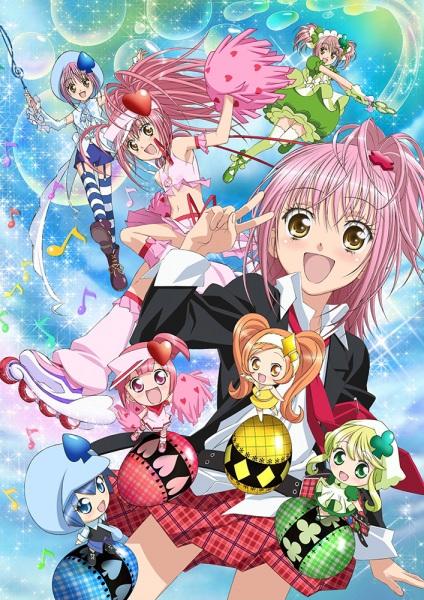
Amu Hinamori is a quiet elementary school girl who has trouble fitting in, partly because classmates have built up rumors about her supposedly “cool and spicy” attitude. Secretly, Amu wishes she could be more honest about the person she wants to be. One morning, she discovers three beautifully decorated eggs in her bed—Heart’s Eggs that soon hatch into Guardian Characters: Ran, Miki, and Su, each embodying a different “would-be” self tied to her dreams.
Their sudden arrival draws the attention of the Seiyo Elementary Guardians, a student council-like group whose members also have Guardian Characters. Because Amu has multiple Characters, she’s appointed the Guardians’ “Joker” and pulled into their mission to locate X Eggs—Heart’s Eggs that have become corrupted. As Amu helps with the search, she learns more about the nature of Guardian Characters, the mystery behind the X Eggs, and the organization connected to the growing trouble.
Otaku Consensus
Kenji Yasuda’s direction and Michiru Shimada’s series composition preserve the clarity of PEACH-PIT’s identity-centered concept, with sharp comic timing and rehabilitation-focused conflicts giving the adaptation unusual emotional intelligence for a brightly commercial magical-girl series. Its 51-episode length is also its chief liability: filler-heavy stretches, repeated formulas, and Satelight’s visibly modest production divide viewers, even as the central cast inspires exceptional loyalty and repeat viewing.
Why You Should Watch
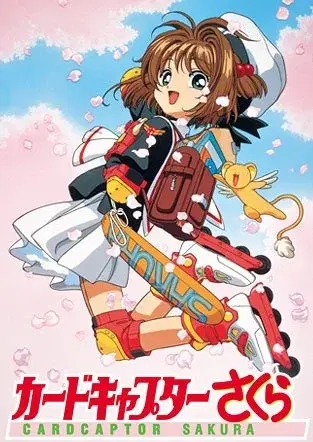
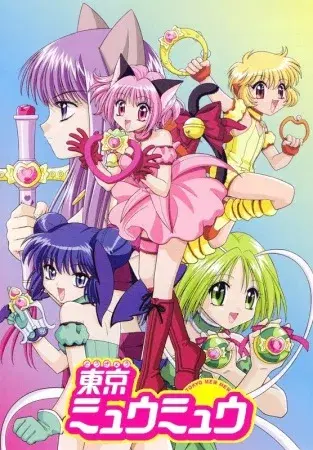
Watch Shugo Chara! if you want magical-girl optimism without grim revisionism, but still expect its themes to take childhood insecurity seriously. It scratches the colorful school-life itch of Cardcaptor Sakura and Tokyo Mew Mew, yet its powers are unusually effective metaphors for self-image, social performance, and the fear of choosing the wrong future. Conflicts tend to emphasize emotional rehabilitation rather than punishment, giving even routine encounters a compassionate point of view. Satelight’s production is economical and the 51-episode run contains noticeable filler, but the expressive chibi comedy, costume-driven transformations, and Buono! theme songs give it a durable late-2000s charm. It is especially rewarding for viewers who prefer sincere coming-of-age storytelling, messy rivalries, and a child cast allowed to be contradictory rather than precociously perfect.
Key Characters
- AAmu Hinamori(VA: Kanae Itou)
Kanae Itou’s performance pivots cleanly between blunt deadpan, flustered vulnerability, and sincerity, turning Amu’s competing personas into both the show’s best comedy and its emotional anchor.
- UUtau Hoshina(VA: Nana Mizuki)
Utau brings genuine anti-hero tension to the otherwise gentle ensemble, while Nana Mizuki supplies the vocal authority and intensity needed for her music-centered presence.
- RRima Mashiro(VA: Sayuri Yahagi)
Rima’s guarded severity and exacting sense of comedy make her a pointed study of how performing cuteness can become another kind of social armor.
- NNagihiko Fujisaki(VA: Saeko Chiba)
Nagihiko’s poise, performance discipline, and sensitivity to social roles make him one of the series’ most layered explorations of identity and self-presentation.
What Makes It Stand Out
- 1
The magic system treats transformation as an expression of a possible self rather than simple power escalation, allowing costume and ability changes to carry psychological meaning.
- 2
Its conflicts are structured around rehabilitation more often than defeat; AniList’s 79% Rehabilitation tag reflects how consistently the series treats emotional damage as something to understand and repair.
- 3
Satelight leans on chibi reactions, bold color coding, and Fumihide Sai’s highly readable character designs to preserve visual personality despite the modest budget noted by critics.
- 4
Michiru Shimada’s composition uses a long, 51-episode school-year rhythm that gives supporting relationships room to develop, though the same recurring structure produces the filler and repetition most often criticized.
- 5
Buono! performs theme music for the series, helping define its distinctly late-2000s shoujo energy with polished idol-pop rather than an orchestral or darker magical-girl sound.
Fun Facts & Trivia
- Fun fact 1
- The original work was created by PEACH-PIT, the manga-creator duo also known for building elaborate fantasy concepts around highly decorative character designs.
- Fun fact 2
- The production separated character and object aesthetics between character designer Fumihide Sai and prop designer Tomoyuki Niho, while Shingo Suzuki served as chief animation director.
- Fun fact 3
- Susumu Aketagawa handled sound direction, with Toshiyuki Sakae overseeing art direction and Atsushi Iwasaki serving as director of photography.
- Fun fact 4
- Contemporary English-language reviews note that the series did not receive an English dub, so international recommendations commonly frame it as a subtitled-only commitment.
- Fun fact 5
- Its reception shows steady rather than blockbuster popularity: the supplied snapshot records a 7.42 MyAnimeList score from 110,845 votes, a 71/100 AniList score, and 1,047 AniList favourites.
Studios
- Satelight