The Animatrix
アニマトリックス
- Action
- Drama
- Sci-Fi
- Mecha
- Psychological
- Episodes
- 9
- Duration
- 10 min per ep
- Aired
- Jun 3, 2003
- Status
- Finished Airing
Synopsis
*The Animatrix* is a collection of nine animated stories set in the world of *The Matrix*, spanning desperate warnings, virtual duels, and brief moments of awakening. In “Final Flight of the Osiris,” a ship’s crew uncovers an imminent threat to Zion, forcing one member to sprint through the Matrix with a message while the others hold off an overwhelming Sentinel attack. “The Second Renaissance” Parts I and II trace the rise of human-made artificial intelligence, a failed attempt at coexistence, and the war that ends with humanity defeated and confined within the Matrix.
Other segments explore different corners of that reality: “Kid’s Story” follows a teenager who realizes his life is fabricated and escapes with help from Neo; “Program” pits Cis and Duo against each other in a feudal Japan simulation; and “World Record” captures a champion runner who briefly breaks through the illusion before waking with no memory in a nursing home. “Beyond” turns a Tokyo “haunted house” into a playful encounter with a glitch, “Detective Story” sends private eye Ash after the hacker Trinity, and “Matriculated” places a captured machine into a strange dreamscape—until an attack leaves a lone scientist and the robot facing isolation inside the constructed world.
Otaku Consensus
The Animatrix earns its reputation as one of the rare franchise tie-ins that adds texture rather than merchandise, with critics and fans singling out its anthology structure, brisk pacing, and the bleak historical force of The Second Renaissance. The strongest entries benefit from directors like Shinichirou Watanabe and Kouji Morimoto treating the Matrix as an anime sandbox, while the common complaint is real: uneven shorts, and at least one slickly animated segment that feels more supplementary than essential.
Why You Should Watch
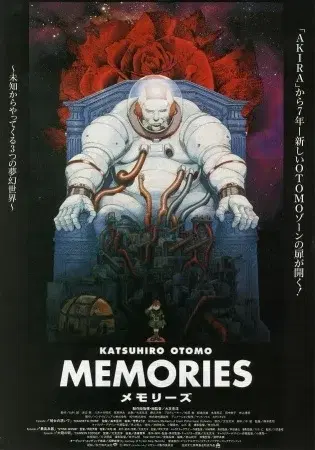
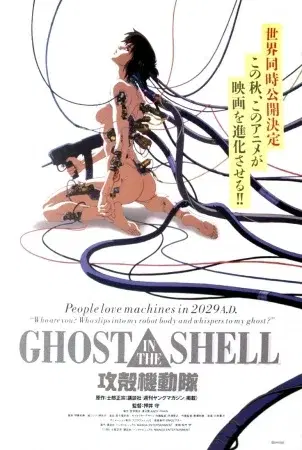
Watch The Animatrix if you want cyberpunk worldbuilding with the density of Ghost in the Shell but in the restless, director-driven format of Memories. Its nine-part structure lets Madhouse, Studio 4°C, and Square Pictures attack the same universe through different visual logics: hard CGI spectacle, sketchy psychological motion, noir framing, and surreal urban glitch-art. It is especially rewarding for viewers who like lore when it changes the emotional temperature of a setting rather than simply filling wiki gaps. The Second Renaissance gives the franchise its most severe historical backbone, while Watanabe’s episodes bring a lean, genre-literate cool closer to Cowboy Bebop than to standard Hollywood spin-off animation. If you want The Matrix without another two-hour hero’s-journey arc, this is the concentrated version.
Key Characters
- AAsh(VA: Masane Tsukayama)
Ash stands out as the anthology’s noir vessel, a private-eye figure whose old-cinema melancholy gives the Matrix mythos a different texture from its usual leather-and-gunmetal cool.
- CCis(VA: Kaho Kouda)
Cis is memorable because her segment treats identity and loyalty as performance, filtering cyberpunk paranoia through the controlled elegance of a period-drama simulation.
- DDuo(VA: Toshiyuki Morikawa)
Duo gives Program its emotional pressure, turning what could have been a simple action showcase into a test of desire, nostalgia, and ideological conviction.
- JJue(VA: Atsuko Yuuya)
Jue is the kinetic face of Final Flight of the Osiris, remembered less for exposition than for the short’s urgent blend of sensual choreography and mission-driven momentum.
What Makes It Stand Out
- 1
The production is split across Madhouse, Square Pictures, and Studio 4°C, making the anthology’s shifting look a structural feature rather than a one-off stylistic flourish.
- 2
Final Flight of the Osiris uses Square Pictures’ CGI approach, placing it closest in surface language to early-2000s digital film experiments while still functioning as anime-adjacent franchise storytelling.
- 3
Shinichirou Watanabe directed episodes 4 and 8, giving Kid’s Story and Detective Story a recognizable command of mood, genre pastiche, and economical character framing.
- 4
Kouji Morimoto directed episode 7, Beyond, the entry most associated with turning a Matrix malfunction into a playful slice of urban surrealism rather than a combat set piece.
- 5
Don Davis, credited for the music, links the anthology sonically to the larger Matrix identity instead of letting the nine shorts feel like disconnected studio demos.
Fun Facts & Trivia
- Fun fact 1
- Lana Wachowski and Lilly Wachowski are credited not only as original creators but also as producers, which helps explain why the anthology feels integrated into the franchise rather than outsourced fan service.
- Fun fact 2
- Joel Silver is credited as executive producer, while Michael Arias and Hiroaki Takeuchi are listed among the producers, reflecting a production bridge between Hollywood franchise management and Japanese animation studios.
- Fun fact 3
- The anime aired on June 3, 2003 as a finished nine-episode project, giving it a compact format closer to a curated short-film collection than a television season.
- Fun fact 4
- AniList’s highest tags are Anthology at 86%, Cyberpunk at 85%, and Virtual World at 84%, accurately capturing why viewers discuss it more as a format-and-setting experiment than as a conventional character saga.
- Fun fact 5
- Its reception sits in a narrow but respectable band across databases: 7.31 on MyAnimeList from 48,218 votes and 70/100 on AniList, with 301 AniList favourites indicating a dedicated niche rather than broad mainstream dominance.
Studios
- Madhouse
- Square Pictures
- Studio 4°C