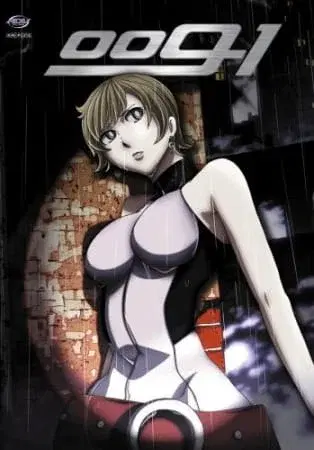
Lupin the Third: The Woman Called Fujiko Mine
LUPIN the Third ~峰不二子という女~ (Lupin the Third: Mine Fujiko to Iu Onna)
- Action
- Adventure
- Award Winning
- Comedy
- Ecchi
- Adult Cast
- Samurai
- Episodes
- 13
- Duration
- 22 min per ep
- Aired
- Apr 5, 2012 to Jun 28, 2012
- Status
- Finished Airing
Synopsis
A wave of followers is being drawn into a dubious new religion, and Lupin III slips inside with one goal in mind: the valuable treasure rumored to be hidden by its charismatic leader. As he closes in on his target, his attention is captured by a stunning, enigmatic woman who holds the leader firmly under her spell.
Lupin the Third: The Woman Called Fujiko Mine traces the first encounter between Lupin and the stylish thief Fujiko Mine, setting their fateful connection against a backdrop of high-stakes intrigue, action, and sly humor.
Otaku Consensus
The Woman Called Fujiko Mine is widely valued as one of the boldest modern Lupin III entries: Sayo Yamamoto’s direction, Takeshi Koike’s sharp character design, and Naruyoshi Kikuchi’s noir-jazz score make it feel less like franchise maintenance and more like an auteur reset. Its 13-episode length gives the crime vignettes a lean, adult rhythm, though the most common sticking point is the series’ heavy use of nudity and psychosexual imagery, which can read as confrontational style overwhelming the character drama.
Why You Should Watch
Watch this if you want a Lupin III that strips away Saturday-morning caper comfort and leans into crime, seduction, and noir psychology without bloating itself into a long franchise commitment. It scratches some of the same adult-cool itch as Cowboy Bebop, but with harsher pulp edges, more overt eroticism, and a visual identity closer to inked manga panels than glossy action spectacle. Sayo Yamamoto frames Fujiko as the gravitational center rather than a recurring complication, while Mari Okada’s series composition gives the episodic cases a through-line of obsession, identity, and performance. If you want stylish thieves, detectives, guns, and moral rot in 13 tightly packaged episodes, this is the Lupin entry built for seinen viewers rather than completionists.
Key Characters
- FFujiko Mine
Fujiko is treated less as a stock femme fatale than as the series’ controlling mystery, with the direction turning her sexuality, evasiveness, and survival instincts into the main text rather than background flavor.
- LLupin III
Lupin plays as a younger, sharper-edged version of the iconic thief, defined here by appetite, improvisation, and the thrill of meeting someone who refuses to be solved.
What Makes It Stand Out
- 1
TMS Entertainment produced the series with Takeshi Koike as character designer, giving this Lupin entry a rougher, more adult visual profile than the cleaner television-adventure look associated with many franchise installments.
- 2
Sayo Yamamoto’s direction foregrounds Fujiko Mine as a true protagonist, a major structural shift for a franchise usually organized around Lupin’s perspective and ensemble capers.
- 3
Mari Okada handled series composition, and the show uses a 13-episode format that balances standalone crime episodes with a larger psychological through-line instead of running as a purely open-ended adventure series.
- 4
Naruyoshi Kikuchi’s music reinforces the noir tag with jazz-driven scoring, making the show’s mood feel closer to smoke-filled crime cinema than conventional action-comedy anime.
- 5
The AniList tag profile is unusually intense for a Lupin title: Nudity at 92%, Crime at 90%, Noir at 80%, and Primarily Adult Cast at 77% signal a deliberate adult reorientation rather than a standard franchise revival.
Fun Facts & Trivia
- Fun fact 1
- The series aired from April 5, 2012 to June 28, 2012, making it a compact one-cour Lupin III television project rather than a film, OVA, or long-running seasonal entry.
- Fun fact 2
- Monkey Punch is credited as the original creator, while the 2012 production was handled by TMS Entertainment, the studio most closely associated with the Lupin III anime legacy.
- Fun fact 3
- Sayo Yamamoto is credited not only as director but also for storyboard work, giving the series a stronger authorial stamp than a purely committee-driven franchise installment.
- Fun fact 4
- The core creative lineup pairs Sayo Yamamoto with Mari Okada on series composition and Takeshi Koike on character design, an unusually recognizable staff trio for a franchise prequel-style project.
- Fun fact 5
- Its database reception sits in the strong-but-polarizing zone: MAL lists it at 7.77 from 25,791 votes, while AniList records a 76/100 score and 560 favourites.
Studios
- TMS Entertainment